
Apr . 01, 2024 17:55 Back to list
china car washer hose factory Performance Analysis

Introduction
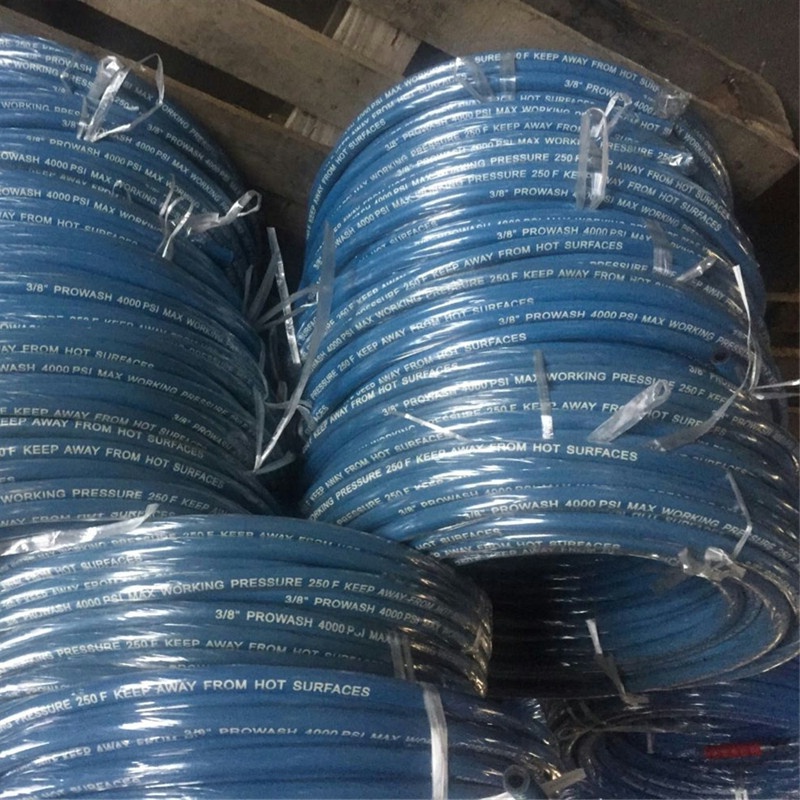
Automotive washing hoses, specifically those manufactured in China for global distribution, represent a critical component within the vehicle maintenance and detailing industry. These hoses facilitate the delivery of high-pressure water, often mixed with detergents and cleaning agents, for exterior vehicle cleaning. The manufacturing sector in China has become a dominant force in this market due to its competitive pricing, expanding production capacity, and increasing focus on quality control. This guide provides a comprehensive technical overview of these hoses, encompassing material science, manufacturing processes, performance characteristics, potential failure modes, and relevant industry standards. The core performance of a car wash hose centers on its burst pressure, flexibility, abrasion resistance, and resistance to chemical degradation from common cleaning solutions. Failure in these areas leads to downtime, potential damage to vehicles, and safety concerns. Understanding the nuances of these parameters is essential for procurement managers, engineers, and quality control personnel involved in sourcing and utilizing these products.
Material Science & Manufacturing
The primary material used in the construction of car wash hoses is thermoplastic rubber (TPR) or Polyvinyl Chloride (PVC), often reinforced with textile braiding (typically polyester or nylon). The choice between TPR and PVC impacts key properties. TPR offers superior flexibility at low temperatures and enhanced abrasion resistance, while PVC provides a lower cost solution with good chemical resistance. Reinforcement braiding provides the tensile strength required to withstand high-pressure operation. Raw material quality is paramount. PVC resin requires careful selection based on its K-value (molecular weight), influencing its viscosity and mechanical properties. TPR compounds must be formulated with the appropriate hardness (measured in Shore A) to balance flexibility and durability. Manufacturing typically involves extrusion. PVC compound is heated and extruded through a die, forming the inner tube. Simultaneously, the reinforcing braid is applied, followed by a second extrusion layer to create the outer jacket. Critical process parameters include die temperature, screw speed, and cooling rates. Improper cooling can lead to residual stresses, increasing the risk of cracking. After extrusion, hoses are subjected to pressure testing to verify burst strength, and dimensional checks to ensure adherence to specifications. Quality control often involves microscopic examination of the braid structure to confirm consistent density and alignment, impacting overall hose performance and longevity.
Performance & Engineering
The performance of a car wash hose is dictated by its ability to withstand sustained high pressure, resist kinking, maintain flexibility in varying temperatures, and survive repeated bending and abrasion. Force analysis during operation reveals that the hose experiences significant hoop stress due to internal pressure. The reinforcing braid bears the brunt of this stress, preventing expansion and potential rupture. Fatigue life is a critical engineering consideration. Repeated pressurization and depressurization cycles induce cyclic stress, leading to eventual fatigue failure. The number of cycles to failure is influenced by the amplitude of the stress, the material properties of the hose, and the quality of the manufacturing process. Environmental resistance is also crucial. Exposure to UV radiation can degrade the PVC or TPR jacket, leading to brittleness and cracking. Chemical compatibility with common car wash detergents and cleaning agents must be verified to prevent swelling, softening, or discoloration of the hose material. Standards such as SAE J568 specify performance requirements for hydraulic hoses, which can be used as a benchmark for car wash hose design and testing. The hose's bend radius is another essential parameter, impacting flow rate and potential for kinking. A smaller bend radius increases the risk of flow restriction and internal damage.
Technical Specifications
| Parameter | Unit | Typical Value (TPR Hose) | Typical Value (PVC Hose) |
|---|---|---|---|
| Working Pressure | MPa | 20 | 15 |
| Burst Pressure | MPa | 60 | 45 |
| Tensile Strength | MPa | 18 | 15 |
| Elongation at Break | % | 400 | 300 |
| Diameter (Inner) | mm | 12.7 | 12.7 |
| Diameter (Outer) | mm | 18 | 16 |
| Operating Temperature Range | °C | -40 to +80 | -20 to +60 |
Failure Mode & Maintenance
Common failure modes for car wash hoses include burst failure due to exceeding the working pressure, kinking leading to flow restriction and eventual cracking, abrasion damage from contact with rough surfaces, and degradation of the jacket material due to UV exposure and chemical attack. Fatigue cracking, initiated at stress concentration points (e.g., fittings), is a frequent cause of failure in long-term use. Microscopic analysis of failed hoses often reveals crack propagation originating from areas with braid irregularities or material defects. Delamination between the jacket and the reinforcing braid can also occur, reducing the hose's ability to withstand pressure. Preventive maintenance is crucial. Regular visual inspections should be conducted to identify signs of wear, such as cracks, abrasions, and discoloration. Hoses should be replaced if they show any evidence of damage or deterioration. Avoid sharp bends and dragging the hose across abrasive surfaces. After use, hoses should be properly stored, coiled loosely to prevent kinking, and protected from direct sunlight. Flushing the hose with clean water after each use can help remove residual detergents and prevent internal corrosion. Periodic pressure testing can proactively identify hoses nearing the end of their service life. When replacing a hose, ensure the new hose has the same or higher working pressure and temperature ratings as the original.
Industry FAQ
Q: What is the impact of water hammer on car wash hose lifespan?
A: Water hammer, the pressure surge caused by the sudden stopping of water flow, is a significant contributor to hose failure. The rapid pressure increase exceeds the hose's design limits, causing stress concentrations and potential rupture. Using slow-closing valves or incorporating surge suppressors in the water delivery system can mitigate water hammer effects and extend hose lifespan.
Q: How does the braiding material affect hose durability?
A: Polyester braiding generally offers higher tensile strength and better resistance to stretching compared to nylon. However, nylon braiding is more flexible and provides better resistance to fatigue. The braid density and uniformity are also critical factors. A tightly woven, consistent braid structure distributes stress more evenly, reducing the risk of localized failure.
Q: What are the common chemical compatibility concerns with car wash detergents?
A: Strong alkaline detergents and solvents can degrade PVC and TPR materials over time. This can lead to swelling, softening, and cracking. Selecting hoses specifically formulated for chemical resistance, and rinsing the hose thoroughly after each use, are crucial preventative measures. Refer to the detergent's Material Safety Data Sheet (MSDS) for compatibility information.
Q: How does temperature affect the performance of car wash hoses?
A: Low temperatures can reduce the flexibility of PVC hoses, increasing the risk of kinking and cracking. TPR hoses generally maintain better flexibility at lower temperatures. High temperatures can weaken the hose material, reducing its burst pressure and increasing the risk of failure. Always operate hoses within their specified temperature range.
Q: What is the importance of hose fitting selection?
A: Improperly sized or installed fittings can create stress concentrations and leak points, leading to premature failure. Fittings should be compatible with the hose material and rated for the same working pressure. Securely crimping or clamping the fittings is essential to ensure a tight, leak-proof connection. Regularly inspect fittings for signs of corrosion or damage.
Conclusion
The selection and maintenance of car wash hoses are critical aspects of efficient and safe vehicle washing operations. Understanding the interplay between material science, manufacturing processes, and performance characteristics is essential for making informed procurement decisions and maximizing hose longevity. The dominance of Chinese manufacturers necessitates a robust quality control process, focusing on raw material sourcing, extrusion parameters, and rigorous pressure testing.
Continued advancements in material science, such as the development of more durable and chemically resistant thermoplastic elastomers, will further enhance the performance and lifespan of car wash hoses. Implementing proactive maintenance programs, including regular inspections and proper storage procedures, will minimize downtime and reduce the risk of catastrophic failures, ultimately optimizing operational efficiency and ensuring workplace safety.