
Apr . 01, 2024 17:55 Back to list
china black wire braid hydraulic hose supplier Performance Analysis
Introduction
Black wire braid hydraulic hose represents a critical component in fluid power systems across a diverse range of industries, including construction equipment, agricultural machinery, material handling, and industrial manufacturing. These hoses are engineered to reliably transmit hydraulic fluid under high pressure, facilitating the operation of actuators, motors, and other hydraulic devices. Positioned within the fluid conveyance sector, their performance directly impacts system efficiency, safety, and longevity. The core performance characteristics – pressure rating, temperature tolerance, fluid compatibility, and burst strength – are paramount considerations for engineers and procurement professionals. Increasingly, demands for reduced weight, improved flexibility, and enhanced resistance to abrasion and environmental factors are driving innovation in materials and construction techniques within this sector. This guide provides an in-depth technical examination of black wire braid hydraulic hose, covering material science, manufacturing processes, performance criteria, failure modes, and relevant industry standards.
Material Science & Manufacturing
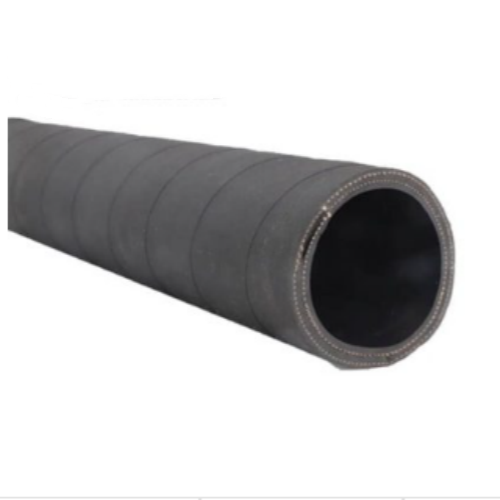
The construction of black wire braid hydraulic hose typically involves four key layers: the inner tube, reinforcement, outer cover, and potentially a bonding layer. The inner tube is commonly composed of synthetic rubbers such as Nitrile (NBR), also known as Buna-N, due to its excellent resistance to petroleum-based hydraulic fluids. Alternative materials include Chloroprene (CR) for improved ozone and weathering resistance, and Ethylene Propylene Diene Monomer (EPDM) for compatibility with phosphate ester fluids. NBR’s tensile strength typically ranges from 15-25 MPa, with elongation at break between 300-500%. The reinforcement layer consists of high-strength steel wire, spirally wound to provide pressure resistance. The wire used is often drawn from carbon steel and treated to prevent corrosion. The wire diameter and pitch significantly impact the hose's pressure capacity – a tighter pitch and larger diameter enhance burst pressure. Manufacturing involves precise winding of the steel wire onto a mandrel, followed by vulcanization to bond the wire to the inner tube. The outer cover is usually made of Chloroprene (CR) for abrasion resistance, weathering protection, and oil resistance. CR typically exhibits a tensile strength of 20-30 MPa and elongation at break of 200-400%. Key manufacturing parameter controls include maintaining consistent rubber compound viscosity, precise wire tension during winding, and accurate vulcanization temperature and time (typically 140-180°C for 20-40 minutes) to ensure optimal bonding and material properties. Post-vulcanization, hoses undergo rigorous pressure testing to verify integrity and compliance with safety standards.
Performance & Engineering
The performance of a black wire braid hydraulic hose is governed by several critical engineering principles. Burst pressure, determined by the reinforcement layer's strength and configuration, is a fundamental parameter, typically expressed in PSI or MPa. A common calculation utilizes the following: Burst Pressure = (Wire Tensile Strength Wire Cross-Sectional Area Number of Wires) / (Hose Inner Diameter). However, this is a simplification; actual burst pressure is determined through destructive testing. Working pressure is significantly lower, typically a safety factor of 4:1 relative to the burst pressure. Hose flexibility is crucial, especially in confined spaces, and is influenced by the hose diameter, wire pitch, and rubber compound properties. Static and dynamic bending radii must be considered to prevent kinking and premature failure. Environmental resistance is paramount; prolonged exposure to ozone, UV radiation, and extreme temperatures can degrade the rubber compounds, reducing their elasticity and tensile strength. Fluid compatibility is also vital. Incompatible fluids can cause swelling, softening, or cracking of the inner tube, leading to leakage and system failure. Temperature range typically spans -40°C to +100°C, though specific limits depend on the rubber compound used. Compliance with standards such as SAE J517 and EN 853 dictates minimum performance requirements for pressure ratings, temperature capabilities, and impulse testing to simulate hydraulic pulsations.
Technical Specifications
| Parameter | Unit | Typical Value (NBR Inner Tube, CR Cover) | Testing Standard |
|---|---|---|---|
| Working Pressure | PSI | 2000-5000 | SAE J517 |
| Burst Pressure | PSI | 8000-20000 | SAE J517 |
| Temperature Range | °C | -40 to +100 | SAE J517 |
| Inner Tube Material | - | Nitrile Rubber (NBR) | ASTM D2000 |
| Reinforcement | - | High-Strength Steel Wire | ASTM A228 |
| Outer Cover Material | - | Chloroprene Rubber (CR) | ASTM D2000 |
Failure Mode & Maintenance
Black wire braid hydraulic hoses are susceptible to several failure modes. Fatigue cracking, induced by repeated pressure cycles and flexing, is a common issue, often initiating at the wire-rubber interface. Corrosion of the steel wire reinforcement, particularly in environments with moisture and corrosive fluids, weakens the hose and can lead to burst failure. Abrasion of the outer cover, caused by rubbing against other components, compromises its protective function, exposing the reinforcement to corrosion. Improper installation – excessive bending, twisting, or kinking – creates stress concentrations and accelerates failure. Fluid incompatibility can lead to swelling and degradation of the inner tube, causing leaks and reduced pressure capacity. Oxidation and ozone cracking, particularly in CR covers exposed to UV radiation, reduce the rubber’s elasticity and tensile strength. Preventative maintenance includes regular visual inspections for abrasion, cracking, and leaks. Proper routing and support to minimize bending stress are crucial. Periodic fluid analysis can identify contaminants or incompatible fluids. Replacement should occur based on manufacturer's recommendations, operational severity, and inspection findings. Avoid using the hose beyond its specified pressure and temperature limits. Proper storage, away from direct sunlight and extreme temperatures, extends hose lifespan.
Industry FAQ
Q: What is the impact of impulse pressure on the service life of a wire braid hose?
A: Impulse pressure – the pressure pulsations within a hydraulic system – significantly reduces hose lifespan. These pulsations create cyclic stresses, accelerating fatigue cracking, particularly at the wire-rubber interface. Higher impulse pressures and frequencies necessitate hoses specifically designed for dynamic service, often featuring enhanced reinforcement and specialized rubber compounds with improved fatigue resistance. Proper dampening techniques within the hydraulic system also mitigate impulse effects.
Q: How does the choice of inner tube material affect fluid compatibility?
A: Inner tube material is paramount for fluid compatibility. NBR offers broad compatibility with petroleum-based fluids but is susceptible to swelling in phosphate ester fluids. EPDM is ideal for phosphate ester fluids but less resistant to petroleum oils. CR provides good all-around resistance, but may not be suitable for highly aggressive chemicals. A thorough understanding of the hydraulic fluid's composition is crucial for selecting the appropriate inner tube material.
Q: What are the limitations of using black wire braid hose in extreme temperature environments?
A: Extreme temperatures degrade rubber compounds. High temperatures accelerate oxidation and reduce elasticity, while low temperatures can cause hardening and brittleness. NBR typically performs well up to 100°C, but prolonged exposure beyond this temperature can lead to premature failure. Below -40°C, NBR can become brittle. Specialized rubber compounds, such as fluorocarbon (FKM), offer wider temperature ranges but at a higher cost.
Q: How does wire pitch affect the hose’s pressure rating and flexibility?
A: A tighter wire pitch generally increases pressure rating because it provides more reinforcement per unit length. However, a tighter pitch reduces flexibility. Conversely, a wider pitch enhances flexibility but lowers pressure capacity. Hose manufacturers balance these two factors to achieve the desired performance characteristics for a specific application.
Q: What certifications demonstrate a hose’s compliance with safety standards?
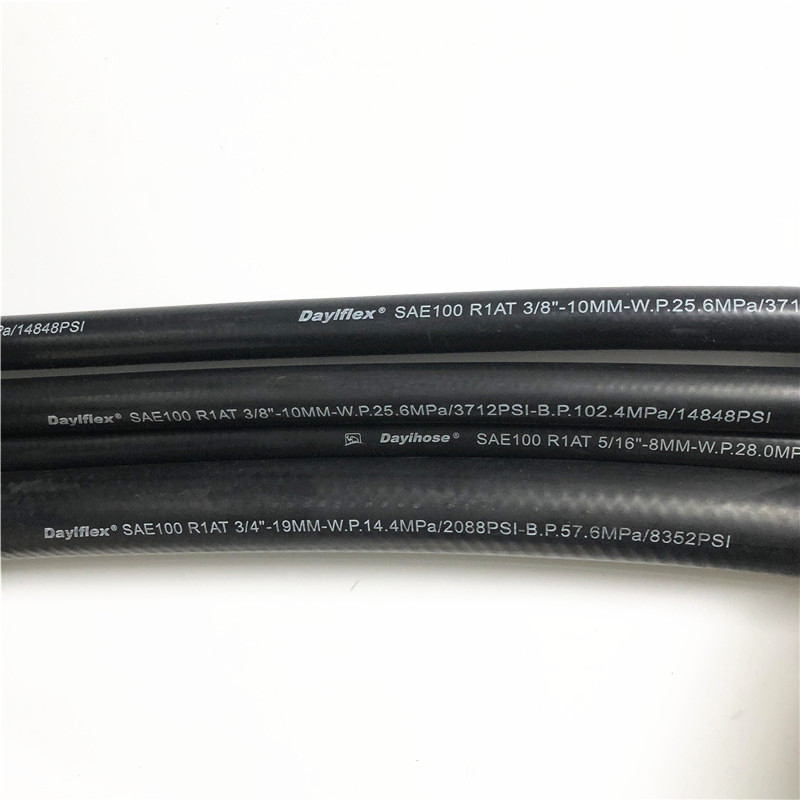
A: Common certifications include SAE J517 (hydraulic hose performance), EN 853 (hydraulic hose standards in Europe), and ISO 14330 (hydraulic fluid power – requirements for surface defects). Look for markings on the hose indicating compliance with these standards, as well as manufacturer’s test reports verifying performance characteristics.
Conclusion
Black wire braid hydraulic hose remains a vital component in a wide range of hydraulic systems, offering a balance of pressure capability, flexibility, and cost-effectiveness. Understanding the material science, manufacturing processes, and performance characteristics of these hoses is crucial for engineers and procurement professionals to ensure system reliability and safety. Careful consideration of fluid compatibility, temperature range, and potential failure modes, coupled with diligent maintenance practices, maximizes hose lifespan and minimizes downtime.
Continued advancements in rubber technology and reinforcement materials are driving innovation in hydraulic hose design. Future trends include the development of lighter-weight hoses with improved abrasion resistance, enhanced environmental protection, and extended service life. Furthermore, the integration of sensor technology within the hose structure to monitor pressure, temperature, and structural integrity will enable predictive maintenance and optimize system performance.