
Apr . 01, 2024 17:55 Back to list
china black wire braid hydraulic hose factories Performance Analysis
Introduction
Black wire braid hydraulic hose represents a foundational component within fluid power systems across diverse industrial applications. Manufactured extensively by factories in China, these hoses facilitate the transmission of hydraulic fluid to actuators and other components, enabling mechanical power. The technical position within the supply chain is as a critical intermediary between hydraulic power units (HPUs), pumps, valves, and end-use equipment. Core performance characteristics revolve around pressure capability, burst strength, flexibility, and resistance to abrasion, temperature extremes, and chemical exposure. The proliferation of Chinese manufacturers has driven down costs, but also introduced variations in quality and adherence to international standards, necessitating rigorous quality control and material verification processes for end-users.
Material Science & Manufacturing
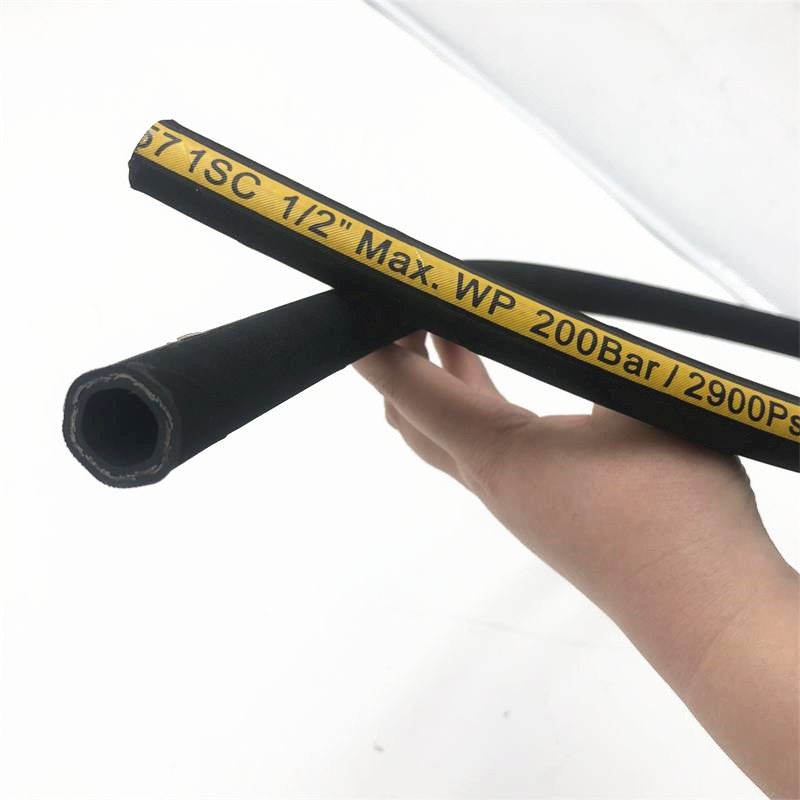
The construction of black wire braid hydraulic hose typically involves four primary layers. The innermost layer, the tube, is generally comprised of synthetic rubber compounds such as Nitrile (NBR), often formulated for compatibility with petroleum-based hydraulic fluids. NBR provides excellent oil resistance, but its temperature range is limited. Alternative tube materials include Chloroprene (CR) for enhanced temperature resistance and Ethylene Propylene Diene Monomer (EPDM) for compatibility with phosphate ester fluids. The reinforcement layer consists of one or more braids of high-tensile steel wire, providing the hose's pressure resistance. Wire diameter and braid angle are crucial parameters; a tighter braid and larger diameter wires yield higher burst pressures. The cover layer, again utilizing synthetic rubber (typically SBR or CR), protects the reinforcement from corrosion, abrasion, and environmental degradation. Finally, an adhesive layer bonds the tube and reinforcement layers. Manufacturing processes include extrusion of the tube and cover, followed by the braiding of the steel wire. Precise control of extrusion temperatures, curing times, and adhesive application are vital to ensure layer adhesion and overall hose integrity. Post-production testing includes burst pressure testing, impulse testing, and dimensional checks. Quality control in Chinese factories varies; reputable manufacturers employ sophisticated testing equipment and adhere to stringent quality management systems like ISO 9001.
Performance & Engineering
Performance of black wire braid hydraulic hose is dictated by several key engineering considerations. The primary factor is the hose's ability to withstand internal pressure without failure. This is determined by the reinforcement layer’s strength and the tube's elasticity. Hose burst pressure is typically four times the working pressure, providing a safety factor. Impulse pressures, caused by pulsating flow from hydraulic pumps, introduce cyclic stresses on the hose. The hose must withstand these repeated stresses without fatigue failure. Flexibility is also critical, particularly in tight spaces. Braid angle and the rubber compound’s durometer (hardness) influence flexibility. Environmental resistance is paramount; exposure to ozone, UV radiation, and chemicals can cause rubber degradation. Selecting appropriate rubber compounds is crucial. Furthermore, dimensional stability is important. Hose elongation under pressure must be minimized to prevent fitting slippage. Engineering calculations involve stress-strain analysis of the hose layers under various loading conditions. Compliance requirements, such as those dictated by SAE J517 (hydraulic hose standards), mandate specific performance criteria for pressure ratings, temperature ranges, and fluid compatibility.
Technical Specifications
| Parameter | Unit | Typical Value (1/2" ID Hose) | Test Standard |
|---|---|---|---|
| Working Pressure | PSI | 2000 | SAE J517 |
| Burst Pressure | PSI | 8000 | SAE J517 |
| Temperature Range | °F | -40 to +212 | SAE J517 |
| Inner Tube Material | - | Nitrile (NBR) | ASTM D2000 |
| Reinforcement | - | Single Steel Wire Braid | SAE J517 |
| Cover Material | - | Synthetic Rubber (SBR) | ASTM D2000 |
Failure Mode & Maintenance
Failure modes in black wire braid hydraulic hoses are diverse. Fatigue cracking, often initiating at the braid-tube interface, is common under cyclic pressure loads. Delamination, the separation of hose layers, occurs due to inadequate adhesion or exposure to harsh chemicals. Rubber degradation, caused by ozone cracking, UV exposure, and chemical attack, reduces hose flexibility and strength. Abrasion damage results from external contact with abrasive surfaces. Corrosion of the steel wire braid can occur in humid environments or with exposure to corrosive fluids, weakening the reinforcement. Bursting is a catastrophic failure mode resulting from exceeding the working pressure or a pre-existing defect. Maintenance practices should include regular visual inspection for cracks, abrasions, and leaks. Hose should be replaced if any signs of damage are detected. Proper routing and support are essential to prevent abrasion and excessive bending. Avoid sharp bends and kinks. Store hoses in a cool, dry place away from direct sunlight and ozone sources. Periodic pressure testing can identify potential weaknesses before catastrophic failure occurs. Use appropriate fittings and ensure proper crimping to prevent fitting slippage.
Industry FAQ
Q: What is the impact of different steel wire braid constructions (e.g., single vs. double braid) on hose performance?
A: Increasing the number of braid layers significantly increases the hose’s pressure capability and resistance to impulse pressures. Double braid hoses can typically withstand pressures two to three times higher than single braid hoses. However, double braid hoses are less flexible and more expensive.
Q: How do different rubber compounds affect the chemical compatibility of the hose?
A: Different rubber compounds exhibit varying levels of resistance to different chemicals. NBR is generally good for petroleum-based fluids, while EPDM is preferred for phosphate ester fluids. CR offers broader chemical resistance. Selecting the appropriate rubber compound is crucial to prevent swelling, degradation, and failure.
Q: What are the key differences between SAE J517 and EN 853 hydraulic hose standards?
A: SAE J517 is a North American standard, while EN 853 is a European standard. They differ in terms of pressure ratings, testing procedures, and dimensional tolerances. EN 853 generally uses metric units, while SAE J517 uses imperial units. Interchanging hoses designed for different standards is not recommended.
Q: What is the role of the adhesive in hydraulic hose construction, and how does it affect long-term reliability?
A: The adhesive bonds the tube and reinforcement layers, preventing delamination. A strong, durable adhesive is crucial for long-term reliability. Poor adhesive bonding can lead to premature failure, particularly under cyclic pressure loads. Quality control measures to ensure adequate adhesive application and curing are essential.
Q: What are the common causes of hose fitting failure, and how can they be prevented?
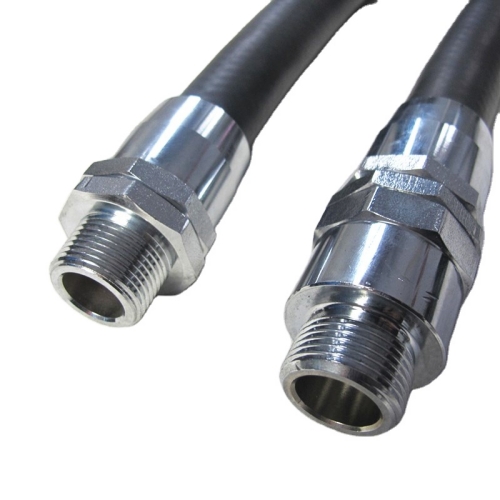
A: Common causes include improper crimping, corrosion, and material incompatibility. Ensuring correct crimp parameters (crimp diameter, crimp force) is vital. Using corrosion-resistant fittings and applying anti-seize compound can prevent corrosion. Selecting fittings compatible with the hose and fluid is crucial.
Conclusion
Black wire braid hydraulic hose remains a fundamental component in countless industrial systems, and China’s manufacturing capacity plays a significant role in global supply. Successful implementation hinges on a thorough understanding of material science, manufacturing processes, and performance engineering principles. The selection of appropriate materials, coupled with rigorous quality control and adherence to international standards, are paramount to ensuring reliable and safe operation.
Looking ahead, advancements in hose technology are focused on developing lighter-weight materials, enhancing chemical resistance, and improving impulse performance. Continued innovation in manufacturing processes will further optimize hose construction and reduce costs. Proper maintenance and regular inspection remain crucial for maximizing hose lifespan and preventing catastrophic failures. Prioritizing these aspects will ensure the continued efficiency and safety of hydraulic systems.