
Apr . 01, 2024 17:55 Back to list
china best price hydraulic hose supplier Performance Engineering
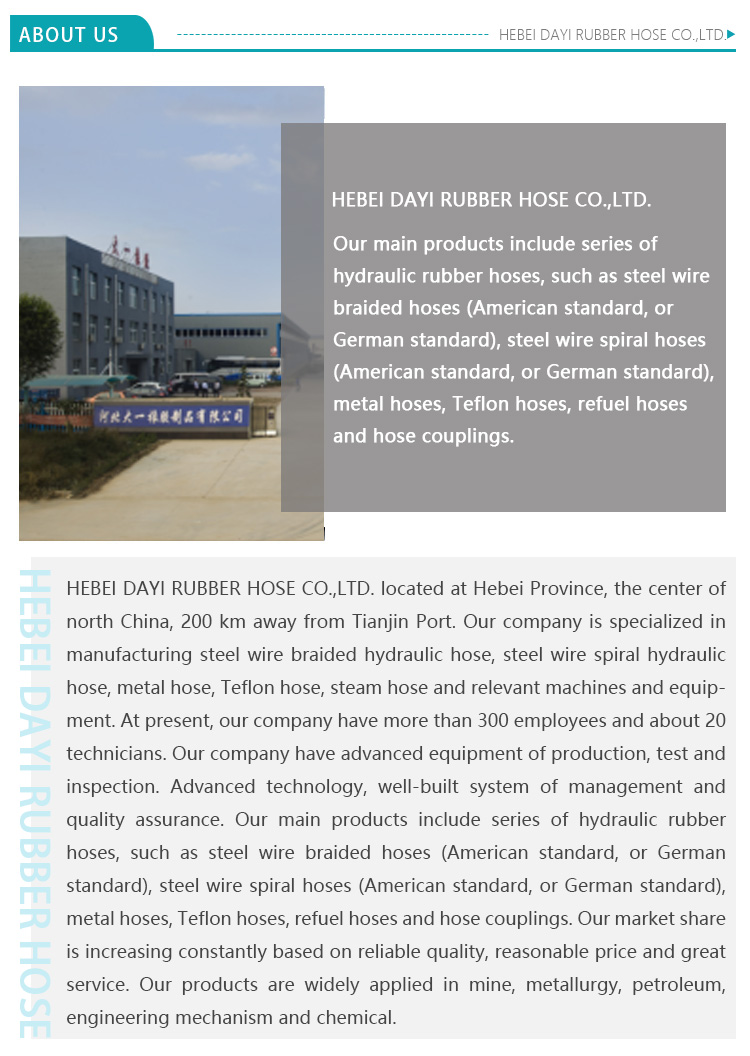
Introduction
Hydraulic hoses, integral components in fluid power systems, transmit hydraulic fluid to operate machinery across diverse industries, including construction, agriculture, manufacturing, and automotive. The ‘china best price hydraulic hose supplier’ market focuses on delivering cost-effective solutions without compromising performance and safety. These hoses function by containing pressurized hydraulic fluid, enabling the transmission of power for applications ranging from heavy equipment operation to precise robotic control. Core performance characteristics include pressure rating, temperature resistance, and compatibility with various hydraulic fluids. Understanding the construction, materials, and testing standards governing hydraulic hoses is critical for selecting the appropriate hose for a given application and ensuring system reliability. The ongoing demand for enhanced durability, reduced weight, and increased operational efficiency continues to drive innovation within the hydraulic hose industry. A primary industry pain point revolves around consistent quality control in lower-priced options, leading to premature failure and costly downtime. Therefore, a detailed understanding of manufacturing processes and material selection is crucial for procurement professionals.
Material Science & Manufacturing
Hydraulic hoses are typically constructed from multiple layers, each contributing to specific performance characteristics. The inner tube, responsible for fluid containment, is commonly made from synthetic rubbers such as nitrile (NBR), ethylene propylene diene monomer (EPDM), or fluorocarbon (FKM/Viton), selected based on fluid compatibility and temperature requirements. NBR offers good resistance to petroleum-based fluids, while EPDM excels in phosphate ester fluid applications. FKM provides superior resistance to high temperatures and aggressive chemicals. Reinforcement layers, providing strength and pressure resistance, utilize braided or spiraled steel wire, synthetic fibers (aramid, polyester), or a combination thereof. Steel wire reinforcement offers high-pressure capability but adds weight and reduces flexibility. Synthetic fiber reinforcement provides a balance between strength and flexibility. The outer cover, protecting against abrasion, weathering, and oil exposure, is usually composed of synthetic rubber compounds such as chloroprene (CR) or polyurethane (PU).
Manufacturing processes vary based on hose type and construction. Braided hoses involve intertwining high-tensile steel wires around the inner tube, followed by vulcanization to bond the layers. Spiraled hoses are created by continuously winding steel wire around the inner tube, also followed by vulcanization. Extrusion is used to form the inner tube and outer cover. Key parameter control during manufacturing includes precise wire tension during braiding/spiraling, consistent rubber compound mixing and curing temperatures, and dimensional accuracy. Improper curing can lead to reduced strength and premature failure. Quality control measures encompass burst pressure testing, impulse testing, and dimensional inspections according to industry standards (SAE J517, EN 853). The selection of rubber compounds is vital; ensuring resistance to degradation from ozone, UV exposure, and hydraulic fluid aging is paramount. Careful consideration must be given to the elongation properties of the rubber to prevent cracking under stress.
Performance & Engineering
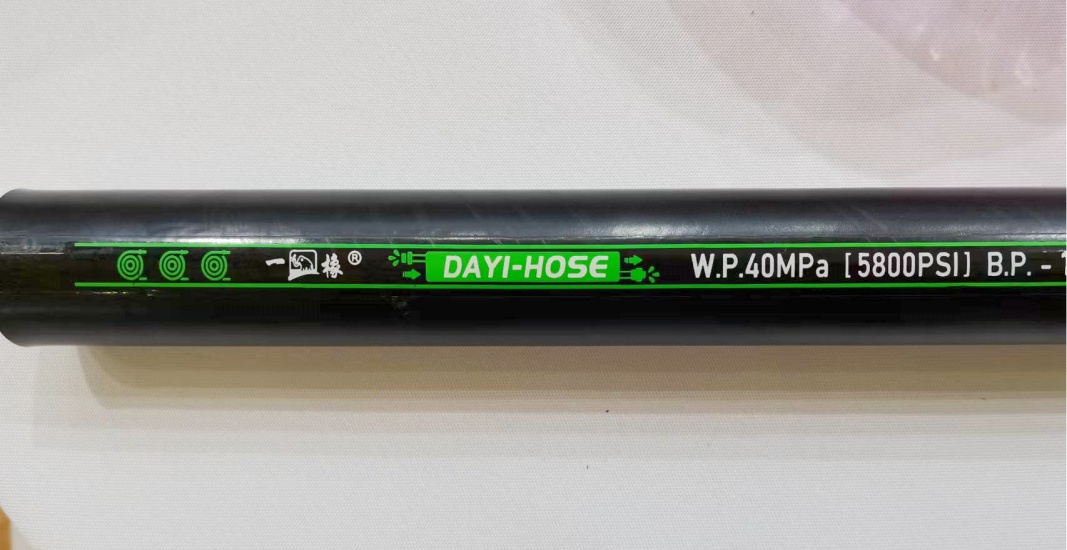
The performance of a hydraulic hose is dictated by its ability to withstand internal pressure, external loads, and environmental conditions. Burst pressure, the maximum pressure the hose can withstand before failure, is a critical performance parameter, determined through hydrostatic testing. Working pressure is typically specified as a fraction of the burst pressure (e.g., 1/4 of the burst pressure). Impulse pressure, representing pressure surges or pulsations within the hydraulic system, requires consideration of hose fatigue life. Hose bend radius is another essential engineering parameter; exceeding the minimum bend radius can induce stress and reduce hose life. Temperature range dictates the hose’s operational limits; exceeding temperature limits can lead to rubber degradation and loss of pressure capacity.
Force analysis involves calculating hoop stress (tangential stress in the hose wall due to internal pressure) and longitudinal stress (stress along the hose length). These stresses must be within the material’s allowable limits to prevent failure. Environmental resistance includes consideration of ozone, UV exposure, chemical compatibility, and abrasion resistance. Compliance requirements depend on the application and geographical region. For example, SAE J517 specifies performance requirements for hydraulic hoses in North America, while EN 853 governs European standards. Furthermore, the hose's compatibility with the hydraulic fluid is paramount. Incompatibility can lead to swelling, degradation, and ultimately, hose failure. Hose guards and sleeves are often employed to provide additional protection against abrasion, kinking, and impact damage, enhancing overall system reliability.
Technical Specifications
| Parameter | SAE 100R1AT | SAE 100R2AT | DIN EN 853 1SN | DIN EN 856 4SH |
|---|---|---|---|---|
| Working Pressure (PSI) | 1000 | 2000 | 1500 | 2500 |
| Burst Pressure (PSI) | 3000 | 6000 | 4500 | 7500 |
| Temperature Range (°F) | -40 to +212 | -40 to +212 | -40 to +212 | -40 to +248 |
| Inner Tube | NBR | NBR | NBR | NBR |
| Reinforcement | Single Steel Wire Braid | Double Steel Wire Braid | Single Steel Wire Spiral | Four Steel Wire Spiral |
| Outer Cover | CR | CR | CR | CR |
Failure Mode & Maintenance
Hydraulic hose failure can stem from various modes, including burst, leakage, kinking, and abrasion. Burst failure typically occurs due to exceeding the working pressure or experiencing a sudden pressure surge. Leakage can arise from pinholes in the inner tube, degradation of seals, or damage to fittings. Kinking, caused by excessive bending or improper support, restricts fluid flow and can lead to hose damage. Abrasion, resulting from contact with abrasive surfaces, gradually wears away the outer cover, exposing the reinforcement layers. Fatigue cracking can occur in the reinforcement layers due to repeated flexing and pressure cycling. Oxidation and degradation of rubber compounds, accelerated by exposure to heat, ozone, and UV radiation, compromise hose integrity.
Preventive maintenance is crucial for extending hose life and preventing failures. Regular visual inspections should identify signs of wear, damage, or leakage. Proper hose routing and support are essential to prevent kinking and abrasion. Correct fitting selection and tightening torque are critical for preventing leaks. Fluid cleanliness is paramount; contaminants can accelerate wear and damage. Periodic pressure testing can identify hoses nearing the end of their service life. When replacing hoses, always use hoses that meet or exceed the original specifications. Avoid twisting the hose during installation. When a hose fails, conduct a failure analysis to determine the root cause and prevent recurrence. Document all maintenance and inspection activities for traceability.
Industry FAQ
Q: What is the significance of ‘dash size’ in hydraulic hose specification?
A: Dash size represents the inner diameter of the hose in -100ths of an inch. For example, a -10 hose has a 1-inch inner diameter. It’s crucial because the inner diameter dictates the flow rate and pressure drop within the system. Selecting the correct dash size is essential for maintaining optimal system performance.
Q: How does the reinforcement type impact hose performance?
A: Reinforcement type dramatically impacts pressure rating, flexibility, and fatigue life. Steel wire braid offers high pressure capability but limited flexibility. Steel wire spiral provides even higher pressure ratings and better kink resistance. Synthetic fiber reinforcement offers a balance between strength and flexibility, suitable for applications requiring frequent bending.
Q: What is the role of the outer cover material in hose durability?
A: The outer cover protects the hose from abrasion, weathering, oil exposure, and ozone degradation. CR (Chloroprene) is a common choice offering good all-around protection. PU (Polyurethane) provides superior abrasion resistance but may be less resistant to certain chemicals.
Q: What are the critical considerations for hydraulic fluid compatibility?
A: Incompatibility between the hydraulic fluid and the hose material can lead to swelling, degradation, and leakage. Consult fluid compatibility charts provided by hose manufacturers to ensure the selected hose is compatible with the fluid being used. Using the wrong hose material can result in catastrophic failure.
Q: How often should hydraulic hoses be inspected and replaced?
A: Inspection frequency depends on the application severity. A visual inspection should be conducted monthly, looking for signs of wear, damage, or leakage. Hoses operating in harsh environments or experiencing high stress should be inspected more frequently. Replacement intervals vary, but a general guideline is to replace hoses every 5-7 years, or sooner if defects are detected.
Conclusion
Selecting the appropriate hydraulic hose requires a comprehensive understanding of material science, manufacturing processes, performance parameters, and potential failure modes. ‘china best price hydraulic hose supplier’ offerings necessitate careful scrutiny to ensure compliance with relevant industry standards and compatibility with the intended application. Prioritizing quality control, rigorous testing, and proper maintenance practices are crucial for maximizing hose life, minimizing downtime, and ensuring the safety and reliability of hydraulic systems.
Future advancements in hydraulic hose technology are likely to focus on developing lighter-weight materials, increasing pressure ratings, and enhancing resistance to extreme temperatures and aggressive fluids. The integration of sensor technologies for real-time monitoring of hose condition will also play a significant role in predictive maintenance and failure prevention. Procurement professionals must remain informed about these advancements to optimize hose selection and maximize return on investment.