
Apr . 01, 2024 17:55 Back to list
china best price hydraulic hose factory Technical Analysis
Introduction
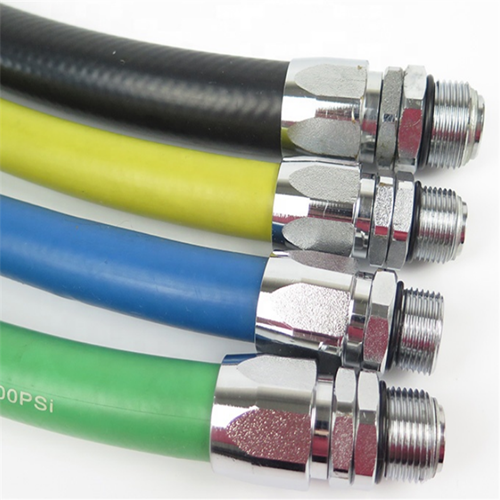
Hydraulic hoses are critical components in fluid power systems, transmitting hydraulic fluid to actuators and other components. China's position as a leading manufacturer offers cost-competitive solutions in the global hydraulic hose market. This guide provides an in-depth technical overview of hydraulic hoses manufactured in China, focusing on construction, performance characteristics, failure modes, and industry standards. These hoses are utilized across a wide range of industries including construction equipment, agricultural machinery, material handling, mining, and industrial manufacturing. Core performance centers around pressure rating, burst pressure, temperature resistance, and compatibility with various hydraulic fluids. A significant industry pain point lies in ensuring consistent quality control and adherence to international standards across different manufacturers, alongside the selection of appropriate hose materials for specific application requirements to avoid premature failure.
Material Science & Manufacturing
The core materials in hydraulic hose construction include synthetic rubbers (primarily nitrile, neoprene, and EPDM), reinforcement layers (typically high-tensile steel wire or aramid fiber), and outer cover materials (often polyurethane or a rubber compound providing abrasion and weather resistance). Nitrile rubber (NBR) offers excellent resistance to petroleum-based hydraulic fluids, making it prevalent in many applications. EPDM provides superior resistance to heat, ozone, and weathering, crucial for outdoor or high-temperature environments. Steel wire reinforcement provides high-pressure capacity, while aramid fiber offers flexibility and reduced weight. Manufacturing processes involve extrusion of the inner tube, winding of reinforcement layers, and subsequent extrusion of the outer cover. Key parameter control areas include rubber compound mixing ratios to ensure consistent physical properties, precise winding tension for reinforcement layers to guarantee pressure integrity, and controlled curing processes to optimize rubber elasticity and durability. Variations in material composition directly impact the hose's resistance to degradation and its overall lifespan. Pre-treatment of steel wire is critical to prevent corrosion and maintain reinforcement integrity. Proper vulcanization (curing) is essential for achieving optimal rubber properties, influencing factors like tensile strength, elongation, and hardness.
Performance & Engineering
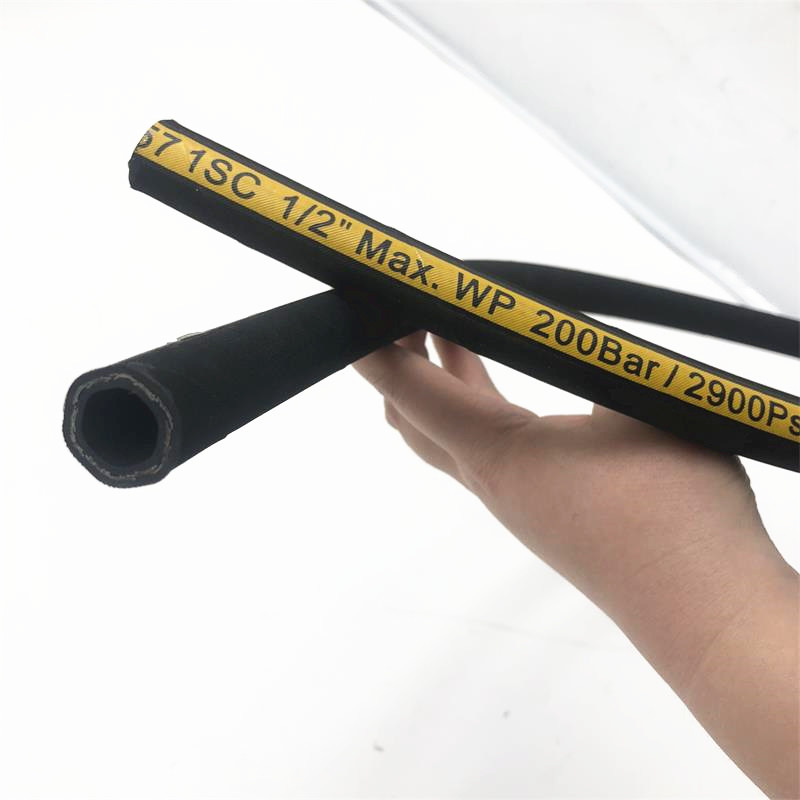
Hydraulic hose performance is governed by several engineering principles. Burst pressure is determined by the tensile strength of the reinforcement layers and the adhesion between layers. Working pressure is typically a fraction of the burst pressure, providing a safety factor. Hose bending radius is critical; exceeding the minimum bend radius induces stress concentration and potential failure. Impulse pressure resistance, particularly important in applications like hydraulic hammers, relies on the hose's ability to withstand repeated pressure surges. Environmental resistance encompasses exposure to temperature extremes, UV radiation, ozone, and corrosive fluids. Compliance requirements, such as SAE J517 and EN 853, dictate minimum performance standards. Force analysis during hose assembly and operation must consider hoop stress in the hose wall and end fitting crimp strength. Finite element analysis (FEA) is employed to optimize hose designs for specific applications, predicting stress distribution and identifying potential failure points. Chemical compatibility between the hose material and the hydraulic fluid is paramount to prevent swelling, degradation, or permeation, ensuring long-term reliability. Static and dynamic fatigue tests are used to evaluate hose life under cyclic loading conditions.
Technical Specifications
| Parameter | Unit | SAE 100R1AT | SAE 100R2AT |
|---|---|---|---|
| Working Pressure | MPa | 20.7 | 34.5 |
| Burst Pressure | MPa | 82.7 | 138.0 |
| Temperature Range | °C | -40 to +100 | -40 to +121 |
| Reinforcement | - | Single Steel Wire Braid | Double Steel Wire Braid |
| Inner Tube | - | Nitrile Rubber (NBR) | Nitrile Rubber (NBR) |
| Outer Cover | - | Synthetic Rubber (CPE) | Synthetic Rubber (CPE) |
Failure Mode & Maintenance
Common failure modes in hydraulic hoses include burst failure due to exceeding pressure limits, fatigue cracking from repeated bending and flexing, abrasion of the outer cover leading to reinforcement exposure, and internal degradation caused by fluid incompatibility. External damage, such as cuts or punctures, can initiate crack propagation. Corrosion of steel wire reinforcement, particularly in humid environments, reduces hose strength. Leakage at connections is often attributable to improper crimping or damaged fittings. Failure analysis involves examining the fracture surface to determine the root cause (e.g., fatigue, overpressure, corrosion). Preventative maintenance includes regular visual inspections for signs of wear, abrasion, or leaks, periodic pressure testing, and proper hose routing to minimize bending stress. Proper storage in a cool, dry environment away from direct sunlight is critical. Hose replacement should be based on a defined schedule or when damage is detected. When replacing hoses, ensure compatibility with the hydraulic fluid and use appropriately sized fittings. Crimping procedures must adhere to manufacturer specifications to ensure secure connections. Avoid kinking or twisting the hose during installation.
Industry FAQ
Q: What is the impact of hydraulic fluid type on hose life?
A: Different hydraulic fluids possess varying chemical properties. Incompatible fluids can cause the inner tube to swell, soften, or degrade, leading to premature failure. For example, using a phosphate ester fluid in a hose designed for petroleum-based fluids will result in rapid degradation of the NBR inner tube. Always verify fluid compatibility with the hose manufacturer’s specifications.
Q: How does temperature affect hydraulic hose performance?
A: Elevated temperatures accelerate the degradation of rubber compounds, reducing their elasticity and tensile strength. Low temperatures can cause rubber to become brittle and prone to cracking. Hose selection must account for the operating temperature range. Specialized hoses with EPDM inner tubes are designed for high-temperature applications.
Q: What are the key considerations for hose routing?
A: Avoid sharp bends and tight radii, as these induce stress concentration. Protect hoses from abrasion by using sleeves or clamps. Ensure adequate clearance between hoses and moving parts. Prevent hoses from being exposed to direct heat sources or corrosive environments. Proper hose routing minimizes stress and prolongs hose life.
Q: How important is the crimping process for hose fittings?
A: The crimping process is critical for ensuring a leak-free and durable connection. Improper crimping – whether under-crimped or over-crimped – can lead to failure. Use a calibrated crimping machine and follow the fitting manufacturer’s specifications for crimp dimensions and force.
Q: What is the difference between a single-wire and double-wire braid hose?
A: A double-wire braid hose offers significantly higher pressure capacity and improved impulse pressure resistance compared to a single-wire braid hose. The additional reinforcement layer provides greater strength and durability, making it suitable for demanding applications. However, double-wire braid hoses are generally less flexible.
Conclusion
Hydraulic hoses are integral to efficient fluid power systems, and understanding their material science, manufacturing processes, and performance characteristics is essential for reliable operation. China's hydraulic hose manufacturing capabilities offer a diverse range of products, but careful consideration must be given to quality control and adherence to international standards. Selecting the appropriate hose type, ensuring proper installation, and implementing a robust preventative maintenance program are crucial for maximizing hose lifespan and preventing costly downtime.
Future developments in hydraulic hose technology will likely focus on advanced materials offering enhanced chemical resistance and temperature stability, as well as smart hose solutions incorporating sensors for real-time monitoring of pressure and temperature. A continued emphasis on sustainable manufacturing practices and improved quality assurance will further enhance the competitiveness of China's hydraulic hose industry.