
Apr . 01, 2024 17:55 Back to list
china best price high pressure hydraulic hose supplier Performance Analysis
Introduction
High-pressure hydraulic hose, a critical component in fluid power systems, facilitates the transmission of pressurized fluid to actuators and other components. China has emerged as a significant global supplier, offering competitive pricing alongside increasingly sophisticated manufacturing capabilities. This technical guide focuses on the engineering principles, material science, manufacturing processes, performance characteristics, failure modes, and relevant standards governing high-pressure hydraulic hose, particularly from Chinese suppliers. These hoses are integral to sectors including construction, agriculture, mining, manufacturing, and aerospace, demanding stringent performance and reliability. Core performance metrics include pressure rating, burst pressure, temperature range, and fluid compatibility. The industry frequently grapples with issues related to hose longevity, particularly concerning degradation from exposure to harsh chemicals, extreme temperatures, and mechanical abrasion. This document aims to provide a comprehensive understanding for procurement managers, engineers, and maintenance personnel involved in selecting and utilizing these critical components.
Material Science & Manufacturing
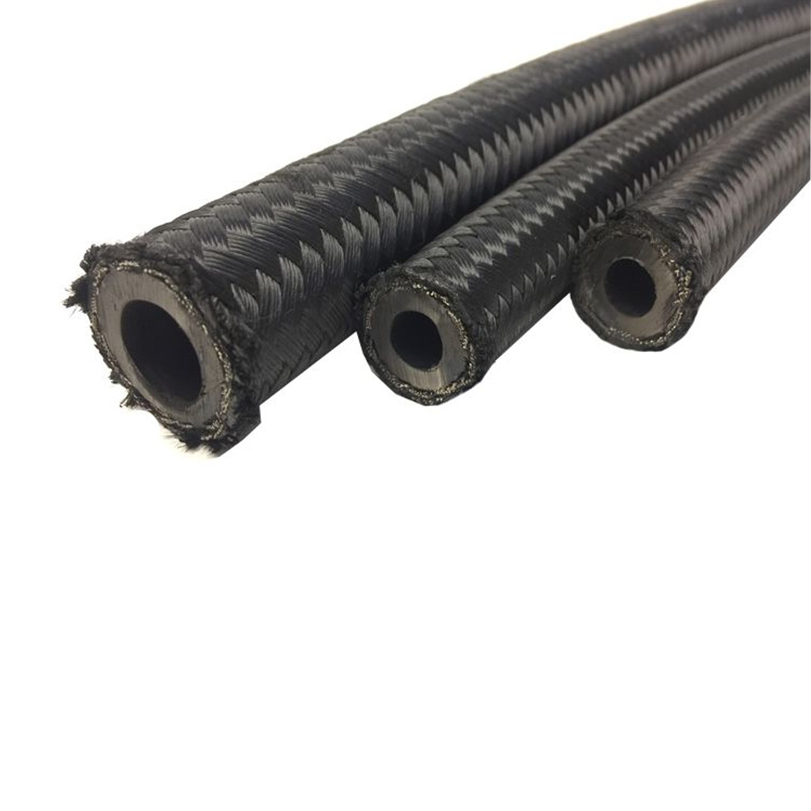
The construction of high-pressure hydraulic hose typically involves four key layers: the inner tube, reinforcement layers, the outer cover, and potentially an intermediary bond layer. The inner tube, which conveys the hydraulic fluid, is commonly composed of synthetic rubbers such as nitrile (NBR), chloroprene (CR – Neoprene), or fluorocarbon (FKM – Viton). NBR provides excellent resistance to petroleum-based fluids, CR offers good weather resistance, and FKM delivers exceptional chemical and temperature resistance, albeit at a higher cost. Reinforcement layers dictate the hose's pressure rating and flexibility. These layers traditionally consist of multiple plies of high-tensile steel wire, often spirally wound. The wire gauge and ply count are directly proportional to the maximum working pressure. Modern hoses also incorporate synthetic fiber braids (e.g., aramid fiber) for enhanced strength-to-weight ratios and increased flexibility. The outer cover provides abrasion resistance, weather protection, and resistance to oil and chemicals. Materials used for the cover include synthetic rubbers like CR, EPDM (ethylene propylene diene monomer), and polyurethane. Manufacturing processes begin with the extrusion of the inner tube and outer cover. The reinforcement layers are then applied through a winding or braiding process, meticulously controlling the tension and overlap. Bonding agents are used to ensure adhesion between layers. Critical process parameters include extrusion temperature, curing time and temperature, winding/braiding tension, and adhesion promoter concentration. Variations in these parameters directly impact hose performance and longevity. Quality control measures encompass hydrostatic pressure testing, impulse testing, and dimensional verification.
Performance & Engineering
Hydraulic hose performance is fundamentally governed by pressure-temperature ratings. The working pressure, expressed in PSI or MPa, is the maximum sustained pressure the hose can safely handle at a specified temperature. Burst pressure, typically four times the working pressure, represents the point of catastrophic failure. Temperature fluctuations significantly impact hose performance. Elevated temperatures reduce rubber elasticity and strength, decreasing the pressure rating. Conversely, low temperatures can cause embrittlement and cracking. The hose’s flexibility, measured by its bend radius, is crucial for installation and operation. A smaller bend radius indicates greater flexibility, but excessive bending can induce stress concentrations and premature failure. Force analysis involves calculating the stresses within the hose wall under internal pressure. The hoop stress, acting circumferentially, is the primary stress component. Finite element analysis (FEA) is commonly used to model stress distribution and optimize hose design. Fluid compatibility is paramount. Incompatible fluids can cause swelling, softening, or degradation of the inner tube, leading to leaks and failure. Environmental resistance encompasses protection against ozone, UV radiation, and exposure to various chemicals. Compliance requirements vary by region and application. Standards such as SAE J517, EN 853, and ISO 6898 define the performance criteria for hydraulic hose. Fatigue life, the number of pressure cycles the hose can withstand before failure, is a critical parameter for applications involving frequent pressure fluctuations.
Technical Specifications
| Parameter | Unit | SAE J517 100R2AT | EN 853 2SN |
|---|---|---|---|
| Working Pressure | MPa | 31.5 | 20 |
| Burst Pressure | MPa | 126 | 80 |
| Temperature Range | °C | -40 to +100 | -40 to +70 |
| Inner Tube | Material | Synthetic Rubber (NBR) | Synthetic Rubber (NBR) |
| Reinforcement | Layers | Two Steel Wire Braids | Two Steel Wire Spirals |
| Outer Cover | Material | Synthetic Rubber (CR) | Synthetic Rubber (CR) |
Failure Mode & Maintenance
High-pressure hydraulic hose is susceptible to several failure modes. Fatigue cracking, initiated by repeated pressure cycles and bending, is a common cause of failure. This manifests as small cracks in the reinforcement layers that propagate over time. Pinholes in the inner tube can occur due to abrasion from fluid contaminants or chemical attack. Bursting results from exceeding the hose's pressure rating or a sudden pressure surge. Degradation of the rubber materials, caused by exposure to ozone, UV radiation, or extreme temperatures, leads to reduced elasticity and increased susceptibility to cracking. Delamination, the separation of layers, weakens the hose structure and can lead to catastrophic failure. Oxidation, especially in the outer cover, causes hardening and cracking. Maintenance procedures include regular visual inspection for cracks, abrasions, and leaks. Hose should be replaced if any damage is detected. Proper hose routing, avoiding sharp bends and abrasion points, is crucial. Using appropriate fittings and ensuring proper crimping is essential to prevent leaks and premature failure. Flushing the hydraulic system to remove contaminants extends hose life. Periodic pressure testing can identify weakened hoses before they fail. A detailed failure analysis, including material examination and fracture surface analysis, can pinpoint the root cause of failures and prevent recurrence. Employing a preventative maintenance schedule based on operating hours and environmental conditions is vital for maximizing hose lifespan.
Industry FAQ
Q: What is the impact of fluid velocity on hydraulic hose life?
A: Higher fluid velocity increases frictional heat, potentially degrading the inner tube material. It also accelerates erosion from particulate contamination. Maintaining appropriate fluid velocity within the hose's specifications is crucial.
Q: How do different hose constructions handle impulse pressures (pressure spikes)?
A: Hoses with multiple reinforcement layers and tighter braid constructions generally exhibit better impulse pressure resistance. Spiral-wound reinforcement offers superior impulse performance compared to braided reinforcement.
Q: What are the key considerations when selecting a hose for use with fire-resistant fluids?
A: The inner tube material must be compatible with the fire-resistant fluid and provide adequate protection against degradation. The outer cover should also be fire-resistant to prevent flame propagation.
Q: How does the hose bend radius affect its lifespan and performance?
A: Exceeding the recommended bend radius induces stress concentrations in the reinforcement layers, leading to fatigue cracking and premature failure. Maintaining the specified bend radius is essential.
Q: What are the common causes of fitting failure and how can they be prevented?
A: Improper crimping, corrosion, and material incompatibility are common causes of fitting failure. Using high-quality fittings, ensuring proper crimping procedures, and applying corrosion inhibitors can prevent fitting failures.
Conclusion
The selection and utilization of high-pressure hydraulic hose necessitate a thorough understanding of material properties, manufacturing processes, performance parameters, and potential failure modes. Chinese suppliers are increasingly capable of delivering high-quality hoses that meet stringent international standards, but careful evaluation of technical specifications and quality control processes is paramount. Proper maintenance, including regular inspection and adherence to recommended operating parameters, is crucial for maximizing hose lifespan and ensuring the safe and reliable operation of hydraulic systems.
Future developments in hydraulic hose technology are focused on lightweight materials, improved chemical resistance, and enhanced durability. The integration of smart sensors for real-time monitoring of hose condition and pressure levels is also gaining traction, enabling predictive maintenance and reducing the risk of catastrophic failures. Continued adherence to evolving industry standards and best practices will be essential for ensuring the continued safety and reliability of hydraulic power transmission systems.