
Apr . 01, 2024 17:55 Back to list
china best price high pressure hydraulic hose manufacturer Performance Analysis
Introduction
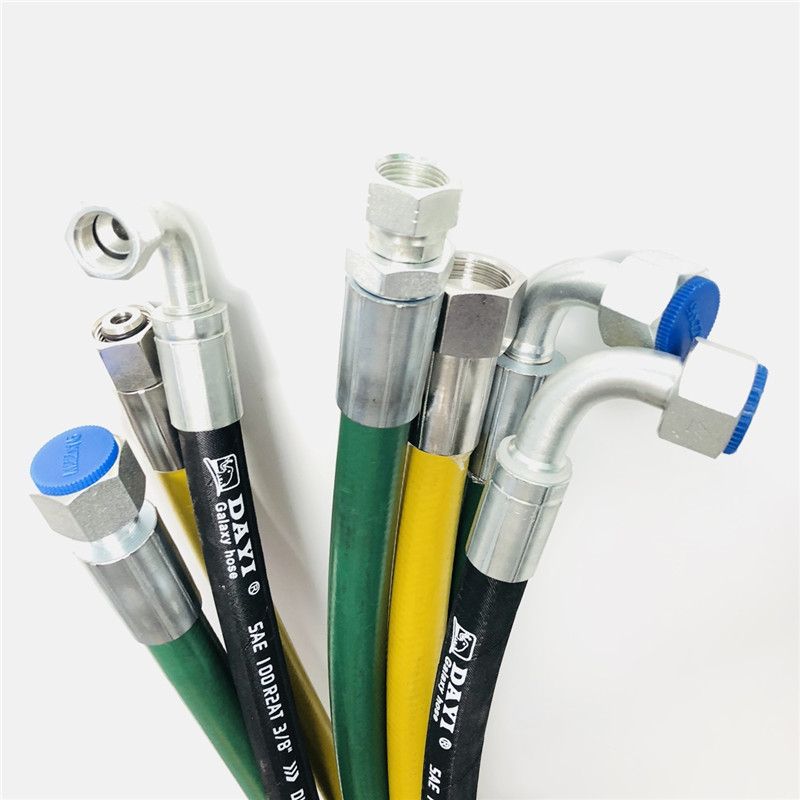
High-pressure hydraulic hoses are critical components in fluid power systems, transmitting hydraulic fluid to actuate machinery across diverse industries – construction, agriculture, manufacturing, and material handling. These hoses are engineered to withstand substantial pressures, temperatures, and fluid types, offering a robust and reliable method for power transmission. China has emerged as a significant global manufacturer of hydraulic hoses, particularly offering competitive pricing without necessarily compromising on essential performance characteristics. This technical guide provides a comprehensive overview of high-pressure hydraulic hose technology, focusing on material science, manufacturing processes, performance parameters, failure modes, and relevant industry standards, specifically addressing aspects crucial for procurement managers evaluating suppliers such as china best price high pressure hydraulic hose manufacturer. Core performance centers around burst pressure, working pressure, impulse resistance, and temperature range, each dictated by the hose's internal construction and external protection.
Material Science & Manufacturing
The construction of a high-pressure hydraulic hose involves multiple layers, each contributing to its overall performance. The inner tube, typically composed of synthetic rubbers like nitrile (NBR), chloroprene (CR), or ethylene propylene diene monomer (EPDM), provides compatibility with various hydraulic fluids. NBR offers excellent resistance to petroleum-based fluids, CR to ozone and weathering, and EPDM to phosphate ester fluids. Reinforcement layers, essential for withstanding pressure, are usually constructed from high-tensile steel wire (single or multi-spiral) or synthetic fiber braids (aramid or polyester). Steel wire provides superior strength and is preferred for high-pressure applications. The cover, generally made of abrasion-resistant synthetic rubber (CR or polyurethane), protects the reinforcement layers from environmental degradation and mechanical damage. Manufacturing involves extrusion of the inner tube and cover, followed by precise winding or braiding of the reinforcement layers. Curing, a vulcanization process, chemically crosslinks the rubber compounds, imparting elasticity and strength. Critical parameters during manufacturing include rubber compound formulation (viscosity, cure rate), reinforcement wire tension, braid angle, and curing temperature/time. Improper control of these parameters can lead to defects like porosity, incomplete curing, and reinforcement layer separation. Specialized techniques like spiral wrapping using automated machinery maintain consistent layer placement, crucial for uniform pressure resistance. The selection of materials is heavily influenced by fluid compatibility (avoiding swelling or degradation), operating temperature (maintaining flexibility and preventing hardening), and pressure requirements (dictating reinforcement layer density).
Performance & Engineering
The performance of a high-pressure hydraulic hose is governed by a complex interplay of mechanical stresses and environmental factors. Burst pressure, defined as the pressure at which the hose fails catastrophically, is a fundamental performance metric. Working pressure is typically specified as a fraction (e.g., 50%) of the burst pressure to provide a safety factor. Impulse pressure, the pressure fluctuation within the hydraulic system, introduces cyclic stresses that can lead to fatigue failure. Hose construction, particularly the reinforcement layer, dictates impulse resistance. Finite element analysis (FEA) is commonly used to model stress distribution within the hose under various loading conditions, optimizing reinforcement geometry and material selection. Environmental resistance is another crucial aspect. Temperature extremes can affect rubber elasticity and tensile strength. Exposure to ozone, UV radiation, and hydraulic fluids can cause degradation of the cover and inner tube. Hose assemblies often incorporate specialized fittings designed to withstand the same pressures and temperatures as the hose itself. Fitting crimping is a critical process; improper crimping can result in leakage or fitting detachment. Compliance with industry standards (SAE J517, EN 853, ISO 6393) ensures that hoses meet minimum performance requirements. Force analysis considers hoop stress within the hose wall, proportional to pressure and diameter, and longitudinal stress due to internal pressure and external bending. Minimizing these stresses through appropriate hose selection and routing is essential for maximizing service life.
Technical Specifications
| Parameter | Unit | Specification (Typical) | Test Standard |
|---|---|---|---|
| Working Pressure | MPa | 20 - 40 | SAE J517 |
| Burst Pressure | MPa | 80 - 160 | SAE J517 |
| Temperature Range | °C | -40 to +100 | SAE J517 |
| Reinforcement Type | - | Single/Double Steel Wire Spiral | ISO 6393 |
| Inner Tube Material | - | NBR, CR, EPDM | ASTM D2000 |
| Cover Material | - | CR, Polyurethane | ASTM D2000 |
Failure Mode & Maintenance
High-pressure hydraulic hoses are susceptible to several failure modes. Fatigue cracking, induced by repeated pressure cycles and bending, is a common cause of failure, particularly in impulse applications. Delamination, the separation of reinforcement layers from the rubber matrix, often results from inadequate adhesion or exposure to aggressive fluids. Abrasion and cuts to the cover can expose the reinforcement layers to corrosion, leading to weakening and eventual failure. Pinholes in the inner tube can cause leakage and fluid contamination. Oxidation of the rubber compounds, accelerated by heat and oxygen exposure, results in hardening and loss of elasticity. External damage, such as kinking or crushing, can significantly reduce hose life. Regular inspection is critical for preventative maintenance. Visual inspection should focus on identifying cuts, abrasions, swelling, or discoloration. Leak testing using a pressure gauge can detect pinholes or fitting leaks. Hose routing should avoid sharp bends and excessive abrasion. Proper fitting selection and crimping are essential. When replacing a hose, it’s crucial to use a hose with the same or higher pressure rating and fluid compatibility. Avoid twisting the hose during installation as this can induce stress and premature failure. Documenting hose replacement dates and failure modes helps identify potential systemic issues within the hydraulic system. Avoid over-bending the hose beyond its minimum bend radius as this can cause internal damage.
Industry FAQ
Q: What is the significance of the impulse test, and how does it differ from a static pressure test?
A: The impulse test simulates the cyclical pressure fluctuations inherent in most hydraulic systems. It assesses the hose’s ability to withstand repeated pressure surges without failure, crucial for systems with pumps or rapid valve actuation. A static pressure test, conversely, applies a constant pressure until the hose bursts, measuring its ultimate strength but not its fatigue resistance. Impulse resistance is often the limiting factor in hose life, particularly in mobile hydraulic applications.
Q: How does the choice of inner tube material affect the hose's lifespan and compatibility with different hydraulic fluids?
A: The inner tube material must be chemically compatible with the hydraulic fluid to prevent swelling, degradation, or leaching. NBR is generally suitable for petroleum-based fluids, while EPDM excels with phosphate ester fluids. Incompatibility can lead to rapid deterioration of the inner tube, causing leaks and system contamination. Proper material selection is paramount for longevity.
Q: What are the critical factors to consider when selecting a hose fitting, and what are the consequences of using an incorrect fitting?
A: Key considerations include fitting material (steel, stainless steel, brass), pressure rating, thread type (NPT, SAE, BSP), and hose end connection type (crimped, field-attachable). Incorrect fittings can lead to leakage, fitting detachment, and catastrophic hose failure. Ensuring compatibility between the fitting and hose is critical for safe and reliable operation.
Q: What is the impact of improper hose routing on performance and lifespan?
A: Improper routing – including sharp bends exceeding the minimum bend radius, kinking, or abrasion against other components – creates localized stress concentrations that significantly reduce hose lifespan. Sharp bends damage the reinforcement layers, while abrasion compromises the cover’s integrity. Optimized routing minimizes stress and extends hose service life.
Q: How do international standards like SAE J517 and EN 853 ensure quality and consistency in hydraulic hose manufacturing?
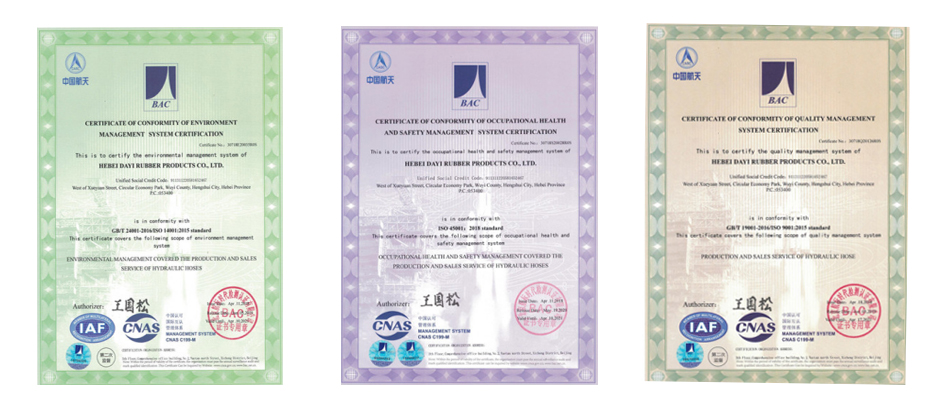
A: These standards define minimum performance requirements for hydraulic hoses, including burst pressure, working pressure, temperature range, and dimensional tolerances. Manufacturers adhering to these standards undergo rigorous testing and quality control procedures, ensuring that their products meet specified criteria. Compliance offers assurance of reliability and safety.
Conclusion
High-pressure hydraulic hoses are engineered components demanding careful material selection, precise manufacturing control, and conscientious application. Understanding the interplay between material properties, performance parameters, and potential failure modes is critical for ensuring reliable operation and maximizing service life. The competitive landscape of manufacturers like china best price high pressure hydraulic hose manufacturer necessitates a thorough technical evaluation alongside price considerations.
Future advancements in hydraulic hose technology will likely focus on lightweight materials, improved fluid compatibility, and enhanced resistance to abrasion and extreme temperatures. Proactive maintenance, coupled with adherence to relevant industry standards, remains the most effective strategy for preventing failures and optimizing the lifespan of these essential components within complex hydraulic systems.