
Apr . 01, 2024 17:55 Back to list
china best price high pressure hydraulic hose factory Technical Analysis
Introduction
High-pressure hydraulic hoses are critical components in fluid power systems, transmitting hydraulic fluid to actuators and motors. China’s position as a leading manufacturer of these hoses is driven by competitive pricing and increasing technical capabilities. This guide provides an in-depth technical analysis of high-pressure hydraulic hoses originating from Chinese manufacturers, focusing on construction, performance characteristics, failure modes, and relevant industry standards. The core performance metrics of these hoses – burst pressure, working pressure, temperature range, and fluid compatibility – are central to their application across diverse industries including construction, agriculture, mining, and manufacturing. A key pain point within the industry revolves around ensuring consistent quality and adherence to international safety standards given the broad range of manufacturers. This guide aims to address these concerns through a detailed examination of the materials, manufacturing processes, and testing protocols.
Material Science & Manufacturing
High-pressure hydraulic hoses typically comprise four primary layers: the inner tube, reinforcement layers, the outer cover, and, sometimes, a bonding layer. The inner tube material is crucial for fluid compatibility and resistance to abrasion. Commonly used materials include synthetic rubbers like nitrile (NBR), chloroprene (CR), and ethylene propylene diene monomer (EPDM). NBR provides excellent oil resistance, CR offers good resistance to weathering and ozone, and EPDM excels in compatibility with phosphate ester fluids. The reinforcement layer provides the strength necessary to withstand high pressures. This is typically constructed from multiple braids of high-tensile steel wire. The number of braids, wire diameter, and braid angle directly influence the hose’s burst pressure. Outer covers are often made of abrasion and weather-resistant materials like polyurethane or a blend of synthetic rubbers. Bonding layers, when present, improve adhesion between the tube and reinforcement, enhancing overall hose integrity. Manufacturing involves extrusion of the inner tube and outer cover, followed by helical winding or braiding of the reinforcement layers. Critical parameters include extrusion temperature, curing time, braid tension, and the quality of the bonding agent. Precise control of these parameters is essential to achieving consistent mechanical properties and preventing premature failure. A common manufacturing defect is incomplete bonding, which can lead to separation of the layers under pressure.
Performance & Engineering
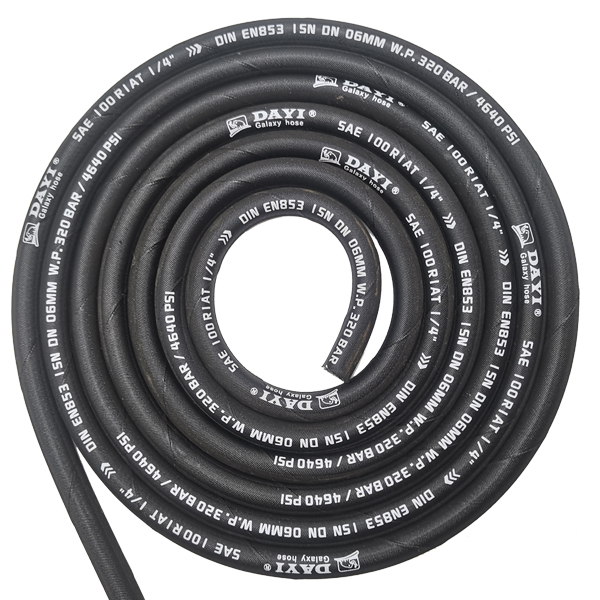
The performance of a hydraulic hose is dictated by its ability to withstand internal pressure, external loads, and environmental conditions. Burst pressure is the maximum pressure the hose can withstand before failure, typically specified as a multiple of the working pressure (safety factor). Working pressure is the recommended maximum operating pressure. Stress analysis, using finite element methods (FEM), is frequently employed to optimize hose construction and predict performance under various loading scenarios. Environmental resistance is a critical factor; exposure to UV radiation, ozone, extreme temperatures, and corrosive fluids can degrade hose materials over time. Hose end connections (fittings) are also a critical engineering consideration. Common fitting types include crimped, swaged, and field-attachable fittings. The integrity of the connection is paramount, as fitting failure is a common cause of hydraulic system breakdowns. Compliance with safety standards, such as SAE J517 and EN 853, is essential. These standards specify testing procedures and performance requirements for hydraulic hoses. Furthermore, dynamic performance – the hose's ability to withstand pulsations and vibrations – must be considered in applications like hydraulic hammers and pumps.
Technical Specifications
| Parameter | Unit | SAE 100R2 AT | SAE 100R6 |
|---|---|---|---|
| Working Pressure | MPa | 31.5 | 21.0 |
| Burst Pressure | MPa | 105 | 69 |
| Temperature Range | °C | -40 to +100 | -40 to +100 |
| Inner Tube Material | - | Synthetic Rubber (NBR) | Synthetic Rubber (NBR) |
| Reinforcement | - | Two Steel Wire Braids | Four Steel Wire Braids |
| Outer Cover Material | - | Synthetic Rubber (CRM) | Synthetic Rubber (CRM) |
Failure Mode & Maintenance
Hydraulic hose failure can manifest in several forms. Fatigue cracking, often initiated at the fitting interface, is a common failure mode resulting from repeated pressure cycles. Abrasion, caused by rubbing against other components, can wear through the outer cover and expose the reinforcement layers. Permeation, the diffusion of hydraulic fluid through the tube wall, can lead to fluid loss and reduced system efficiency. Delamination, the separation of layers, occurs due to inadequate bonding or excessive stress. Oxidation of the rubber materials can cause hardening and cracking, particularly at elevated temperatures. Kinking, caused by excessive bending, can restrict fluid flow and damage the reinforcement. Maintenance practices are crucial for extending hose life. Regular visual inspections should be conducted to identify signs of wear, damage, or leaks. Hoses should be replaced if they show any evidence of cracking, abrasion, swelling, or kinking. Correct routing and support are essential to prevent abrasion and kinking. Proper fitting selection and installation are also critical. Avoid over-tightening fittings, as this can damage the hose. Regular fluid analysis can help identify contaminants that can accelerate hose degradation.
Industry FAQ
Q: What is the significance of the steel wire braid count in a hydraulic hose?
A: The steel wire braid count directly correlates to the hose's pressure rating. A higher braid count provides greater reinforcement, enabling the hose to withstand higher pressures without bursting. Each additional braid layer increases the tensile strength and the hose's resistance to expansion under pressure.
Q: How does temperature affect the performance of a hydraulic hose?
A: Extreme temperatures, both high and low, can significantly impact hose performance. High temperatures can accelerate material degradation, reduce the hose’s flexibility, and decrease its burst pressure. Low temperatures can cause the rubber to harden, making the hose brittle and prone to cracking. Selecting a hose with a suitable temperature range for the application is crucial.
Q: What are the key differences between NBR and EPDM inner tube materials?
A: NBR (Nitrile Butadiene Rubber) offers excellent resistance to petroleum-based hydraulic fluids, making it ideal for general-purpose applications. EPDM (Ethylene Propylene Diene Monomer) provides superior resistance to heat, ozone, and weathering, and is particularly well-suited for applications involving phosphate ester fluids and outdoor exposure.
Q: How important is proper hose routing and support?
A: Proper hose routing and support are critical for preventing premature failure. Incorrect routing can cause abrasion, kinking, and excessive bending stress. Using hose supports and clamps ensures the hose is adequately secured and protected from external damage, extending its service life.
Q: What are the implications of using a hose with a lower working pressure than the system's operating pressure?
A: Using a hose with a lower working pressure than the system's operating pressure is extremely dangerous and can lead to catastrophic failure. The hose is at risk of bursting, resulting in fluid leaks, potential injury, and system downtime. Always ensure the hose's working pressure exceeds the maximum operating pressure of the hydraulic system.
Conclusion
The selection and maintenance of high-pressure hydraulic hoses are vital for the safe and efficient operation of any hydraulic system. Understanding the materials, manufacturing processes, and performance characteristics of these hoses, particularly those sourced from Chinese manufacturers, is crucial for procurement managers and engineers alike. Adhering to relevant industry standards, performing regular inspections, and implementing proper maintenance practices can significantly extend hose life and prevent costly failures.
The increasing sophistication of Chinese manufacturing capabilities presents a viable option for cost-effective hydraulic hose solutions. However, rigorous quality control and adherence to international standards remain paramount. Continuous monitoring of material properties, manufacturing parameters, and performance testing are essential to ensure consistent quality and reliability. Looking forward, advancements in hose materials and manufacturing techniques will focus on enhancing durability, reducing weight, and improving environmental resistance.