
Apr . 01, 2024 17:55 Back to list
china automatic crimping machine supplier Performance Analysis
Introduction
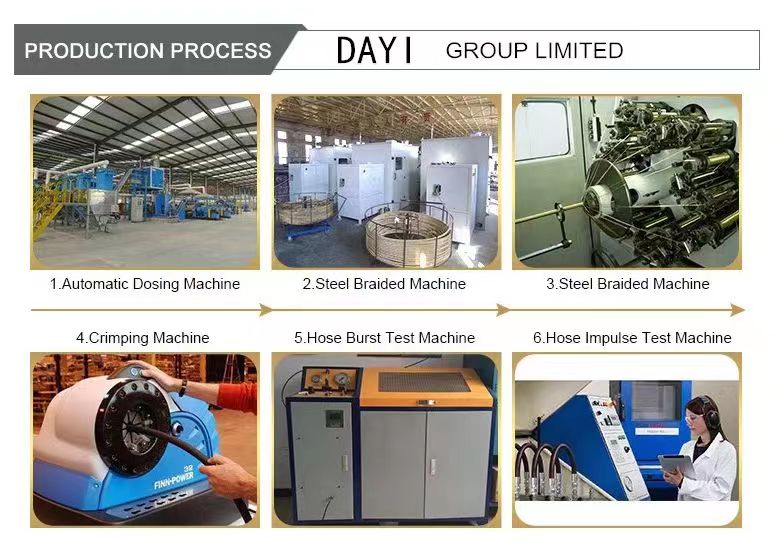
Automatic crimping machines, supplied globally by manufacturers in China, represent a critical component in the production of hose assemblies across a diverse range of industries including automotive, hydraulic systems, construction, and industrial equipment. These machines facilitate the secure attachment of fittings to hoses via radial compression, ensuring leak-proof and durable connections. The technical position of these machines lies between raw material processing (hose and fitting manufacture) and final product assembly. Core performance indicators focus on crimp diameter accuracy, crimp force consistency, cycle time, and long-term reliability. The industry faces increasing pressure to reduce labor costs, enhance production throughput, and maintain stringent quality control, making automated crimping solutions increasingly essential. Failure to achieve optimal crimping can result in catastrophic hose assembly failure, leading to significant safety risks and financial losses. This guide provides a comprehensive technical overview of automatic crimping machines, encompassing material science, manufacturing processes, performance characteristics, potential failure modes, and relevant industry standards.
Material Science & Manufacturing
The construction of an automatic crimping machine relies heavily on robust material science principles. Machine frames are typically constructed from high-strength steel alloys (e.g., AISI 1045, S355J2) chosen for their yield strength and resistance to deformation under high loads. These alloys undergo heat treatment processes such as quenching and tempering to optimize hardness and toughness. Crimping dies, the core components responsible for compression, are manufactured from tool steels (e.g., D2, H13) renowned for their wear resistance and ability to withstand repeated impact forces. Die manufacturing typically involves CNC machining, electrical discharge machining (EDM), and precision grinding to achieve exacting dimensional tolerances. The hydraulic systems, crucial for providing the necessary crimping force, utilize hydraulic fluids based on mineral oils with additives to enhance viscosity, lubricity, and corrosion inhibition. The hoses being crimped exhibit diverse material properties; rubber compounds (EPDM, nitrile, fluorocarbon) are often reinforced with textile or wire braiding, influencing crimp force requirements. Fittings are generally constructed from brass, stainless steel, or carbon steel, with surface treatments (e.g., zinc plating, passivation) employed to prevent corrosion. Manufacturing involves precise forging, machining, and thread rolling. Key parameter control during machine construction includes weld integrity (for frame components), die hardness (verified via Rockwell testing), hydraulic fluid cleanliness (measured by ISO 4406), and alignment accuracy of moving parts (validated using laser tracking systems).
Performance & Engineering
The performance of an automatic crimping machine is heavily influenced by force analysis, environmental resistance, and adherence to relevant compliance standards. Force analysis involves calculating the required crimping force based on hose diameter, fitting material, and desired crimp percentage. Finite element analysis (FEA) is routinely used to simulate stress distribution within the crimp assembly, optimizing die geometry and minimizing stress concentrations. Environmental resistance is critical, particularly in harsh industrial environments. Machines are often sealed to protect against dust, moisture, and corrosive chemicals, employing IP65 or higher ingress protection ratings. Temperature fluctuations can affect hydraulic fluid viscosity and machine component dimensions, requiring temperature compensation mechanisms. Compliance requirements vary depending on the target industry. Automotive applications demand compliance with IATF 16949, focusing on quality management systems. Hydraulic systems require adherence to ISO 6020 for hose and fitting assemblies. Safety standards (e.g., EN ISO 13849-1) govern machine guarding and emergency stop functionality. Functional implementation relies on programmable logic controllers (PLCs) to orchestrate the crimping cycle, incorporating sensors for position feedback, force monitoring, and leak detection. Precise synchronization between the die movement, hydraulic pressure, and sensor readings is paramount to achieving consistent and reliable crimps.
Technical Specifications
| Parameter | Typical Range (China Supplier Machines) | Units | Testing Standard |
|---|---|---|---|
| Hose Diameter Capacity | 6 - 51 | mm | ISO 3864 |
| Crimping Force | 200 - 1200 | kN | ASTM F978 |
| Cycle Time | 3 - 15 | seconds | Internal Measurement |
| Die Angle | 15 - 30 | degrees | Customer Specification |
| Power Supply | 380-415 / 220-240 | V | IEC 60038 |
| Machine Weight | 800 - 3000 | kg | Internal Measurement |
Failure Mode & Maintenance
Automatic crimping machines are susceptible to several failure modes. Fatigue cracking in the machine frame, particularly around weld joints, can occur due to repeated stress cycles. Die wear, manifested as pitting or chipping, reduces crimp quality and dimensional accuracy. Hydraulic system failures, including pump cavitation, valve leakage, and cylinder seal degradation, diminish crimping force and cycle time. Electrical component failures, such as PLC malfunctions or sensor drift, disrupt automated operation. Hose and fitting mismatch, or improper die selection, can lead to over-crimping or under-crimping, compromising assembly integrity. Preventative maintenance is crucial. Regular lubrication of moving parts minimizes friction and wear. Hydraulic fluid should be monitored for contamination and replaced according to manufacturer recommendations (typically every 6-12 months). Die inspection (visual and dimensional) should be performed regularly, with damaged dies replaced or refurbished. Electrical connections should be checked for tightness and corrosion. PLC software should be backed up periodically. Failure analysis techniques, including fractography (examining fracture surfaces) and oil analysis, can pinpoint root causes of failures and inform corrective actions. Proper operator training and adherence to safety protocols are essential to prevent accidental damage and ensure machine longevity.
Industry FAQ
Q: What level of crimp force variation is acceptable in a high-pressure hydraulic hose assembly?
A: For high-pressure hydraulic hose assemblies, crimp force variation should typically be within ±5% of the target value. Significant deviations can compromise the hose’s burst pressure rating and lead to premature failure. Regular force calibration and die inspection are essential to maintain this level of accuracy, often utilizing calibrated load cells and statistical process control (SPC).
Q: How do different fitting materials (e.g., steel vs. brass) impact the required crimp parameters?
A: Steel fittings generally require higher crimp forces compared to brass fittings due to their greater hardness and yield strength. The die geometry and crimp cycle parameters must be adjusted accordingly to achieve a secure and leak-proof connection. Incorrect crimp settings can lead to fitting distortion or hose damage.
Q: What preventative measures can be taken to minimize hydraulic fluid contamination?
A: Implementing a robust filtration system is crucial. Use of high-efficiency filters (down to 3 microns or less) prevents the ingress of particulate matter. Regular fluid analysis identifies contaminants and guides maintenance decisions. Sealed reservoirs and proper breather caps prevent moisture and air contamination. Cleanliness during fluid handling and maintenance procedures is paramount.
Q: How does the die profile affect the final crimp shape and performance?
A: The die profile dictates the crimp shape – whether it's a single-flare, double-flare, or other configuration. An optimized die profile ensures uniform compression around the hose and fitting, maximizing contact area and minimizing stress concentrations. Incorrect die profiles can lead to localized deformation, reduced burst pressure, and potential leakage.
Q: What safety features are critical in an automatic crimping machine to prevent operator injury?
A: Critical safety features include light curtains or safety scanners to prevent operation when the guarding is compromised, emergency stop buttons readily accessible to the operator, and interlocked guards to prevent access to moving parts during the crimping cycle. Regular safety inspections and operator training are also essential components of a safe work environment.
Conclusion
China-supplied automatic crimping machines are indispensable for high-volume hose assembly production, offering significant advantages in terms of efficiency, consistency, and quality control. Understanding the underlying material science, manufacturing processes, and performance parameters is crucial for selecting the appropriate machine and optimizing its operation. Attention to preventative maintenance, regular calibration, and adherence to relevant industry standards are paramount to ensuring long-term reliability and minimizing the risk of catastrophic failure.
Future developments in crimping technology are likely to focus on increased automation, incorporating advanced sensor technologies for real-time process monitoring and control, and integrating machine learning algorithms to optimize crimp parameters based on hose and fitting characteristics. The trend towards Industry 4.0 principles – including data analytics and remote diagnostics – will further enhance the performance and productivity of these essential manufacturing machines.

