
Apr . 01, 2024 17:55 Back to list
china 8mm air hose suppliers Technical Performance Analysis
Introduction
8mm air hoses are a ubiquitous component in pneumatic systems across a broad spectrum of industrial applications, ranging from automotive repair and construction to manufacturing and material handling. China has emerged as a dominant global supplier of these hoses, offering a diverse range of products catering to varying performance requirements and price points. This guide provides an in-depth technical overview of 8mm air hoses sourced from China, detailing material science, manufacturing processes, performance characteristics, potential failure modes, and relevant industry standards. The core performance aspects of these hoses revolve around burst pressure, working pressure, flexibility, abrasion resistance, and resistance to environmental factors such as temperature and oil exposure. Understanding these factors is critical for ensuring safe and efficient operation in demanding industrial environments. A key industry pain point is the variability in quality control amongst Chinese suppliers, necessitating rigorous technical assessment by procurement professionals.
Material Science & Manufacturing
The core material for 8mm air hoses is typically a synthetic rubber compound, with Polyvinyl Chloride (PVC) and Thermoplastic Polyurethane (TPU) also commonly employed depending on the desired performance characteristics. PVC offers cost-effectiveness and good resistance to abrasion, but generally exhibits lower flexibility and temperature tolerance. TPU provides superior flexibility, kink resistance, and abrasion resistance, performing well across a wider temperature range but at a higher cost. The rubber compounds themselves are often blends of various polymers, including Styrene-Butadiene Rubber (SBR), Nitrile Rubber (NBR), and Ethylene Propylene Diene Monomer (EPDM). NBR is favored for its oil resistance, crucial in applications where exposure to lubricants is common. EPDM excels in outdoor applications due to its excellent ozone and weathering resistance. Reinforcement is critical for maintaining burst strength. Commonly, a high-tensile strength polyester or nylon braid is embedded within the rubber matrix during the extrusion process.
Manufacturing typically involves an extrusion process. Raw rubber compounds, along with reinforcing fibers, are fed into an extruder, which forces the material through a die to form a continuous tube. The diameter is precisely controlled to achieve the 8mm internal diameter specification. Following extrusion, the hose is cured, a process involving heat and pressure to vulcanize the rubber, permanently setting its shape and enhancing its mechanical properties. Quality control at this stage is paramount, focusing on dimensional accuracy, cure consistency, and the absence of defects. The hose is then typically fitted with crimped fittings (e.g., brass or steel) for connection to pneumatic tools and systems. Critical parameters during manufacturing include extrusion temperature, curing time and temperature, braid tension, and fitting crimp force. Variations in these parameters directly impact the final product’s performance and reliability.
Performance & Engineering
The performance of an 8mm air hose is dictated by several engineering considerations. Burst pressure, the maximum pressure the hose can withstand before failure, is a critical safety parameter. Working pressure, significantly lower than burst pressure, defines the safe operating limit. Flexibility, quantified by bend radius, impacts ease of use and maneuverability. Abrasion resistance is vital in harsh environments where the hose is subjected to rubbing against rough surfaces. Environmental resistance, encompassing temperature range and chemical compatibility, ensures longevity and prevents degradation. The hose’s ability to maintain its integrity under repeated flexing and pressure cycling is also crucial, relating to fatigue life.
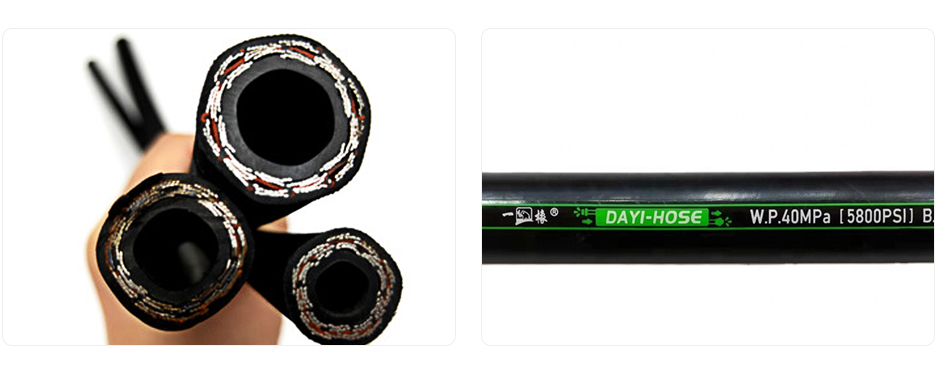
Force analysis involves understanding the tensile stresses within the hose wall during pressurization. The reinforcement braid plays a key role in resisting these stresses, preventing expansion and potential rupture. Finite Element Analysis (FEA) is increasingly used by reputable manufacturers to optimize hose design and predict performance under various load conditions. Compliance requirements vary by region. In Europe, the Pressure Equipment Directive (PED) may apply depending on the intended application and working pressure. In the US, relevant standards are established by organizations like the Rubber Manufacturers Association (RMA). Functional implementation requires careful consideration of fitting compatibility and proper hose routing to avoid kinking or excessive bending, which can compromise performance and shorten the hose's lifespan.
Technical Specifications
| Parameter | Typical Value (PVC Hose) | Typical Value (TPU Hose) | Typical Value (Rubber/Nylon Braid Hose) |
|---|---|---|---|
| Internal Diameter | 8.0 mm ± 0.2 mm | 8.0 mm ± 0.2 mm | 8.0 mm ± 0.1 mm |
| Working Pressure | 300 PSI (2.07 MPa) | 400 PSI (2.76 MPa) | 350 PSI (2.41 MPa) |
| Burst Pressure | 900 PSI (6.21 MPa) | 1200 PSI (8.27 MPa) | 1050 PSI (7.24 MPa) |
| Tensile Strength | 15 MPa | 25 MPa | 20 MPa |
| Elongation at Break | 300% | 400% | 350% |
| Temperature Range | -10°C to +60°C | -40°C to +80°C | -20°C to +70°C |
Failure Mode & Maintenance
Common failure modes for 8mm air hoses include burst failure due to exceeding working pressure, fatigue cracking from repeated flexing, abrasion damage from contact with rough surfaces, and degradation from exposure to UV light, ozone, or chemicals. Kinking can also lead to localized stress concentrations and eventual failure. Delamination, the separation of the rubber matrix from the reinforcement braid, is a serious defect that significantly reduces burst strength. Oxidation of the rubber compound, particularly in EPDM hoses, can lead to brittleness and cracking over time.
Preventative maintenance is crucial for extending hose lifespan. Regular visual inspection for cuts, abrasions, kinks, and signs of degradation is essential. Hoses should be replaced immediately if any damage is detected. Avoid exceeding the working pressure and ensure proper hose routing to minimize stress. Store hoses in a cool, dry, and dark location away from direct sunlight and ozone sources. Clean hoses regularly with mild soap and water to remove dirt and contaminants. For hoses exposed to oils or chemicals, consult the manufacturer’s chemical compatibility chart to ensure appropriate material selection and avoid premature degradation. Implement a hose replacement schedule based on usage frequency and environmental conditions.
Industry FAQ
Q: What is the typical lifespan of an 8mm air hose used in a standard automotive workshop environment?
A: The typical lifespan of an 8mm air hose in an automotive workshop environment is between 1-3 years, depending on usage frequency, exposure to oils and solvents, and the quality of the hose. Regular inspection and replacement are critical for safety and efficiency.
Q: How does the reinforcement braid material (polyester vs. nylon) affect burst pressure and kink resistance?
A: Nylon braids generally offer higher tensile strength and thus contribute to higher burst pressure ratings compared to polyester braids. However, polyester braids exhibit better kink resistance due to their higher elasticity.
Q: What are the key differences between PVC and TPU hoses in terms of chemical resistance?
A: PVC offers good resistance to many common chemicals, but is susceptible to attack by strong acids and alkalis. TPU exhibits broader chemical resistance, particularly to oils, fuels, and solvents, making it suitable for more demanding applications.
Q: What testing procedures are used to verify the burst pressure of an 8mm air hose?
A: Burst pressure testing typically involves slowly increasing the internal pressure of the hose until it fails. This is conducted in a controlled environment, and the pressure at failure is recorded. Hydraulic testing is common, but pneumatic testing is also used, with appropriate safety precautions.
Q: What certifications should I look for when sourcing 8mm air hoses from Chinese suppliers?
A: Look for suppliers with ISO 9001 certification (quality management system) and potentially certifications specific to pressure equipment, depending on the intended application (e.g., CE marking for European markets). Request testing reports verifying compliance with relevant standards.
Conclusion
8mm air hoses sourced from China offer a cost-effective solution for pneumatic applications, but careful consideration of material selection, manufacturing quality, and performance characteristics is paramount. Understanding the interplay between rubber compound, reinforcement braid, and environmental factors is critical for ensuring safe and reliable operation. Prioritizing hoses with documented testing data and certifications from reputable suppliers mitigates the risk of premature failure and ensures long-term performance.
The increasing demands for higher performance and durability are driving innovation in hose technology. Future developments are likely to focus on advanced materials with improved abrasion resistance, chemical compatibility, and temperature tolerance. Furthermore, advancements in manufacturing processes, such as precision extrusion and automated braiding, will contribute to greater consistency and reliability. Procurement professionals must remain informed about these developments to optimize their sourcing strategies and select the most appropriate hoses for their specific applications.