
Apr . 01, 2024 17:55 Back to list
china 5/8 hydraulic hose factories Performance Analysis
Introduction
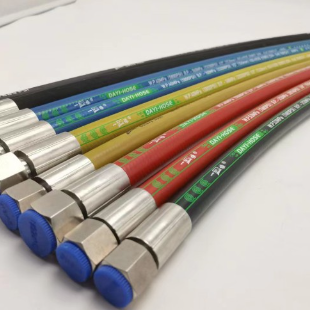
5/8 inch hydraulic hose, a common size in industrial and mobile hydraulic systems, represents a critical component for fluid power transmission. China has become a dominant manufacturing hub for these hoses, supplying a significant portion of the global demand. This guide provides a comprehensive technical overview of 5/8 hydraulic hose production within Chinese factories, focusing on material science, manufacturing processes, performance characteristics, failure modes, and relevant industry standards. The core performance parameters include pressure rating, burst pressure, temperature range, and fluid compatibility. Understanding these aspects is crucial for procurement managers and engineers aiming for reliable and cost-effective sourcing. The increasing demand necessitates a detailed examination of quality control and potential risks associated with various manufacturing approaches prevalent within the Chinese industry.
Material Science & Manufacturing
The construction of a 5/8 hydraulic hose typically involves four key layers: the inner tube, reinforcement layers, outer cover, and sometimes an intermediate adhesion layer. The inner tube is commonly composed of synthetic rubbers like nitrile (NBR) due to its excellent oil resistance, though other materials like chloroprene (CR) or fluorocarbon (FKM/Viton) are used for specialized applications requiring higher temperature or chemical resistance. NBR’s tensile strength typically ranges from 15-25 MPa. Reinforcement is primarily provided by multiple layers of high-tensile steel wire, often spiral-wound. Wire diameters vary (typically 0.4-0.8mm) influencing pressure capabilities. The outer cover, typically made of chloroprene (CR), provides abrasion and weather resistance, with a tensile strength of 10-18 MPa. The adhesion layer, often a woven fabric coated with a suitable adhesive, ensures bonding between layers.
Manufacturing processes begin with rubber compounding, where raw rubber is mixed with additives like carbon black (for reinforcement and UV protection), plasticizers (to enhance flexibility), antioxidants, and curing agents. The inner tube is extruded through a die, followed by winding of the steel wire reinforcement. Precise tension control during winding is critical to ensure uniform pressure resistance. The outer cover is then extruded over the reinforcement layer. Curing (vulcanization) is a heat-driven process transforming the raw rubber into a durable, elastic material. Key parameters include temperature (140-180°C) and time (20-60 minutes). Quality control involves dimensional checks, pressure testing (hydrostatic testing at 1.5x working pressure), and visual inspection for defects. Chinese factories frequently utilize automated extrusion and winding lines for efficiency, but variations in quality control procedures can significantly affect product reliability. Specific attention must be paid to the batch-to-batch consistency of rubber compounds and the integrity of steel wire winding.
Performance & Engineering
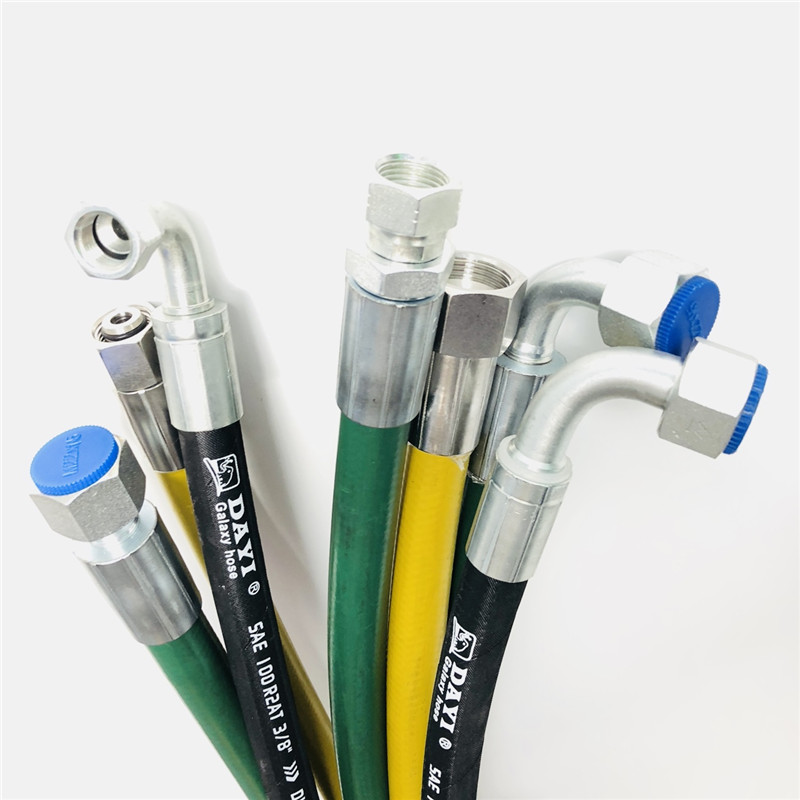
The performance of a 5/8 hydraulic hose is defined by its ability to withstand internal pressure, external damage, and environmental factors. Force analysis focuses on hoop stress within the hose wall due to internal pressure. This stress is directly proportional to the internal pressure and the hose’s radius, inversely proportional to the wall thickness. Burst pressure is a critical specification, typically 4-6 times the working pressure. Temperature resistance is crucial; NBR typically operates between -40°C and 100°C, while FKM can withstand up to 200°C. Fluid compatibility is paramount; using the wrong hose material with an incompatible fluid can cause swelling, degradation, and ultimately, failure.
Engineering considerations also include bend radius; exceeding the minimum bend radius can induce stress concentrations and lead to cracking. Hose assemblies require proper end fitting crimping to ensure a leak-proof seal. Crimping pressure must be precisely controlled based on the hose and fitting materials. Compliance requirements, dictated by standards like SAE J517 and EN 853, define performance criteria and testing procedures. The susceptibility to abrasion and ozone cracking must also be considered, particularly in outdoor applications. Fatigue life, determined through cyclical pressure testing, is an important parameter for mobile applications where hoses are subject to constant flexing and vibration. Chinese manufacturers' adherence to these standards varies, necessitating thorough supplier vetting and independent testing.
Technical Specifications
| Parameter | Unit | SAE J517 (Typical) | EN 853 (Typical) |
|---|---|---|---|
| Inner Diameter | inches | 5/8 | 5/8 |
| Working Pressure | psi | 2000-4000 | 140-280 bar (2030-4060 psi) |
| Burst Pressure | psi | 6000-12000 | 420-840 bar (6090-12180 psi) |
| Temperature Range | °C | -40 to +100 | -40 to +100 |
| Reinforcement Type | - | Steel Wire Spiral | Steel Wire Spiral |
| Cover Material | - | Chloroprene (CR) | Chloroprene (CR) |
Failure Mode & Maintenance
Common failure modes in 5/8 hydraulic hoses include burst failure due to exceeding pressure limits, pinhole leaks caused by internal corrosion or damage, and cracking due to fatigue, ozone exposure, or abrasion. Fatigue cracking typically initiates at points of high stress concentration, such as near fittings or at bends. Delamination, the separation of layers, can occur due to inadequate adhesion or exposure to incompatible fluids. Oxidation of the rubber material leads to hardening and reduced flexibility, increasing the risk of cracking.
Preventative maintenance involves regular visual inspections for signs of damage (cracks, abrasions, swelling) and leak checks. Proper hose routing and support are crucial to prevent excessive bending and abrasion. Avoid sharp bends and direct contact with hot surfaces. Ensure that the hydraulic fluid is clean and free of contaminants. If a hose shows signs of damage, it should be replaced immediately. Crimped fittings should be inspected for proper engagement and tightness. Chinese-manufactured hoses, particularly those sourced from less reputable suppliers, may exhibit accelerated degradation due to inconsistent material quality or inadequate curing. Therefore, rigorous quality control and proactive maintenance are essential for maximizing service life and preventing catastrophic failures.
Industry FAQ
Q: What are the key differences in quality between a Tier 1 and Tier 3 Chinese hydraulic hose manufacturer?
A: Tier 1 manufacturers invest heavily in R&D, employ stringent quality control systems (including full traceability of materials), and typically hold certifications like ISO 9001 and IATF 16949. They often utilize advanced testing equipment and have established relationships with reputable raw material suppliers. Tier 3 manufacturers prioritize cost reduction, often resulting in inconsistent material quality, less rigorous testing, and potential issues with dimensional accuracy. Traceability may be limited, and adherence to international standards may be questionable.
Q: How do I verify the actual burst pressure of a hose claimed by a Chinese supplier?
A: Independent hydrostatic testing is crucial. Send samples to a certified testing laboratory (e.g., one accredited to ISO 17025) for verification. Request a detailed test report, including the test procedure and results. Be wary of suppliers who are unwilling to provide samples for testing.
Q: What is the impact of using incorrect hydraulic fluid on the lifespan of a hydraulic hose?
A: Incorrect fluid can cause swelling, softening, or hardening of the inner tube material, leading to leaks or cracking. Certain fluids can also attack the reinforcement layers, reducing the hose's pressure capacity. Always consult the hose manufacturer's compatibility chart to ensure the fluid is suitable for the hose material.
Q: What are the typical lead times for custom-configured hydraulic hose assemblies from Chinese factories?
A: Lead times vary depending on the complexity of the assembly, the quantity ordered, and the supplier's current workload. Typically, standard assemblies have a lead time of 2-4 weeks, while custom assemblies can take 4-8 weeks or longer. Factor in additional time for shipping and customs clearance.
Q: What should I look for in a crimping procedure to ensure a reliable hose assembly?
A: The crimping process must be precisely controlled to create a secure, leak-proof seal without damaging the hose. The correct die size and crimping pressure must be used, based on the hose and fitting specifications. Visual inspection of the crimped assembly should reveal a uniform crimp with no gaps or distortions. Hydrostatic testing of the assembled hose is recommended to verify the integrity of the connection.
Conclusion
The Chinese hydraulic hose manufacturing sector offers competitive pricing and a high production capacity. However, significant variations in quality exist among manufacturers. Understanding the material science, manufacturing processes, and potential failure modes is essential for procurement professionals. Prioritizing suppliers with robust quality control systems, independent testing, and adherence to international standards is crucial for ensuring the reliability and longevity of hydraulic hose assemblies.
Moving forward, increased adoption of Industry 4.0 technologies within Chinese factories will likely lead to improved process control and traceability. The demand for specialized hoses with enhanced temperature and chemical resistance will drive innovation in rubber compounding and reinforcement materials. Continued due diligence, coupled with proactive maintenance practices, will remain paramount for mitigating risks and maximizing the performance of 5/8 hydraulic hoses sourced from China.