
Apr . 01, 2024 17:55 Back to list
china 19mm hydraulic hose manufacturer Performance Analysis

Introduction
19mm (¾ inch) hydraulic hose represents a critical component in fluid power systems across a diverse range of industries, including construction, agriculture, manufacturing, and automotive. China has emerged as a significant global manufacturer of these hoses, offering competitive pricing and increasing quality standards. This technical guide provides an in-depth analysis of 19mm hydraulic hose, covering material science, manufacturing processes, performance characteristics, failure modes, and relevant industry standards. The focus will be on the technical aspects impacting reliability and longevity, addressing the core concerns of B2B procurement and engineering professionals. Core performance revolves around withstanding high pressures, resisting abrasion, maintaining flexibility at varying temperatures, and ensuring fluid compatibility. The internal construction, comprised of a reinforced carcass and compatible cover, dictates these capabilities, and consistent quality control is paramount in preventing system failures.
Material Science & Manufacturing
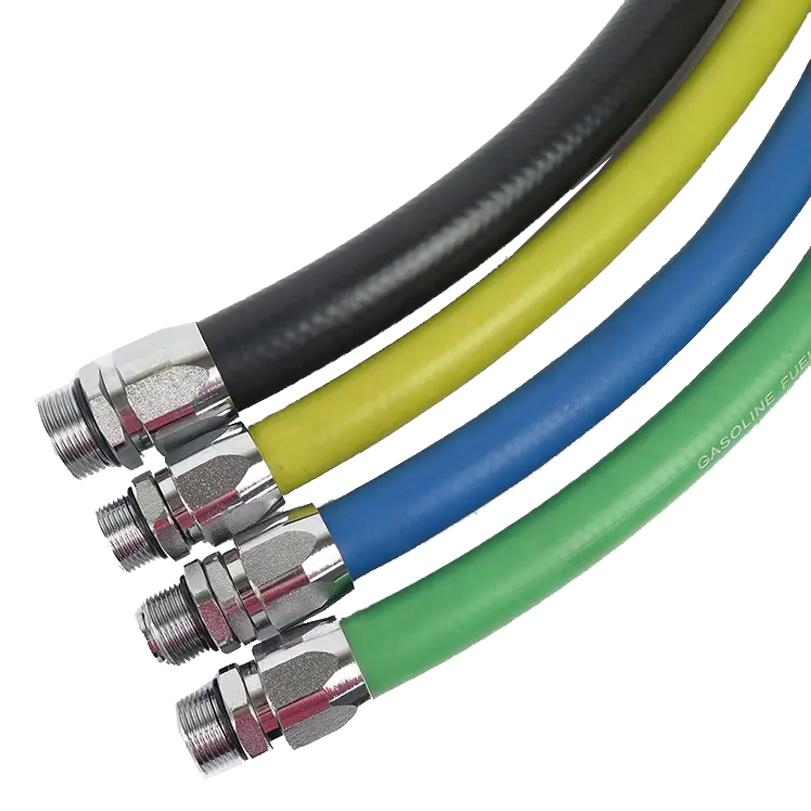
The foundation of a reliable 19mm hydraulic hose lies in the selection and processing of its constituent materials. The inner tube typically comprises oil-resistant synthetic rubber compounds, primarily Nitrile Butadiene Rubber (NBR) or Ethylene Propylene Diene Monomer (EPDM) rubber. NBR offers excellent resistance to petroleum-based fluids, while EPDM excels with phosphate ester-based hydraulic fluids and exhibits superior heat and ozone resistance. The reinforcement layer is critical for pressure containment. Common materials include high-tensile steel wire (single or multiple spiral layers) or synthetic fiber braids (e.g., polyester, aramid). Steel wire provides higher pressure ratings and robust resistance to kinking, but can add weight and reduce flexibility. Fiber braids offer flexibility but have lower pressure capabilities. The outer cover is generally composed of Chloroprene Rubber (CR) offering abrasion, weathering, and ozone resistance. Manufacturing involves several key processes. The inner tube is extruded, followed by the application of the reinforcement layer—either by spiraling steel wire or braiding synthetic fibers. The outer cover is then extruded over the reinforcement. Critical parameters include maintaining consistent rubber compound viscosity, precise wire tension during winding or braid density, and accurate temperature control during vulcanization (curing). Post-production testing encompasses hydrostatic pressure testing, impulse testing, and dimensional checks. A key pain point is consistent batch-to-batch material property variance, which necessitates stringent quality control procedures throughout the manufacturing process.
Performance & Engineering
The performance of a 19mm hydraulic hose is defined by its ability to safely transmit fluid under pressure while withstanding environmental stresses. Force analysis considers burst pressure, working pressure (typically 50-70% of burst pressure), and impulse pressure (cyclic pressure spikes). The hose must demonstrate sufficient tensile strength to resist pull-out forces at the fittings. Environmental resistance is crucial. Exposure to extreme temperatures (ranging from -40°C to +100°C, depending on the rubber compounds) can affect flexibility and pressure ratings. Exposure to UV radiation and ozone causes degradation of the outer cover, leading to cracking and reduced protection. Fluid compatibility is another key consideration; incompatible fluids can cause swelling, softening, or degradation of the inner tube, leading to leaks and failure. Compliance requirements vary by region but generally align with SAE J517, EN 853, and DIN EN 489 standards, dictating pressure ratings, testing procedures, and material specifications. Engineering considerations also include bend radius—excessive bending can induce stress on the reinforcement layer, leading to fatigue failure. Proper hose assembly with compatible fittings is critical; incorrect crimping can compromise the connection and result in leaks or catastrophic failure. A common industry challenge is balancing flexibility with pressure capacity; achieving both requires precise material selection and optimized construction techniques.
Technical Specifications
| Parameter | Unit | NBR Rubber, Steel Wire Reinforcement | EPDM Rubber, Steel Wire Reinforcement |
|---|---|---|---|
| Inner Diameter | mm | 19.0 ± 0.3 | 19.0 ± 0.3 |
| Outer Diameter | mm | 31.0 ± 0.5 | 32.0 ± 0.5 |
| Working Pressure | MPa | 25.0 | 20.0 |
| Burst Pressure | MPa | 75.0 | 60.0 |
| Temperature Range | °C | -40 to +100 | -40 to +120 |
| Minimum Bend Radius | mm | 170 | 180 |
| Reinforcement Type | - | Single Steel Wire Spiral | Single Steel Wire Spiral |
Failure Mode & Maintenance
Failure modes in 19mm hydraulic hose are multifaceted. Fatigue cracking, initiated by repeated bending and pressure cycling, is a common occurrence, particularly near fittings. Delamination, the separation of the reinforcement layer from the inner tube or outer cover, often results from improper vulcanization or material incompatibility. Abrasion, caused by external contact with abrasive surfaces, degrades the outer cover, exposing the reinforcement layer to corrosion. Oxidation, particularly in the presence of heat and oxygen, degrades rubber compounds, reducing flexibility and increasing brittleness. Chemical degradation occurs when incompatible fluids attack the rubber materials. Pinholes in the inner tube can result from defects in the extrusion process or damage from internal corrosion. Maintenance practices are crucial to extending hose life. Regular visual inspections should identify signs of abrasion, cracking, swelling, or leaks. Hose assemblies should be inspected for proper crimping and fitting integrity. Fluid cleanliness is paramount; contaminants can accelerate wear and damage the inner tube. Avoid exceeding the specified working pressure or bending the hose beyond its minimum bend radius. Replace hoses at regular intervals, even if no visible damage is apparent, based on the severity of the application and operating conditions. Proper storage—protected from UV radiation, ozone, and extreme temperatures—is essential to prevent premature degradation.
Industry FAQ
Q: What is the significance of impulse testing, and what constitutes a passing result?
A: Impulse testing simulates the effects of pressure pulsations commonly found in hydraulic systems, such as those generated by pumps or valves. It assesses the hose's ability to withstand repeated pressure spikes without failure. A passing result typically requires the hose to withstand a specified number of impulse cycles (e.g., 100,000 cycles) at a defined amplitude and frequency without exhibiting any signs of leakage, rupture, or significant degradation of its performance characteristics. The specific criteria are defined by standards like SAE J517.
Q: How does the choice of fitting material affect the overall lifespan of the hose assembly?
A: Fitting material compatibility is critical. Carbon steel fittings are common, but can corrode in certain environments. Stainless steel offers superior corrosion resistance, particularly in applications involving exposure to harsh chemicals or saltwater. The crimping process itself must be appropriate for the hose and fitting materials; improper crimping can create stress concentrations and lead to premature failure. Galvanic corrosion, occurring when dissimilar metals are in contact, can also be a concern and should be addressed with appropriate corrosion inhibitors or insulating materials.
Q: What are the key considerations when selecting a hose for phosphate ester-based hydraulic fluids?
A: Phosphate ester fluids are incompatible with many standard rubber compounds, particularly those containing nitrile rubber. EPDM rubber is the preferred material for phosphate ester applications due to its inherent resistance to these fluids. Additionally, the fittings must be compatible with phosphate esters to prevent corrosion and degradation. Careful consideration should be given to the fluid’s operating temperature, as elevated temperatures can accelerate degradation.
Q: How can we identify potential issues with a hose due to overexposure to ozone?
A: Ozone cracking manifests as small, hairline cracks on the outer surface of the rubber cover, typically perpendicular to the direction of stress. The affected area may appear chalky or discolored. Early detection is crucial. Regularly inspect hoses exposed to ozone-rich environments (e.g., near electrical equipment) for these signs of degradation. Using an ozone-resistant rubber compound (e.g., CR or EPDM) in the outer cover can significantly mitigate this issue.
Q: What role does hose layline marking play in traceability and quality control?
A: Hose layline marking provides critical traceability information, typically including the manufacturer’s name, hose type, working pressure, date of manufacture, and compliance standards. This information allows for tracking the hose’s origin and verifying its compliance with relevant specifications. In the event of a failure, the layline marking aids in identifying potential manufacturing defects or material issues. It is an essential component of a comprehensive quality control system.
Conclusion
The selection and implementation of 19mm hydraulic hose require a thorough understanding of material science, manufacturing processes, and performance parameters. China’s role as a key manufacturer presents both opportunities and challenges; rigorous quality control and adherence to international standards are essential to ensure product reliability. The appropriate choice of rubber compounds, reinforcement materials, and fitting types, coupled with proper installation and maintenance, are crucial for maximizing hose lifespan and preventing costly system failures.
Looking ahead, advancements in rubber technology and hose construction techniques will likely focus on enhancing pressure capacity, reducing weight, improving flexibility, and increasing resistance to harsh environments. Furthermore, the integration of sensor technologies into hydraulic hoses will enable real-time monitoring of pressure, temperature, and strain, providing valuable data for predictive maintenance and system optimization. Continued collaboration between manufacturers, engineers, and procurement professionals is vital to driving innovation and ensuring the continued safety and efficiency of hydraulic power systems.