
Apr . 01, 2024 17:55 Back to list
china 16mm hydraulic hose supplier Performance Analysis
Introduction
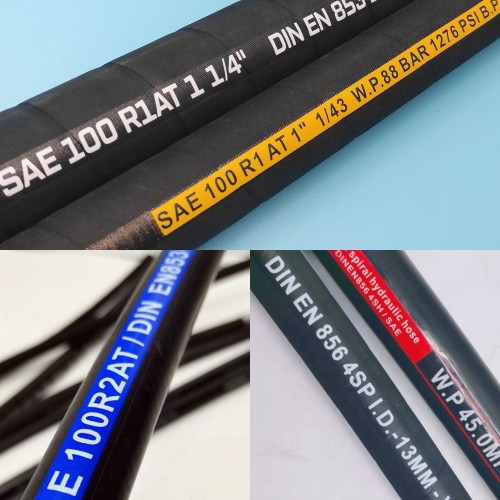
Hydraulic hoses, specifically those with a 16mm inner diameter supplied from China, represent a critical component in fluid power systems across diverse industries including construction, agriculture, manufacturing, and material handling. These hoses are designed to transmit hydraulic fluid under high pressure to facilitate the operation of hydraulic machinery. The Chinese supply base has become a significant global provider due to its manufacturing capacity, competitive pricing, and evolving quality standards. This guide provides an in-depth technical analysis of these 16mm hydraulic hoses, covering material science, manufacturing processes, performance characteristics, potential failure modes, and relevant industry standards. The core performance relies on burst pressure, working pressure, and resistance to hydraulic fluid degradation. A primary industry pain point is ensuring consistent quality control amidst a vast and varied supplier landscape, as well as verifying compliance with international safety and performance benchmarks. Selecting the correct hose for a specific application, considering fluid compatibility and operational temperature, is vital to prevent costly failures and downtime.
Material Science & Manufacturing
The construction of a 16mm hydraulic hose typically involves several layers, each contributing to its overall performance and durability. The innermost layer, the tube, is commonly manufactured from synthetic rubbers such as nitrile rubber (NBR), chloroprene rubber (CR, Neoprene), or ethylene propylene diene monomer (EPDM) rubber. NBR offers excellent resistance to petroleum-based hydraulic fluids, CR provides good weathering and ozone resistance, while EPDM excels in high-temperature applications and compatibility with phosphate ester fluids. The reinforcement layer is crucial for withstanding high pressure and preventing hose collapse. This layer traditionally comprises multiple plies of high-tensile steel wire, spirally wound or braided. The number and gauge of the wire plies directly correlate with the hose’s burst pressure rating. An outer cover, typically made of synthetic rubber such as polyurethane or polyester, protects the reinforcement layer from abrasion, weathering, and chemical attack. Manufacturing processes involve extrusion for the inner tube and outer cover, followed by wire winding or braiding for the reinforcement layer. Precise control of extrusion temperatures, wire tension, and curing times is essential. Curing, typically employing sulfur or peroxide-based systems, crosslinks the rubber polymers, enhancing their mechanical properties and chemical resistance. Quality control measures include dimensional checks, pressure testing (hydrostatic and impulse), and material composition analysis to ensure adherence to specifications.

Performance & Engineering
The performance of a 16mm hydraulic hose is dictated by several engineering factors. Burst pressure, defined as the pressure at which the hose fails catastrophically, is a primary specification. Working pressure, typically specified as a percentage (e.g., 70%) of the burst pressure, represents the maximum pressure for continuous operation. Hose flexibility, determined by bend radius, is critical for installation in confined spaces. Static and dynamic OIT (Oil Immersion Testing) are performed to assess the hose's resistance to swelling and degradation when exposed to hydraulic fluids at elevated temperatures. Impulse testing evaluates the hose's ability to withstand pressure pulsations without failure, a common occurrence in hydraulic systems. Environmental resistance, encompassing factors like ozone exposure, UV radiation, and temperature extremes, is also a key consideration. Finite element analysis (FEA) is frequently employed during the design phase to optimize the hose’s structural integrity and predict its behavior under various loading conditions. Compliance with industry standards like SAE J517 and EN 856 is mandatory. A critical design consideration is the hose end fitting compatibility – proper fitting selection and crimping procedures are vital for leak-free and secure connections, and improper crimping can lead to premature failure.
Technical Specifications
| Parameter | NBR Hose (Standard Grade) | EPDM Hose (High-Temperature) | Polyurethane Hose (Abrasion Resistant) | Reinforcement Type |
|---|---|---|---|---|
| Inner Diameter (mm) | 16 | 16 | 16 | Steel Wire Spiral |
| Working Pressure (MPa) | 20 | 25 | 30 | Steel Wire Braid (2-ply) |
| Burst Pressure (MPa) | 80 | 100 | 120 | Steel Wire Braid (4-ply) |
| Temperature Range (°C) | -40 to +100 | -50 to +150 | -40 to +80 | N/A |
| Fluid Compatibility | Petroleum-based fluids | Phosphate ester, water-glycol | Mineral oil, synthetic fluids | N/A |
| Outer Cover Material | Synthetic Rubber | Synthetic Rubber | Polyurethane | N/A |
Failure Mode & Maintenance
Hydraulic hose failure can manifest in several forms. Fatigue cracking, initiated by repeated pressure cycles and bending, is a common mode of failure, particularly in areas of high stress concentration. Abrasion, caused by external contact with abrasive surfaces, can compromise the outer cover, exposing the reinforcement layer. Oil permeation, the diffusion of hydraulic fluid through the hose tube, can lead to swelling and reduced performance. Corrosion, especially in marine or corrosive environments, can attack the steel reinforcement, weakening the hose. Improper installation, including incorrect fitting crimping and excessive bending, significantly increases the risk of failure. Maintenance procedures should include regular visual inspections for cuts, abrasions, bulges, and leaks. Pressure testing can identify hoses nearing the end of their service life. Proper storage, shielded from UV radiation and extreme temperatures, is crucial. When replacing a hose, it is essential to use fittings that are compatible with both the hose and the hydraulic system. Regular fluid analysis can identify contamination that can accelerate hose degradation. Avoid sharp bends and kinking during operation and storage to minimize stress on the hose.
Industry FAQ
Q: What is the significance of the hose "lay flat" diameter, and how does it affect system performance?
A: The “lay flat” diameter refers to the diameter of the hose when it is fully extended and unpressurized. A larger lay flat diameter indicates a less restrictive flow path, minimizing pressure drop and improving system efficiency. However, it also affects the hose’s ability to fit in confined spaces. The lay flat diameter should be considered in conjunction with the bend radius to ensure proper installation and operation.
Q: How does temperature affect the working life of a hydraulic hose?
A: Temperature significantly impacts the lifespan of a hydraulic hose. Elevated temperatures accelerate the degradation of the rubber compounds, reducing their elasticity and increasing the risk of cracking and permeation. Conversely, low temperatures can make the hose more brittle and susceptible to damage. Selecting a hose material with an appropriate temperature range for the application is critical.
Q: What are the common causes of hose fitting failure, and how can they be prevented?
A: Hose fitting failures are often caused by improper crimping, corrosion, or material incompatibility. Insufficient crimping can lead to leakage, while excessive crimping can damage the hose reinforcement. Corrosion can weaken the fitting material. Prevention involves using properly calibrated crimping tools, selecting corrosion-resistant fittings, and ensuring compatibility between the hose, fitting, and hydraulic fluid.
Q: What is the impact of hydraulic fluid type on hose selection?
A: Hydraulic fluid compatibility is paramount. Different fluids exhibit varying levels of chemical reactivity with hose materials. For example, phosphate ester fluids require EPDM hoses, while petroleum-based fluids are generally compatible with NBR. Using an incompatible fluid can cause the hose to swell, soften, or degrade, leading to premature failure.
Q: How important are impulse pressure ratings, and how are they tested?
A: Impulse pressure ratings are extremely important in systems with pulsating flows, such as those found in pumps and valves. Impulse testing involves subjecting the hose to repeated pressure spikes, simulating the dynamic loads encountered in real-world applications. A hose with a sufficient impulse pressure rating can withstand these fluctuations without failure.
Conclusion
The selection and implementation of 16mm hydraulic hoses sourced from China require a comprehensive understanding of material science, manufacturing processes, and performance characteristics. Ensuring compatibility with the hydraulic fluid, operating temperature, and pressure requirements is crucial for maximizing service life and minimizing the risk of failure. Proper installation techniques, including correct fitting crimping and bend radius control, are equally important. Addressing the industry pain points related to quality control and supplier reliability necessitates robust verification processes and adherence to international standards.
Continued advancements in hose materials and manufacturing technologies are driving improvements in performance and durability. Future trends include the development of lighter-weight hoses with enhanced abrasion resistance and the integration of smart sensors for real-time monitoring of hose condition. Ultimately, a proactive and informed approach to hydraulic hose management is essential for ensuring the safe and efficient operation of hydraulic systems.