
Apr . 01, 2024 17:55 Back to list
china 16mm hydraulic hose manufacturer Performance Analysis
Introduction
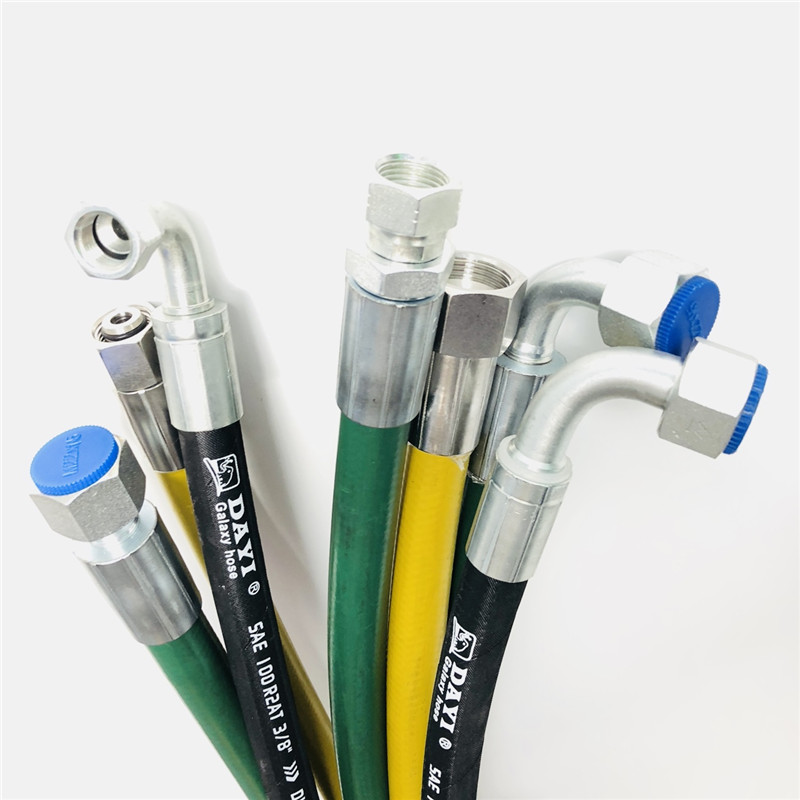
16mm hydraulic hose, produced by manufacturers in China, represents a critical component in fluid power systems across diverse industries including construction, agriculture, material handling, and manufacturing. These hoses are specifically engineered for the transmission of hydraulic fluid under high pressure, facilitating the operation of hydraulic machinery. The technical position of these hoses within the supply chain lies between the hydraulic pump/reservoir and the actuators (cylinders, motors), requiring stringent adherence to performance specifications and safety standards. Core performance characteristics of a 16mm hydraulic hose, as manufactured in China, are defined by its working pressure, burst pressure, temperature range, and fluid compatibility. These parameters are not simply marketing features, but fundamental engineering constraints defining operational reliability and longevity. The focus in recent years has shifted towards increasingly demanding operational environments requiring hoses capable of resisting abrasion, chemical attack, and extreme temperatures, driving continuous improvement in material science and manufacturing techniques.
Material Science & Manufacturing
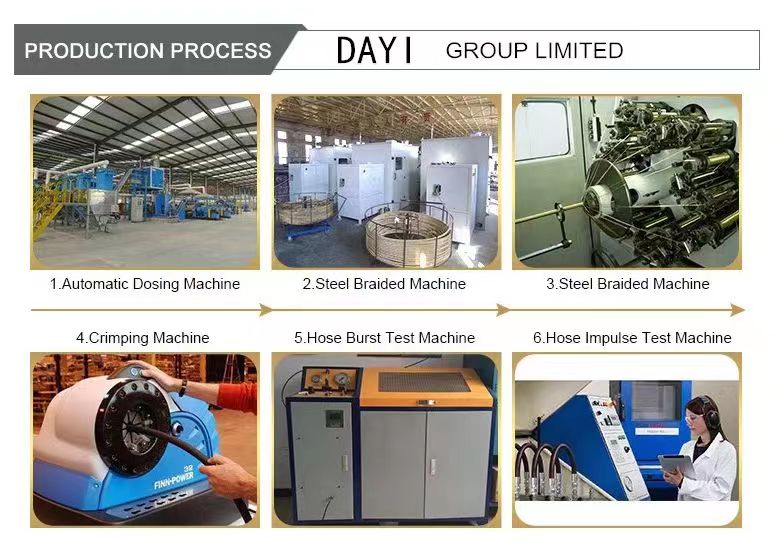
The construction of a 16mm hydraulic hose typically involves multiple layers, each contributing to its overall performance. The innermost layer, the tube, is usually composed of synthetic rubber compounds like nitrile rubber (NBR), chlorinated polyethylene rubber (CM), or fluorocarbon rubber (FKM, Viton®), selected based on fluid compatibility. NBR provides good resistance to petroleum-based fluids, CM excels in seawater and hot oil applications, while FKM offers superior resistance to aggressive chemicals and high temperatures. Reinforcement layers are crucial for withstanding high pressures and preventing hose bursting. These layers commonly consist of multiple braids of high-tensile steel wire, or spirally wound steel wire. The number and configuration of these reinforcement layers directly impact the hose's working and burst pressure ratings. An outer cover, typically made of synthetic rubber such as SBR (styrene-butadiene rubber) or CR (chloroprene rubber), provides abrasion, weathering, and ozone resistance. Manufacturing processes involve extrusion of the inner tube and outer cover, followed by precise winding or braiding of the reinforcement layers. Critical parameter control includes maintaining consistent rubber compound formulations, accurate braid winding tension, and proper curing temperatures and times. Improper curing can lead to diminished physical properties, premature failure, and potential safety hazards. Quality control procedures at Chinese manufacturers routinely involve hydrostatic testing to verify burst pressure, impulse testing to evaluate fatigue resistance, and dimensional inspection to ensure adherence to specified tolerances. Adhesion between layers is also a critical factor, often verified through peel strength testing.
Performance & Engineering
The performance of a 16mm hydraulic hose is fundamentally governed by its ability to withstand internal pressure, external loads, and environmental factors without failure. Force analysis considers hoop stress within the hose tube due to internal pressure, and bending stress during hose routing and operation. Fatigue life is a critical engineering consideration, particularly in applications involving pulsating flow or repetitive bending. Hydraulic fluid pulsation can induce cyclic stress, leading to fatigue cracking in the hose reinforcement. Environmental resistance encompasses protection against ozone degradation, UV radiation, extreme temperatures (both high and low), and chemical attack from hydraulic fluids, oils, and other contaminants. Compliance requirements are dictated by international standards such as SAE J517 (hydraulic hose – performance characteristics), EN 853 (hydraulic hoses – specifications), and ISO 6898 (hydraulic hoses). These standards define testing procedures and performance criteria for working pressure, burst pressure, impulse pressure, temperature range, and fluid compatibility. Functional implementation requires careful consideration of hose routing to avoid sharp bends or kinks that can induce stress concentrations. Proper hose fitting selection is equally important, ensuring a secure and leak-proof connection. Fittings must be compatible with the hose material and operating pressure, and should be regularly inspected for signs of corrosion or damage.
Technical Specifications
| Parameter | Unit | SAE J517 R1AT | SAE J517 R2AT |
|---|---|---|---|
| Working Pressure | MPa | 20.7 | 28.0 |
| Burst Pressure | MPa | 82.7 | 112.0 |
| Temperature Range | °C | -40 to +100 | -40 to +121 |
| Inner Tube | Material | NBR | NBR |
| Reinforcement | Material | 2AT Braid (Steel Wire) | 2AT Braid (Steel Wire) |
| Outer Cover | Material | SBR | SBR |
Failure Mode & Maintenance
Common failure modes in 16mm hydraulic hoses include fatigue cracking, typically initiated at stress concentration points (e.g., near fittings, at sharp bends). This often results from repeated pressure pulsations or excessive bending. Another frequent issue is abrasion damage to the outer cover, caused by rubbing against surrounding components or abrasive materials. This can expose the reinforcement layers, leading to corrosion and eventual hose failure. Pinholes in the inner tube, resulting from chemical degradation or internal abrasion from contaminated fluid, can cause leakage and pressure loss. Additionally, hose twisting under pressure can lead to internal damage and reduced lifespan. Delamination between layers, caused by poor bonding during manufacturing or chemical attack, is also a significant failure mechanism. Maintenance procedures should include regular visual inspection for cuts, abrasions, bulges, leaks, or signs of corrosion. Hose fittings should be checked for tightness and damage. Hydraulic fluid should be regularly filtered to remove contaminants that can cause internal abrasion. Hoses should be replaced according to manufacturer’s recommendations or if any signs of damage or deterioration are observed. Proper storage of hoses is also critical, protecting them from sunlight, extreme temperatures, and ozone exposure. A preventative maintenance schedule, documenting inspection and replacement intervals, is crucial for ensuring reliable system operation and preventing catastrophic failures.
Industry FAQ
Q: What is the significance of the 'dash size' (16mm in this case) and how does it relate to flow rate?
A: The dash size refers to the inner diameter of the hose in sixteenths of an inch. 16mm is approximately 5/8 inch, hence the designation. While the dash size directly influences flow rate, it’s not a linear relationship. Increasing the dash size increases the cross-sectional area available for flow, but also increases the hose’s outer diameter and cost. Flow rate is also significantly affected by fluid viscosity, hose length, and pressure drop across fittings. Proper hose sizing requires careful consideration of all these factors.
Q: How important is selecting the correct reinforcement type (wire braid vs. spiral) for a specific application?
A: Reinforcement type is crucial. Wire braid offers greater flexibility and is suitable for applications with frequent bending or tight routing. Spiral reinforcement provides higher pressure ratings and is often preferred for applications with less movement but higher operational demands. The choice depends on the specific pressure requirements, bending radius, and operating environment.
Q: What are the common causes of hose "kinking" and how can it be prevented?
A: Kinking occurs when the hose is bent beyond its minimum bend radius, causing internal collapse and restricting flow. This is often caused by improper hose routing, inadequate support, or excessive tightening of fittings. Prevention involves ensuring sufficient clearance for hose routing, using hose supports to prevent sagging, and avoiding overly tight bends.
Q: How does the choice of inner tube material impact the lifespan of the hose in different fluid applications?
A: Inner tube material compatibility is paramount. Using an incompatible material can lead to swelling, softening, cracking, or delamination, significantly reducing the hose's lifespan. For example, using an NBR tube with phosphate ester hydraulic fluids will cause rapid degradation. Always consult a fluid compatibility chart to select the appropriate tube material for the specific hydraulic fluid being used.
Q: What is the role of impulse testing, and why is it important for hydraulic hose performance?
A: Impulse testing simulates the effects of hydraulic fluid pulsation on the hose. Repeated pressure surges can cause fatigue failure in the reinforcement layers. Impulse testing verifies the hose's ability to withstand these cyclic pressures without failure, ensuring long-term reliability in dynamic hydraulic systems.
Conclusion
The 16mm hydraulic hose, as manufactured in China, is a complex engineered product critical for the reliable operation of numerous industrial systems. Its performance is dictated by a careful balance of material selection, manufacturing processes, and adherence to stringent industry standards. Understanding the interplay between these factors – from the properties of rubber compounds and steel reinforcement to the impact of environmental conditions and operating pressures – is essential for procurement professionals and engineers alike.
Continued advancements in material science, such as the development of more chemically resistant and high-strength polymers, and improved manufacturing techniques, like precision braiding and advanced curing processes, are driving the evolution of hydraulic hose technology. Future trends will likely focus on developing lighter-weight hoses with enhanced durability, extended service life, and improved environmental sustainability. Proactive maintenance and adherence to recommended replacement schedules remain paramount to preventing catastrophic failures and maximizing the return on investment.