
Apr . 01, 2024 17:55 Back to list
china 16mm hydraulic hose factory Performance Analysis

Introduction
16mm hydraulic hose, manufactured in China, constitutes a critical component within fluid power systems across diverse industries including construction, agriculture, material handling, and manufacturing. This hose size represents a frequently utilized standard, balancing flow capacity with flexibility and ease of installation. Its technical position resides within the conveyance segment of the hydraulic system, directly impacting operational efficiency, system reliability, and overall safety. Core performance characteristics – pressure rating, temperature resistance, fluid compatibility, and dimensional stability – dictate its suitability for specific applications. Modern 16mm hydraulic hoses are typically constructed using synthetic rubber reinforced with high-tensile steel wire braids, offering superior performance compared to earlier natural rubber iterations. A key industry pain point is ensuring consistent quality control and adherence to international safety standards given the wide variance in Chinese manufacturers.
Material Science & Manufacturing
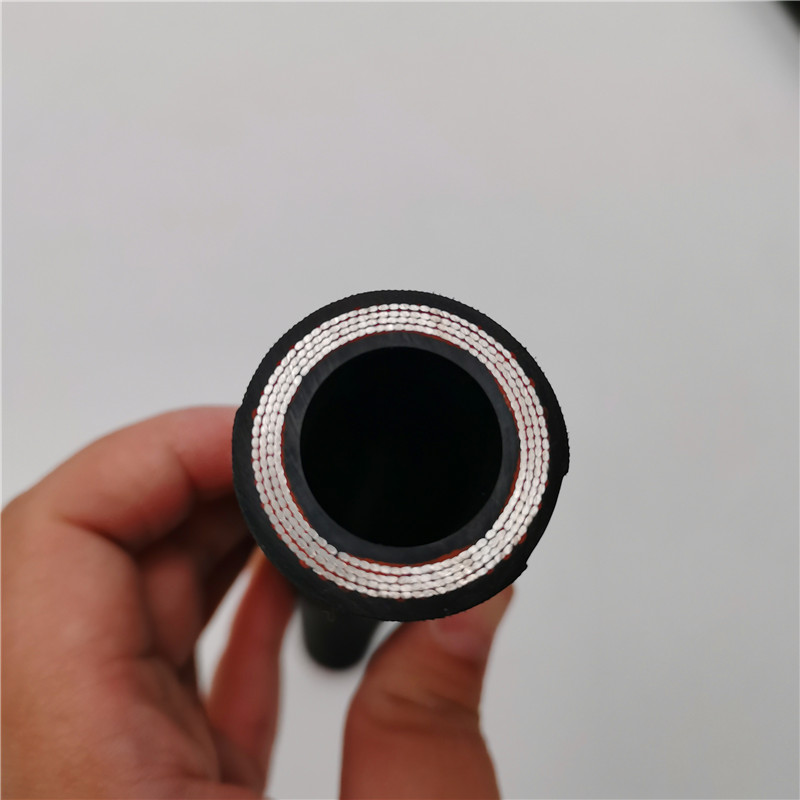
The foundation of a 16mm hydraulic hose lies in its constituent materials. The inner tube is commonly composed of Nitrile Rubber (NBR), known for its excellent resistance to petroleum-based hydraulic fluids. Alternative materials like Chloroprene Rubber (CR) are employed where enhanced temperature range or ozone resistance is needed. The reinforcement layer, critical for withstanding high pressures, utilizes high-tensile steel wire, typically conforming to standards like SAE J517. The wire’s tensile strength and fatigue resistance directly correlate with the hose’s burst pressure. The outer cover is typically constructed from Chlorinated Polyethylene (CPE) or Polyurethane (PU) providing abrasion, weather, and chemical resistance. Manufacturing involves several key processes: extrusion of the inner tube, helical winding of steel wire, extrusion of the outer cover, and finally, vulcanization. Precise control of extrusion temperatures, curing times, and wire tension are paramount. Improper vulcanization can lead to reduced elasticity and premature failure. Quality control checks include dimensional accuracy, pressure testing to 1.5 times the working pressure, and impulse testing to simulate dynamic loading. Material traceability is also essential, linking each batch to specific raw material certifications.
Performance & Engineering
Performance of a 16mm hydraulic hose is governed by several engineering principles. Burst pressure, the maximum pressure the hose can withstand before failure, is a primary specification, heavily influenced by reinforcement layer configuration. Working pressure is typically 50-70% of burst pressure, providing a safety margin. Fatigue life, defined as the number of pressure cycles the hose can endure before failure, is crucial in dynamic applications. This is affected by factors like pressure amplitude, frequency, and temperature. Environmental resistance involves assessing the hose’s performance in extreme temperatures (both high and low), exposure to UV radiation, ozone, and various chemicals (hydraulic fluids, lubricating oils, solvents). Hose bending radius is another critical parameter; exceeding the minimum bending radius induces stress concentration and reduces hose lifespan. Furthermore, hydraulic hose assemblies require proper fitting selection and crimping. Incorrect fitting size or inadequate crimping can lead to leakage or hose blow-off. Compliance requirements dictate adherence to standards such as SAE J517, EN 853, and DIN EN 489, focusing on safety and performance characteristics.
Technical Specifications
| Inner Diameter (mm) | Working Pressure (MPa) | Burst Pressure (MPa) | Temperature Range (°C) |
|---|---|---|---|
| 16 | 20 | 60 | -40 to +100 |
| 16 | 25 | 75 | -40 to +120 |
| 16 | 32 | 96 | -40 to +150 |
| 16 | 40 | 120 | -30 to +130 |
| 16 | 50 | 150 | -20 to +140 |
| 16 | 63 | 189 | -10 to +150 |
Failure Mode & Maintenance
16mm hydraulic hoses are susceptible to several failure modes. Fatigue cracking, initiated by repeated pressure cycling, often occurs near fittings due to stress concentration. Hose twist, caused by improper installation or system movement, induces internal wear and eventual failure. Abrasion, resulting from external contact with abrasive surfaces, damages the outer cover and exposes the reinforcement layer. Chemical degradation, due to incompatibility with the hydraulic fluid or exposure to corrosive substances, weakens the rubber compounds. Impact damage, caused by physical impacts, can rupture the hose or compromise its structural integrity. Oxidation, especially at elevated temperatures, leads to hardening and cracking of the rubber. Maintenance involves regular visual inspections for cracks, abrasions, and leaks. Hose assemblies should be replaced based on a preventative maintenance schedule, even if no visible damage is present. Proper storage – away from direct sunlight, ozone sources, and extreme temperatures – is crucial. Implementing a hose management program, including accurate record-keeping of hose specifications and replacement dates, can significantly enhance system reliability and safety.
Industry FAQ
Q: What is the impact of impulse pressure on the lifespan of a 16mm hydraulic hose?
A: Impulse pressure, or pressure spikes, significantly reduce hose lifespan. These sudden pressure surges create dynamic stresses within the hose wall, accelerating fatigue failure. Hoses specifically designed for high-impulse applications incorporate special construction features, such as multiple reinforcement layers and improved bonding agents, to mitigate these effects. The severity and frequency of impulse pressures should be carefully considered when selecting a hose.
Q: How does temperature affect the performance and longevity of the hose?
A: Temperature extremes degrade hose materials. High temperatures accelerate oxidation and reduce the elasticity of the rubber compounds, leading to hardening and cracking. Low temperatures can cause the rubber to become brittle and less flexible. Operating outside the specified temperature range drastically reduces hose lifespan. Selecting a hose material compatible with the operating temperature is crucial.
Q: What are the key differences between NBR and CR inner tube materials?
A: NBR (Nitrile Rubber) offers excellent resistance to petroleum-based hydraulic fluids, making it suitable for most general-purpose applications. CR (Chloroprene Rubber) provides superior resistance to ozone, weathering, and a wider temperature range. CR is often preferred in outdoor applications or environments where ozone exposure is a concern, although it typically has a slightly lower resistance to certain hydraulic fluids compared to NBR.
Q: What is the role of the hose fitting in ensuring system integrity?
A: The hose fitting is critical. Improperly sized or crimped fittings are a primary cause of hose failure. The fitting must be compatible with the hose and the hydraulic fluid. Proper crimping ensures a leak-free seal and prevents hose blow-off under pressure. Regular inspection of fittings for corrosion or damage is also essential.
Q: How important is proper hose routing and support to prevent damage?
A: Proper hose routing and support are vital. Avoid sharp bends, kinking, and contact with abrasive surfaces. Support the hose at regular intervals to prevent sagging and excessive movement. Using hose guards and clamps provides additional protection against abrasion and impact damage. Incorrect routing induces stress concentration and reduces hose lifespan.
Conclusion
The 16mm hydraulic hose, despite its seemingly simple design, is a complex engineered component demanding careful material selection, precise manufacturing control, and diligent maintenance. Understanding the interplay between material properties, manufacturing processes, and operational parameters is paramount for ensuring system reliability and safety. The ongoing evolution of hydraulic hose technology focuses on enhancing pressure resistance, extending fatigue life, and improving compatibility with environmentally friendly hydraulic fluids.
Ultimately, selecting a reputable Chinese manufacturer with rigorous quality control procedures, adherence to international standards, and a commitment to material traceability is essential for procuring high-performance 16mm hydraulic hoses that meet demanding industrial applications. Proactive hose management programs, coupled with regular inspections and preventative maintenance, further contribute to maximizing system uptime and minimizing costly downtime.