
Apr . 01, 2024 17:55 Back to list
china 10mm hydraulic hose factory Performance Analysis
Introduction
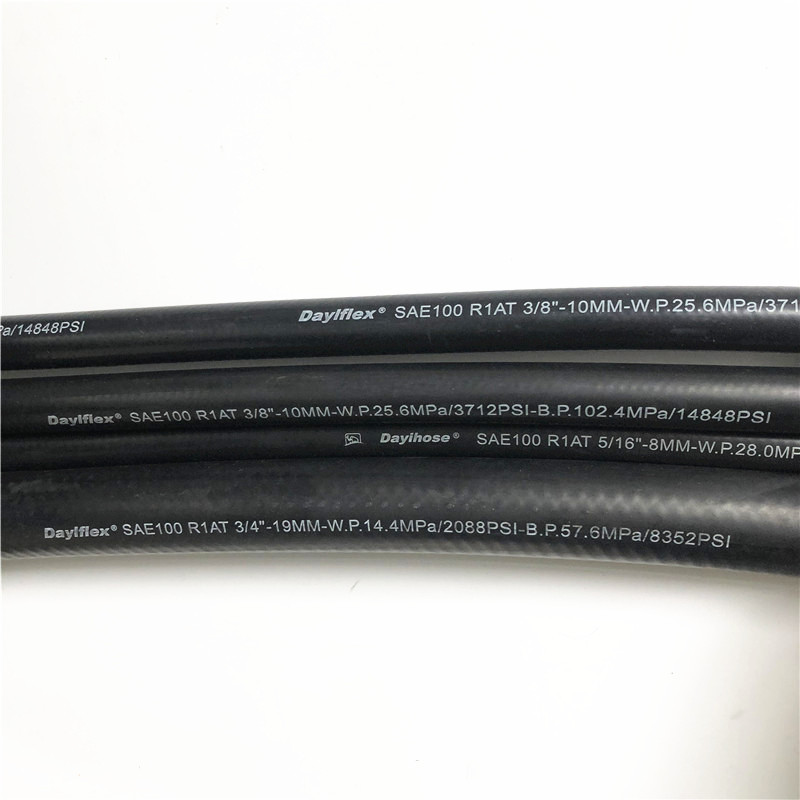
10mm hydraulic hose, produced by manufacturers in China, represents a critical component in fluid power systems across diverse industries. These hoses are integral to the transmission of hydraulic fluid, facilitating the operation of machinery in sectors like construction, agriculture, manufacturing, and automotive. Characterized by their internal diameter of 10mm, these hoses balance flow capacity with flexibility and pressure resistance. Their technical position within the supply chain involves raw material sourcing (rubber compounds, steel wire), manufacturing processes like braiding and vulcanization, and rigorous quality control measures to ensure compliance with international standards. Core performance parameters include working pressure, burst pressure, temperature range, and fluid compatibility. The increasing demand for reliable and cost-effective hydraulic solutions fuels the growth of the Chinese 10mm hydraulic hose market, necessitating a detailed understanding of their material science, manufacturing, performance characteristics, and potential failure modes.
Material Science & Manufacturing
The core material of a 10mm hydraulic hose is a synthetic rubber compound, typically a blend of nitrile rubber (NBR), styrene-butadiene rubber (SBR), or ethylene propylene diene monomer (EPDM). NBR offers excellent resistance to petroleum-based hydraulic fluids, while SBR provides good abrasion resistance and cost-effectiveness. EPDM excels in high-temperature applications and offers superior resistance to weathering and ozone. The reinforcement layer, crucial for pressure containment, is typically constructed of high-tensile steel wire, spirally wound or braided. The number of braids directly correlates to the hose’s working and burst pressure capabilities. Manufacturing begins with the extrusion of the inner rubber tube, followed by the application of the reinforcement layer. This is often a helical winding process controlled by precise tension and pitch parameters. A protective outer cover, often a blend of rubber compounds designed for abrasion and weather resistance, is then extruded over the reinforcement. Key process controls include rubber compound mixing ratios (critical for achieving desired physical properties like tensile strength and elongation at break), extrusion temperature and speed, braiding tension, and vulcanization time and temperature. Vulcanization, a chemical process involving sulfur, crosslinks the rubber molecules, transforming the material from a plastic state to an elastic state, improving its strength, resilience, and resistance to degradation. Post-production, hoses undergo hydrostatic testing to verify pressure integrity and dimensional accuracy.
Performance & Engineering
The performance of a 10mm hydraulic hose is governed by several key engineering principles. Force analysis focuses on hoop stress within the hose wall, directly proportional to internal pressure and inversely proportional to wall thickness. Higher pressures necessitate thicker walls or increased reinforcement layers. Fatigue analysis is critical, as hoses are subjected to cyclical pressure fluctuations. The number of cycles to failure is dependent on the amplitude of the pressure wave and the material properties of the hose. Environmental resistance is paramount, particularly exposure to temperature extremes, UV radiation, and corrosive fluids. EPDM compounds offer superior resistance to ozone cracking and weathering. Fluid compatibility is also vital; incompatible fluids can cause swelling, softening, or degradation of the rubber compounds, leading to premature failure. Compliance requirements dictate adherence to standards such as SAE J517, EN 853, and GB/T 3682. These standards specify minimum performance criteria for working pressure, burst pressure, temperature range, and fluid resistance. Engineering considerations include bend radius, which affects hose lifespan; excessively tight bends induce stress concentrations and accelerate fatigue failure. Proper hose assembly, utilizing correctly sized fittings and crimping procedures, is crucial for maintaining pressure integrity and preventing leaks.
Technical Specifications
| Parameter | Unit | SAE J517 R1 | EN 853 1SN |
|---|---|---|---|
| Inner Diameter | mm | 10 ± 0.3 | 10 ± 0.3 |
| Working Pressure | MPa | 20.7 | 16 |
| Burst Pressure | MPa | 82.7 | 64 |
| Temperature Range | °C | -40 to +100 | -40 to +100 |
| Reinforcement | - | 1SP (Single High Tensile Steel Wire Braid) | 1SN (Single Steel Wire Spiral) |
| Cover Compound | - | Black NBR | Black NBR |
Failure Mode & Maintenance
Common failure modes in 10mm hydraulic hoses include burst failure due to exceeding the working pressure, fatigue cracking caused by cyclical pressure fluctuations and bending, extrusion failure resulting from excessive pressure or internal blockage, and abrasion or damage to the outer cover. Internal degradation of the rubber compound due to fluid incompatibility or aging can also lead to failure. Failure analysis often reveals the root cause, such as improper hose assembly, exceeding temperature limits, or exposure to corrosive fluids. Maintenance procedures are crucial for extending hose lifespan. Regular visual inspections should identify signs of abrasion, cracking, or swelling. Hose assemblies should be replaced if any damage is detected. Proper routing and support are essential to prevent excessive bending and abrasion. Hydraulic fluid should be regularly analyzed to ensure compatibility with the hose materials. Crimping procedures should be verified to ensure secure fitting attachment. Storage of hoses in a cool, dry environment, protected from UV radiation and ozone, will minimize degradation. When replacing hoses, ensure that the new hose meets or exceeds the original specifications and is compatible with the hydraulic fluid.
Industry FAQ
Q: What is the impact of steel wire braid construction (1SP vs. 2SP) on hose lifespan?
A: Increasing the steel wire braid layers from 1SP to 2SP significantly enhances the hose’s burst pressure and resistance to fatigue. While a 2SP hose is more robust, it also exhibits reduced flexibility. Increased rigidity can lead to higher stress concentrations at bend points, potentially reducing lifespan if the hose is subjected to frequent bending or vibration. Proper routing and support become even more critical with 2SP hoses.
Q: How does the choice of rubber compound affect the hose’s chemical compatibility?
A: Rubber compound selection is paramount for chemical compatibility. NBR excels with petroleum-based fluids, but is less suitable for phosphate ester fluids. EPDM provides excellent resistance to water, glycol-based fluids, and weathering, but has limited oil resistance. Incorrect material selection can lead to swelling, softening, or degradation of the hose, causing premature failure. Always consult a chemical compatibility chart before selecting a hose for a specific application.
Q: What are the common causes of hose extrusion failure?
A: Hose extrusion failure typically occurs when the internal pressure exceeds the hose’s capability, causing the inner tube to protrude through the reinforcement. Contributing factors include internal blockages restricting fluid flow, excessive pressure spikes, or degradation of the reinforcement layer. Regular filter maintenance and pressure relief valve checks are crucial for preventing extrusion failures.
Q: What is the recommended bend radius for a 10mm hydraulic hose?
A: The recommended minimum bend radius for a 10mm hydraulic hose is typically 4-6 times the inner diameter, translating to 40-60mm. Exceeding this limit induces excessive stress on the hose wall, accelerating fatigue failure. Using bend supports and ensuring proper hose routing are essential for maintaining the correct bend radius.
Q: How often should hydraulic hoses be inspected and replaced?
A: Hydraulic hoses should be inspected visually before each use for signs of damage, such as cracks, abrasion, swelling, or leaks. A detailed inspection, including a pressure test, should be conducted annually or more frequently in demanding applications. Hoses should be replaced immediately if any damage is detected or if they have reached their recommended service life, typically 5-7 years, even without visible defects.
Conclusion
The performance and reliability of 10mm hydraulic hoses are intrinsically linked to meticulous material selection, precise manufacturing control, and adherence to stringent industry standards. Understanding the interplay between material properties, reinforcement construction, and operating conditions is vital for ensuring optimal service life and preventing catastrophic failures. The Chinese manufacturing sector offers a competitive source for these critical components, but maintaining consistent quality control and rigorous testing remains paramount.
Future advancements in hydraulic hose technology will likely focus on developing more durable rubber compounds, incorporating smart sensors for real-time condition monitoring, and implementing advanced braiding techniques to enhance pressure resistance and flexibility. Furthermore, a growing emphasis on sustainable materials and environmentally friendly manufacturing processes will shape the evolution of this essential component in fluid power systems.