
Apr . 01, 2024 17:55 Back to list
china 100r17 hydraulic hose supplier Performance Analysis
Introduction
The 100R17 hydraulic hose, conforming to Society of Automotive Engineers (SAE) standard J517, represents a critical component in fluid power systems across diverse industrial applications. Sourced from China, these hoses are increasingly prevalent due to their cost-effectiveness and improving quality. This guide provides an in-depth technical overview of 100R17 hydraulic hoses, focusing on material science, manufacturing processes, performance characteristics, failure modes, and relevant industry standards. The core function of a 100R17 hose is to transmit hydraulic fluid under high pressure, facilitating the operation of machinery in sectors such as construction, agriculture, mining, and manufacturing. A key industry pain point lies in ensuring consistent quality control amongst various Chinese suppliers, leading to concerns regarding burst pressure, fatigue life, and chemical compatibility. This document aims to address those concerns with a detailed technical examination. 100R17 hoses typically consist of an inner tube, multiple layers of high-tensile steel wire reinforcement, and an outer cover, all designed to withstand demanding operating conditions. The selection of appropriate hose construction is paramount for application longevity and safety.
Material Science & Manufacturing
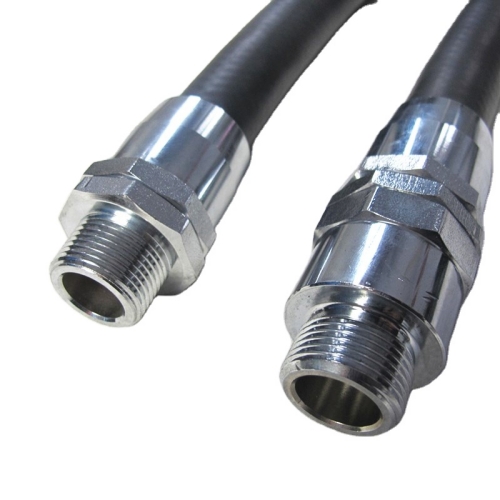
The construction of a 100R17 hose relies on a precise interplay of materials and manufacturing techniques. The inner tube is commonly composed of nitrile rubber (NBR), known for its excellent resistance to petroleum-based hydraulic fluids. Alternative materials, such as chloroprene rubber (CR), are used for specialized applications requiring broader fluid compatibility or improved temperature resistance. The reinforcement layers are typically comprised of high-tensile steel wire, conforming to SAE J517 specifications for strength and ductility. Wire surface treatment, often involving galvanization or phosphating, is crucial to enhance adhesion to the rubber compound and prevent corrosion. The outer cover is generally made of chloroprene rubber (CR) for its resistance to abrasion, ozone, weathering, and oil. Manufacturing involves several key steps: inner tube extrusion, spiral winding of steel wire reinforcement, outer cover extrusion, and final curing. Precise control of temperature, pressure, and curing time is essential for achieving optimal material properties and dimensional accuracy. The helical winding process is critical; improper winding angle or tension can lead to hose kinking, reduced burst pressure, and premature failure. Material batches undergo rigorous testing for tensile strength, elongation, and hardness to meet SAE J517 requirements. The quality of the steel wire significantly impacts the hose’s performance – sourcing from reputable steel mills is essential. Chemical compatibility between the rubber compounds and hydraulic fluid is verified to prevent swelling, degradation, or loss of flexibility.
Performance & Engineering
The performance of a 100R17 hose is governed by several engineering principles and operational factors. Burst pressure, a critical specification, is determined by the reinforcement layer’s strength and the rubber compound’s tensile properties. SAE J517 mandates specific burst pressure requirements based on hose size and operating pressure. Fatigue life, the hose's ability to withstand repeated pressure cycles, is influenced by factors such as pressure amplitude, frequency, and temperature. Impulse testing, simulating hydraulic shock, is essential for evaluating fatigue resistance. Environmental resistance is paramount, particularly in outdoor applications. Ozone cracking, UV degradation, and temperature extremes can compromise the hose’s integrity. Proper hose routing and support are crucial to prevent excessive bending, kinking, and abrasion. Bend radius should adhere to manufacturer’s recommendations to avoid stress concentrations. The hose's compatibility with the hydraulic fluid is also vital; incompatible fluids can cause swelling, hardening, or degradation of the rubber components, leading to leakage and failure. Force analysis considers the internal pressure, external loads, and geometric constraints to determine stress distribution within the hose structure. Finite element analysis (FEA) is often employed to optimize hose design and predict performance under various loading conditions. Compliance with industry standards, such as ISO 14307 (hydraulic fluid power – requirements for interchangeability of pressure ratings and fittings), ensures interoperability and safety.
Technical Specifications
| Parameter | Unit | SAE J517 Specification | Typical Chinese Supplier Range |
|---|---|---|---|
| Working Pressure | MPa | Up to 35 MPa | 20-35 MPa (Variability exists) |
| Burst Pressure | MPa | 4x Working Pressure (Minimum) | 3.5-4.5x Working Pressure (Quality Dependent) |
| Temperature Range | °C | -40 to +100 | -40 to +80 (Some suppliers offer higher) |
| Inner Tube Material | - | NBR, CR | NBR (Most Common), CR |
| Reinforcement | Layers | Multiple Steel Wire Spiral | 4-6 Spiral Layers (Common) |
| Outer Cover Material | - | CR | CR |
Failure Mode & Maintenance
100R17 hydraulic hoses are susceptible to several failure modes. Fatigue cracking, arising from repeated pressure cycles, is a common issue, particularly in applications with high vibration or shock loads. This often initiates at the wire-rubber interface due to stress concentration. Bursting, a catastrophic failure, occurs when the hose pressure exceeds its rated capacity or due to pre-existing damage. Corrosion of the steel wire reinforcement, especially in humid environments or with incompatible fluids, weakens the hose and increases the risk of bursting. Abrasion of the outer cover, caused by contact with abrasive surfaces, can expose the reinforcement layers and lead to corrosion and eventual failure. Kinking, resulting from excessive bending, restricts fluid flow and can cause localized stress concentrations, leading to cracking. Pinholes, small leaks in the inner tube or cover, can be caused by manufacturing defects, chemical attack, or foreign object penetration. Maintenance involves regular visual inspections for signs of wear, abrasion, cracking, or leakage. Hoses should be replaced if any damage is detected. Proper hose routing and support are critical to prevent kinking and abrasion. Regularly check fluid compatibility to prevent degradation of the hose materials. When replacing hoses, ensure proper fitting selection and torque specifications to prevent leaks. Implement a preventative maintenance schedule based on operating conditions and hose usage. Record keeping of hose replacements and inspections assists in identifying recurring issues.
Industry FAQ
Q: What is the significance of the steel wire spiral construction in a 100R17 hose?
A: The steel wire spiral provides the primary reinforcement, enabling the hose to withstand high internal pressure. The number of layers and the wire's tensile strength directly correlate to the hose's burst pressure. The spiral construction also resists elongation under pressure and maintains the hose's dimensional stability.
Q: How does temperature affect the performance of a 100R17 hose?
A: Extreme temperatures can significantly impact hose performance. High temperatures accelerate rubber degradation, reducing flexibility and increasing the risk of cracking. Low temperatures can cause the rubber to harden and become brittle, reducing its resistance to impact. The specified temperature range for the hose must be adhered to.
Q: What is the importance of fluid compatibility in selecting a 100R17 hose?
A: Using an incompatible fluid can cause the inner tube to swell, soften, or degrade, leading to leakage and hose failure. Always verify that the hose material (typically NBR or CR) is compatible with the hydraulic fluid being used.
Q: What are the common causes of hose kinking, and how can it be prevented?
A: Kinking occurs when the hose is bent beyond its minimum bend radius. This restricts fluid flow and causes stress concentrations. Prevention involves proper hose routing, adequate support, and avoiding sharp bends. Adhering to the manufacturer’s recommended bend radius is crucial.
Q: What are the key considerations when evaluating a 100R17 hose supplier in China?
A: Focus on suppliers with robust quality control systems, ISO 9001 certification, and demonstrable testing capabilities (burst pressure, impulse testing, fatigue testing). Request material certifications and conduct independent laboratory testing to verify performance claims. Assess their ability to consistently meet SAE J517 specifications.
Conclusion
The 100R17 hydraulic hose remains a foundational component in numerous industrial applications. Understanding its material science, manufacturing processes, and performance characteristics is critical for ensuring reliable operation and preventing costly failures. The selection of a high-quality hose, sourced from a reputable supplier like china 100r17 hydraulic hose supplier, is paramount.
Continued advancements in rubber compound technology and manufacturing techniques are driving improvements in hose durability and performance. Implementing robust preventative maintenance programs, focusing on regular inspections and timely replacements, will further enhance the longevity and safety of hydraulic systems. Thorough due diligence when evaluating Chinese suppliers, emphasizing quality control and compliance with international standards, is essential for mitigating risks and ensuring optimal value.