
Apr . 01, 2024 17:55 Back to list
china 100r17 hydraulic hose manufacturer Performance Analysis
Introduction
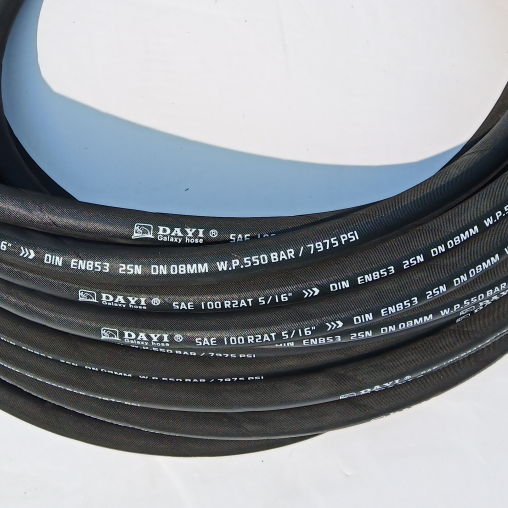
The 100R17 hydraulic hose represents a critical component in hydraulic systems across diverse industrial applications, including construction machinery, agricultural equipment, and material handling. Manufactured to the Society of Automotive Engineers (SAE) 100R17 standard, these hoses are characterized by their high-pressure capabilities, robust construction, and resistance to demanding operating conditions. Chinese manufacturers, increasingly recognized for their capacity and competitive pricing, play a significant role in the global supply of 100R17 hoses. This guide provides an in-depth technical overview, encompassing material science, manufacturing processes, performance characteristics, failure modes, and relevant industry standards, specifically focusing on the considerations when sourcing from China. Core performance indicators include burst pressure, working pressure, impulse pressure, temperature range, and fluid compatibility, all of which are critical for maintaining system integrity and operational safety. The primary pain point for end-users involves ensuring consistent quality and adherence to international standards when procuring from various suppliers.
Material Science & Manufacturing
100R17 hydraulic hoses are typically constructed from multiple layers, each serving a specific function. The inner tube, which directly contacts the hydraulic fluid, is commonly made from synthetic rubber compounds such as nitrile rubber (NBR) or ethylene propylene diene monomer (EPDM) for compatibility with petroleum-based fluids and phosphate ester fluids, respectively. NBR offers excellent abrasion resistance and tensile strength, while EPDM provides superior resistance to heat, ozone, and weathering. The reinforcement layer, essential for withstanding high pressures, is typically comprised of multiple spiraled high-tensile steel wire. The number of spiral layers dictates the hose's pressure rating – typically 4, 6, or 8 spirals. The outer cover is usually a synthetic rubber compound, often chloroprene rubber (CR), providing protection against abrasion, ozone, weathering, and oil exposure.
Manufacturing involves a precise multi-step process. First, the inner tube is extruded through a die to achieve the desired diameter and wall thickness. The steel wire reinforcement is then spiraled onto the inner tube using specialized winding machinery, maintaining consistent pitch and tension. This is a critical parameter control point, directly impacting the hose's burst pressure. Next, the outer cover is extruded over the reinforced inner tube. Post-extrusion, the hose undergoes vulcanization (curing) – a process involving heat and pressure to cross-link the rubber polymers, enhancing their strength, elasticity, and resistance to degradation. Quality control measures at each stage include dimensional checks, pressure testing, and material composition analysis. Chinese manufacturers are increasingly adopting automated processes to improve consistency and reduce defects, however, variations in raw material sourcing and quality control protocols remain key areas of concern.
Performance & Engineering
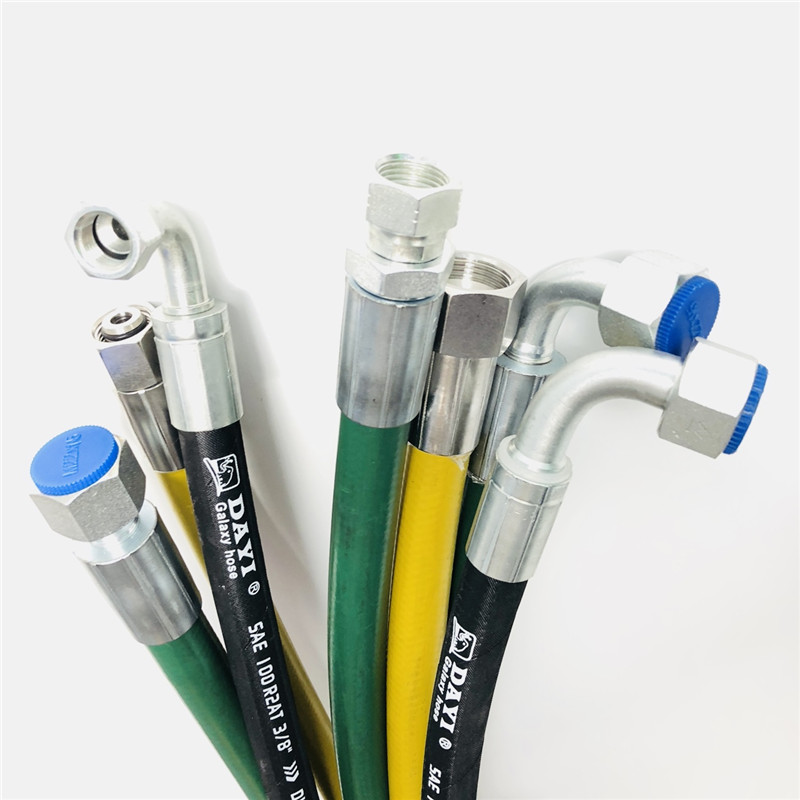
The performance of a 100R17 hose is dictated by several engineering considerations. Force analysis under pressure is paramount; the steel wire reinforcement must effectively resist hoop stress to prevent hose rupture. The hose’s bend radius is also critical, exceeding the minimum bend radius can induce stress concentration and premature failure. Impulse pressure resistance – the ability to withstand pressure fluctuations – is especially important in applications like hydraulic hammers. The hose’s ability to maintain its integrity during repeated pressure cycles depends on the fatigue strength of both the rubber compounds and the steel wire. Environmental resistance is another key factor. Exposure to extreme temperatures (high and low), UV radiation, and corrosive fluids can degrade the rubber components, reducing the hose’s lifespan.
Compliance requirements are stringent. SAE J517 specifies the performance characteristics and testing procedures for hydraulic hoses. Furthermore, many applications demand compliance with industry-specific regulations (e.g., ISO standards for construction machinery). Functional implementation includes proper hose assembly with compatible fittings, utilizing appropriate crimping procedures to ensure a secure and leak-proof connection. Incorrect crimping can significantly reduce the hose’s working pressure. Understanding the fluid compatibility of the inner tube material is also crucial; incompatibility can lead to swelling, softening, or chemical degradation of the rubber, compromising the hose’s integrity.
Technical Specifications
| Parameter | Unit | SAE 100R17 Specification | Typical Chinese Manufacturer Range |
|---|---|---|---|
| Working Pressure | MPa | Up to 35 | 25 – 35 |
| Burst Pressure | MPa | ≥ 3x Working Pressure | 2.8 – 3.5 x Working Pressure |
| Temperature Range | °C | -40 to +100 | -40 to +90 |
| Inner Tube Material | - | NBR, EPDM | NBR, EPDM, SBR |
| Reinforcement | - | Multiple Spiraled Steel Wire | Multiple Spiraled Steel Wire |
| Outer Cover Material | - | CR | CR, SBR |
Failure Mode & Maintenance
Common failure modes in 100R17 hoses include fatigue cracking, particularly near the crimp sleeves, due to repeated bending and pressure cycling. Delamination – separation of the rubber layers – can occur due to insufficient bonding during vulcanization or exposure to harsh chemicals. External abrasion can damage the outer cover, leading to reinforcement exposure and eventual corrosion. Internal degradation occurs when the hydraulic fluid contaminates the inner tube, causing swelling, softening, or cracking. Oxidation of the rubber compounds, accelerated by heat and UV exposure, results in hardening and loss of elasticity.
Preventive maintenance is crucial. Regular visual inspections should identify signs of wear, abrasion, or leakage. Hose assemblies should be periodically pressure tested to verify their integrity. Proper fluid maintenance, including filtration and regular fluid changes, minimizes internal degradation. Avoid exceeding the hose’s maximum working pressure or bend radius. Store hoses in a cool, dry, and dark environment, away from direct sunlight and ozone sources. When replacing hoses, ensure compatibility with the hydraulic fluid and use fittings specifically designed for 100R17 hoses. When sourcing from China, diligent quality assurance checks including material certifications and burst pressure testing are critical to mitigate the risk of premature failure.
Industry FAQ
Q: What are the key differences in steel wire quality between established European/American manufacturers and Chinese manufacturers of 100R17 hoses?
A: The primary difference often lies in the steel wire's tensile strength and ductility. European/American manufacturers typically utilize higher-grade steel alloys with tighter tolerances, resulting in superior fatigue resistance. Chinese manufacturers, while increasingly capable, may utilize lower-grade alloys or have inconsistencies in the wire drawing process, impacting long-term performance under high-pressure cycling.
Q: How can I verify the actual burst pressure of a 100R17 hose sourced from China, given potential discrepancies in labeling?
A: Independent laboratory testing is the most reliable method. Request a sample hose and submit it to a certified testing facility for burst pressure testing according to SAE J517 standards. This provides objective verification of the hose’s actual capabilities.
Q: What is the significance of the vulcanization process in 100R17 hose manufacturing, and how does it impact hose lifespan?
A: Vulcanization creates cross-links between the rubber polymer chains, significantly enhancing the rubber's strength, elasticity, and resistance to degradation. Insufficient or uneven vulcanization leads to weaker bonding between layers, reduced resistance to heat and chemicals, and premature failure. Controlling the temperature, pressure, and curing time is critical.
Q: Are there specific certifications or audits I should request from a Chinese 100R17 hose manufacturer to ensure quality control?
A: Request ISO 9001 certification, demonstrating a commitment to quality management systems. Conduct a factory audit focusing on raw material sourcing, manufacturing processes, quality control procedures, and testing capabilities. Also, request material test reports (MTRs) for the steel wire and rubber compounds.
Q: What impact does hydraulic fluid contamination have on the lifespan of a 100R17 hose, and what preventative measures should be taken?
A: Contaminants act as abrasives, accelerating wear on the inner tube. Chemical contaminants can cause swelling, softening, or cracking of the rubber. Preventative measures include utilizing high-quality hydraulic fluid, implementing a robust filtration system, and regularly monitoring fluid condition. Periodic fluid analysis can identify contaminants before they cause significant damage.
Conclusion
The 100R17 hydraulic hose remains a foundational element in numerous industrial applications, and its performance is intimately linked to material selection, manufacturing precision, and adherence to stringent industry standards. While Chinese manufacturers have significantly increased their production capacity and competitiveness, maintaining consistent quality and verifiable compliance with SAE J517 remains paramount. Thorough due diligence, including independent testing and factory audits, is essential for mitigating risk and ensuring the long-term reliability of these critical components.
Ultimately, a comprehensive understanding of the materials, manufacturing processes, and potential failure modes enables informed procurement decisions, resulting in optimized system performance and minimized downtime. Continued advancements in rubber technology and steel wire manufacturing will likely lead to even more durable and reliable 100R17 hoses in the future, demanding ongoing vigilance in quality control and adherence to evolving industry standards.