
Apr . 01, 2024 17:55 Back to list
china 100r17 hydraulic hose factories Performance Analysis
Introduction
The 100R17 hydraulic hose, conforming to SAE 100R17 standards, represents a critical component in hydraulic systems across diverse industrial applications. Manufactured extensively in China, these hoses are characterized by their multi-layered construction designed for high-pressure fluid conveyance. They occupy a pivotal position in the fluid power transmission chain, connecting pumps, valves, and actuators. The core performance indicators – pressure rating, temperature range, and fluid compatibility – dictate operational efficiency and system reliability. Chinese manufacturers have become significant players in this sector, offering competitive pricing alongside increasingly sophisticated manufacturing capabilities. This guide provides an in-depth technical overview of 100R17 hydraulic hoses produced by Chinese factories, encompassing material science, manufacturing processes, performance characteristics, failure modes, and relevant industry standards.
Material Science & Manufacturing
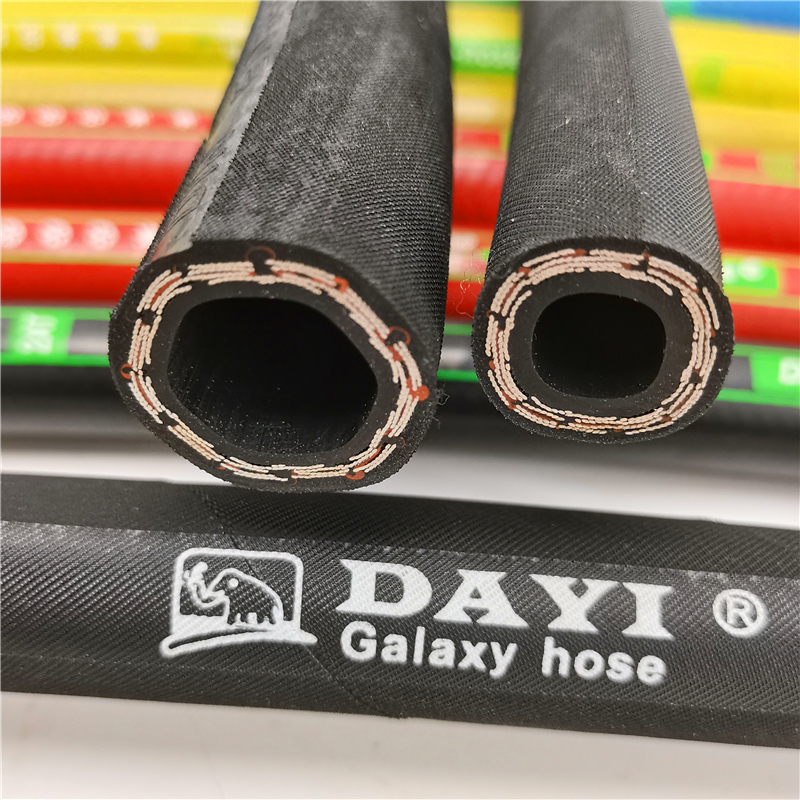
100R17 hoses are typically constructed of multiple layers, each contributing to specific performance characteristics. The inner tube is commonly composed of oil-resistant synthetic rubber, typically nitrile rubber (NBR) or hydrogenated nitrile butadiene rubber (HNBR), providing compatibility with a wide range of hydraulic fluids. NBR offers good resistance to petroleum-based fluids but exhibits limitations at higher temperatures. HNBR provides enhanced thermal stability and abrasion resistance. The reinforcement layer is crucial for pressure resistance and typically consists of multiple spirally wound high-tensile steel wire layers. The wire gauge and number of layers directly impact the hose's working pressure. An outer cover, usually made of Chlorinated Polyethylene (CPE) or Polyurethane (PU), provides abrasion, ozone, and weathering resistance. Manufacturing begins with the extrusion of the inner tube, followed by the spiral winding of the steel wire reinforcement. Precise tension control during winding is paramount to maintain dimensional stability and prevent premature failure. The outer cover is then extruded over the reinforcement. Key manufacturing parameters include extrusion temperature, curing time, wire tension, and adhesion between layers. Post-production quality control involves burst pressure testing, impulse testing, and dimensional verification. The quality of the steel wire – its tensile strength, elongation, and surface finish – directly impacts hose performance and longevity. Chinese manufacturers are increasingly adopting advanced extrusion and winding technologies, alongside rigorous quality control procedures, to meet international standards.
Performance & Engineering
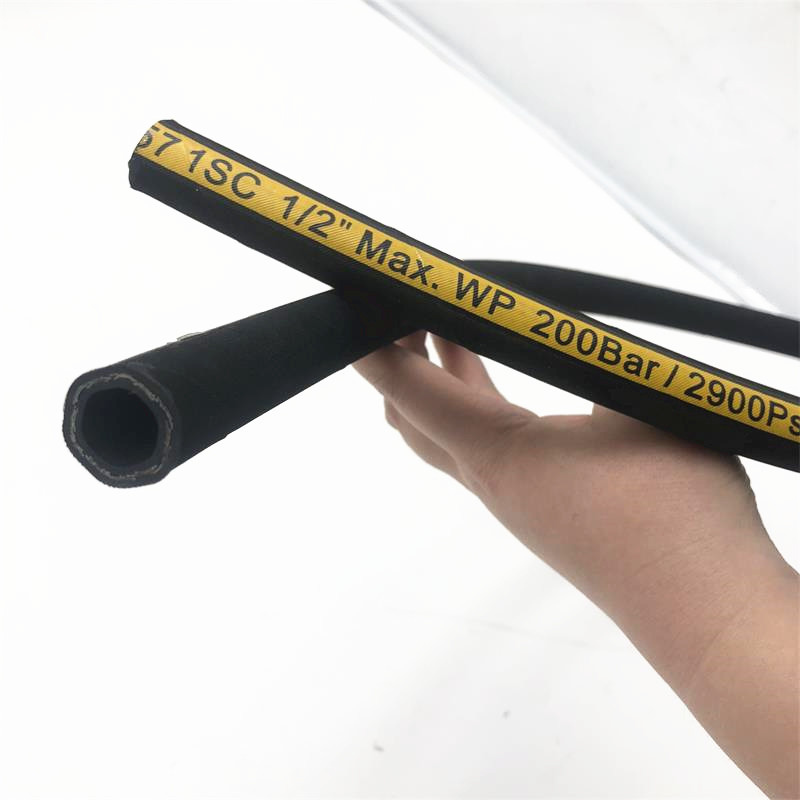
The performance of a 100R17 hose is governed by a complex interplay of material properties and engineering design. Force analysis under pressure reveals significant hoop stress within the hose wall, necessitating robust reinforcement. The steel wire layers are engineered to withstand these stresses without yielding or undergoing plastic deformation. The hose's ability to withstand dynamic loading – pressure pulsations and vibrations – is critical in many applications. Impulse testing assesses the hose’s fatigue resistance under cyclical pressure variations. Environmental resistance is a significant concern. Exposure to extreme temperatures, UV radiation, and corrosive fluids can degrade the rubber compounds and steel wire, leading to failure. CPE and PU outer covers offer varying degrees of protection. Fluid compatibility is paramount; incompatible fluids can cause swelling, softening, or cracking of the inner tube. The working pressure, typically ranging from 315 bar (4570 psi) to 420 bar (6090 psi) depending on the hose diameter and construction, is a critical performance parameter. Compliance with SAE 100R17 requires adherence to stringent testing protocols, including burst pressure testing (at least four times the working pressure), impulse testing (at least 100,000 cycles), and temperature range performance (-40°C to +100°C). Finite Element Analysis (FEA) is increasingly used in the design process to optimize hose geometry and reinforcement configuration, maximizing pressure capacity and minimizing weight.
Technical Specifications
| Parameter | Unit | Typical Value (China 100R17) | SAE 100R17 Standard |
|---|---|---|---|
| Working Pressure | bar (psi) | 315-420 (4570-6090) | Minimum 315 (4570) |
| Burst Pressure | bar (psi) | 1260-1680 (18230-24360) | Minimum 4 x Working Pressure |
| Inner Tube Material | - | NBR/HNBR | Oil-resistant synthetic rubber |
| Reinforcement | Layers | 4-6 | Multiple spirally wound steel wire |
| Outer Cover Material | - | CPE/PU | Abrasion & Weather Resistant Polymer |
| Temperature Range | °C (°F) | -40 to +100 (-40 to +212) | -40 to +100 (-40 to +212) |
Failure Mode & Maintenance
100R17 hydraulic hoses are susceptible to several failure modes. Fatigue cracking, often initiated at the hose ends or around fittings, is a common failure mechanism resulting from repeated pressure cycles and vibrations. Delamination, the separation of layers, can occur due to inadequate adhesion between the inner tube, reinforcement, and outer cover. Oxidation of the steel wire reinforcement, particularly in humid environments, reduces its tensile strength and can lead to catastrophic failure. Abrasion of the outer cover exposes the reinforcement to corrosion and damage. Chemical degradation of the inner tube occurs when incompatible fluids are used, causing swelling, softening, or cracking. Kinking or twisting of the hose restricts fluid flow and can lead to localized stress concentrations. Maintenance best practices include regular visual inspection for signs of damage (cracks, abrasions, leaks), proper fitting installation and torque specification, fluid compatibility verification, and avoidance of sharp bends or kinks. Pressure testing should be conducted periodically to assess hose integrity. Replace hoses showing any signs of degradation or exceeding their service life. Proper storage, protected from UV radiation and extreme temperatures, extends hose lifespan. Leakage around fittings indicates potential thread damage or seal failure, requiring immediate attention.
Industry FAQ
Q: What is the significance of the steel wire spiral angle in a 100R17 hose?
A: The steel wire spiral angle is a critical design parameter. A steeper angle generally provides higher pressure capacity but can reduce flexibility. Chinese manufacturers carefully control this angle to balance pressure resistance with bend radius requirements, optimizing performance for specific applications. Deviation from optimal angles leads to either reduced pressure handling or increased risk of kinking.
Q: How do Chinese manufacturers ensure the consistent quality of the steel wire used in 100R17 hoses?
A: Reputable Chinese manufacturers implement rigorous quality control procedures for incoming steel wire, including tensile strength testing, elongation measurement, surface finish inspection, and metallographic analysis. They typically source steel wire from certified suppliers and maintain detailed traceability records. Many factories are now ISO 9001 certified, demonstrating commitment to quality management systems.
Q: What is the impact of different outer cover materials (CPE vs. PU) on hose lifespan?
A: Polyurethane (PU) generally offers superior abrasion resistance and cut resistance compared to Chlorinated Polyethylene (CPE), resulting in a longer service life in harsh environments. However, PU can be more susceptible to hydrolysis (degradation from moisture). CPE offers good all-around performance and is more cost-effective. The optimal choice depends on the specific application and environmental conditions.
Q: What testing is performed to verify compliance with the impulse testing requirements of SAE 100R17?
A: Impulse testing involves subjecting the hose to cyclical pressure fluctuations at a specified frequency and amplitude (typically 100,000 cycles at a pressure exceeding the working pressure). Chinese manufacturers employ automated impulse testing machines that monitor for leaks, dimensional changes, and signs of fatigue cracking. Detailed test reports document the results and demonstrate compliance.
Q: What considerations are important when selecting a 100R17 hose for use with biodegradable hydraulic fluids?
A: Biodegradable hydraulic fluids can be more aggressive to certain rubber compounds. It's crucial to ensure the inner tube material (NBR or HNBR) is specifically rated for compatibility with the chosen fluid. Consult with the hose manufacturer and fluid supplier to verify compatibility and prevent premature degradation of the hose.
Conclusion
The China-manufactured 100R17 hydraulic hose represents a vital component in modern hydraulic systems. Its multi-layered construction, employing specific materials engineered for high-pressure, high-temperature, and chemically resistant operation, necessitates rigorous manufacturing control and quality assurance. Understanding the interplay between material properties, manufacturing processes, and performance characteristics is crucial for selecting the appropriate hose for a given application.
Chinese manufacturers are continually improving their capabilities, adhering to international standards (SAE 100R17), and offering competitive pricing. Proactive maintenance, regular inspection, and adherence to recommended operating conditions are essential for maximizing hose lifespan and preventing costly failures. Selecting a supplier with a strong track record of quality and a commitment to continuous improvement is paramount.