
Apr . 01, 2024 17:55 Back to list
china 1/4 in hydraulic hose supplier Performance Analysis

Introduction
The 1/4 inch hydraulic hose represents a critical component in fluid power systems across a vast array of industrial applications, from construction equipment and agricultural machinery to manufacturing processes and automotive systems. As a leading china 1/4 in hydraulic hose supplier, manufacturers provide hoses designed to transmit hydraulic fluid under substantial pressure, enabling the operation of cylinders, motors, and other hydraulic actuators. The performance and reliability of these hoses directly impact the efficiency and safety of the entire system. This guide will provide a comprehensive technical overview of 1/4 inch hydraulic hoses, encompassing material science, manufacturing processes, performance characteristics, failure modes, and relevant industry standards. A core pain point in the industry lies in maintaining consistent quality across diverse manufacturing facilities and ensuring compliance with evolving safety regulations, particularly regarding burst pressure and fluid compatibility. This guide addresses these concerns through detailed technical specifications and best practice recommendations.
Material Science & Manufacturing
1/4 inch hydraulic hoses are typically constructed from several key materials, each contributing to specific performance characteristics. The inner tube, responsible for containing the hydraulic fluid, is commonly made from synthetic rubbers like Nitrile (NBR), also known as Buna-N, for its excellent resistance to petroleum-based hydraulic fluids. Alternatively, Ethylene Propylene Diene Monomer (EPDM) is utilized when compatibility with phosphate ester fluids is required. The reinforcement layer, crucial for withstanding internal pressure, typically comprises one or more braids of high-strength steel wire. The number of braids dictates the hose's working pressure capability; a single braid hose will have a lower pressure rating than a two-braid or even a four-braid configuration. Finally, the outer cover, providing protection against abrasion, weathering, and chemical exposure, is usually constructed from Chlorinated Polyethylene (CPE) or Polyurethane (PUR).
Manufacturing typically involves a multi-stage process. The inner tube is extruded through a die to achieve the desired diameter and wall thickness. The reinforcement braid is then applied using a helical winding machine, ensuring precise coverage and consistent tension. The outer cover is subsequently extruded over the braided reinforcement. Critical process parameters include extrusion temperature and speed, braid tension, and curing time. Precise control of these parameters is paramount to ensuring dimensional accuracy, consistent material properties, and optimal hose performance. Post-extrusion, hoses undergo rigorous quality control checks, including dimensional measurements, pressure testing, and visual inspection for defects. Skiving, a process of removing a portion of the outer cover at the hose ends, is often performed to facilitate proper fitting installation, preventing extrusion and ensuring a secure seal.
Performance & Engineering
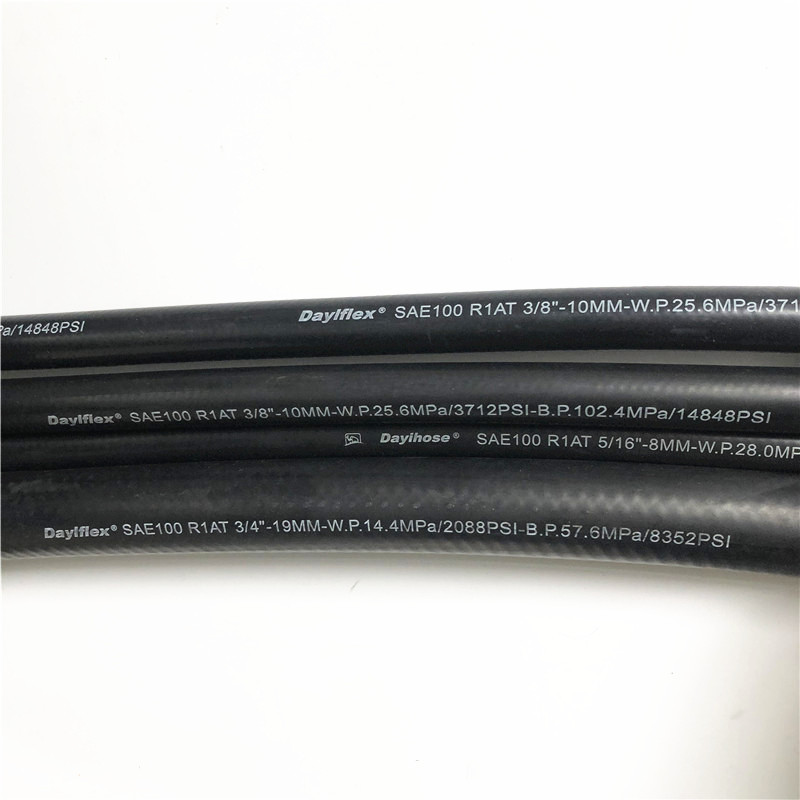
The performance of a 1/4 inch hydraulic hose is primarily governed by its ability to withstand internal pressure, resist external damage, and maintain fluid compatibility. Burst pressure, working pressure, and impulse pressure are critical parameters. Burst pressure is the maximum pressure the hose can withstand before failure, typically four times the working pressure. Working pressure is the maximum continuous operating pressure recommended by the manufacturer. Impulse pressure refers to the hose's ability to withstand pressure surges or spikes.
Force analysis is essential in hose design. Hoop stress, the tensile stress acting circumferentially within the hose wall, is directly proportional to the internal pressure and the hose radius, and inversely proportional to the wall thickness. Reinforcement braiding provides the tensile strength necessary to counteract hoop stress. Environmental resistance is another key consideration. Exposure to extreme temperatures, UV radiation, and corrosive chemicals can degrade the hose materials, leading to premature failure. Compliance requirements, dictated by organizations like SAE International, dictate minimum performance standards for hydraulic hoses. Proper hose routing and support are critical engineering considerations. Sharp bends, abrasion points, and excessive twisting can significantly reduce hose life. The selection of appropriate hose fittings is also crucial; fittings must be compatible with the hose material and capable of withstanding the operating pressure. Finite element analysis (FEA) is frequently used during the design phase to optimize hose geometry and reinforcement configuration for specific applications.
Technical Specifications
| Parameter | Unit | Typical Value (NBR Inner Tube, Steel Wire Braid, CPE Cover) | Standard (SAE J517) |
|---|---|---|---|
| Inner Diameter | inch | 0.25 | 0.25 ± 0.005 |
| Outer Diameter | inch | 0.43 | N/A |
| Working Pressure | psi | 2000 | Varies based on braid construction |
| Burst Pressure | psi | 8000 | 4x Working Pressure minimum |
| Temperature Range | °F | -40 to +212 | -40 to +212 (NBR) |
| Reinforcement | - | Single Steel Wire Braid | SAE J517 Type 1 |
| Cover | - | CPE | N/A |
Failure Mode & Maintenance
Common failure modes in 1/4 inch hydraulic hoses include burst failure due to exceeding the working pressure, pinhole leaks caused by abrasion or internal degradation, and end connection failure resulting from improper installation or corrosion. Fatigue cracking can occur over time due to repeated pressure cycling and flexing. Delamination, the separation of layers within the hose wall, is often a sign of material incompatibility or manufacturing defects. Oxidation of the rubber materials can lead to hardening and cracking, particularly with prolonged exposure to high temperatures and oxygen.
Preventive maintenance is crucial to extend hose life and prevent catastrophic failures. Regular visual inspections should be conducted to identify signs of wear, abrasion, cracking, or swelling. Hoses should be replaced immediately if any damage is detected. Proper hose routing and support are essential to minimize stress and prevent abrasion. Regular fluid analysis can detect contamination that can accelerate hose degradation. When replacing hoses, it's critical to use compatible fittings and follow proper installation procedures, including correct torque specifications. Avoid sharp bends and twisting during installation. Store hoses in a cool, dry, and dark environment to prevent degradation. Periodically check hose connections for leaks and tighten as needed. A common failure analysis technique involves microscopic examination of the fractured hose surface to determine the root cause of failure – whether it was overpressure, material fatigue, or chemical attack.
Industry FAQ
Q: What is the impact of fluid temperature on hydraulic hose life?
A: Elevated fluid temperatures accelerate the degradation of rubber compounds, reducing hose life. Increased temperatures also decrease the fluid viscosity, potentially leading to increased leakage. Selecting a hose material with a higher temperature rating is critical for high-temperature applications. Regular monitoring of fluid temperature and ensuring adequate cooling are also important.
Q: How does steel wire braid construction affect hose pressure capability?
A: The number of steel wire braids directly influences the hose’s ability to withstand internal pressure. A single-braid hose provides moderate pressure capability, while two-braid and four-braid constructions offer progressively higher pressure ratings. Each additional braid layer increases the tensile strength of the hose, allowing it to resist hoop stress more effectively.
Q: What are the best practices for storing hydraulic hoses to prevent degradation?
A: Store hydraulic hoses in a cool, dry, and dark environment, away from direct sunlight, ozone sources, and heat. Avoid bending or kinking the hoses during storage. Protect them from physical damage and contamination. Ideally, store hoses horizontally to prevent distortion.
Q: What is the significance of SAE J517 standards for hydraulic hoses?
A: SAE J517 is a widely recognized standard that defines performance requirements for hydraulic hoses, including pressure ratings, temperature ranges, and material specifications. Compliance with SAE J517 ensures that hoses meet minimum safety and performance criteria, providing assurance of quality and reliability.
Q: How can I identify if a hydraulic hose is experiencing internal degradation?
A: Signs of internal degradation include a reduction in hose flexibility, softening of the hose wall, and the presence of black particles in the hydraulic fluid. Regular fluid analysis can detect the presence of degraded rubber particles, indicating internal wear. A visual inspection may reveal cracks or swelling of the hose.
Conclusion
The 1/4 inch hydraulic hose, while seemingly simple, represents a sophisticated engineered component critical for the reliable operation of countless hydraulic systems. Understanding the interplay between material science, manufacturing processes, and performance characteristics is essential for selecting the appropriate hose for a given application and ensuring long-term performance. Proper maintenance practices, including regular inspections and timely replacement, are paramount for preventing failures and maximizing system uptime.
As hydraulic systems continue to evolve and operate in increasingly demanding environments, advancements in hose technology, such as the development of composite reinforcement materials and more chemically resistant elastomers, will play a crucial role in meeting future challenges. Continued adherence to industry standards and a commitment to quality control will remain essential for suppliers like china 1/4 in hydraulic hose supplier to deliver reliable and safe products to a global market.