
Apr . 01, 2024 17:55 Back to list
china 1/4 hydraulic hose supplier Performance Analysis
Introduction
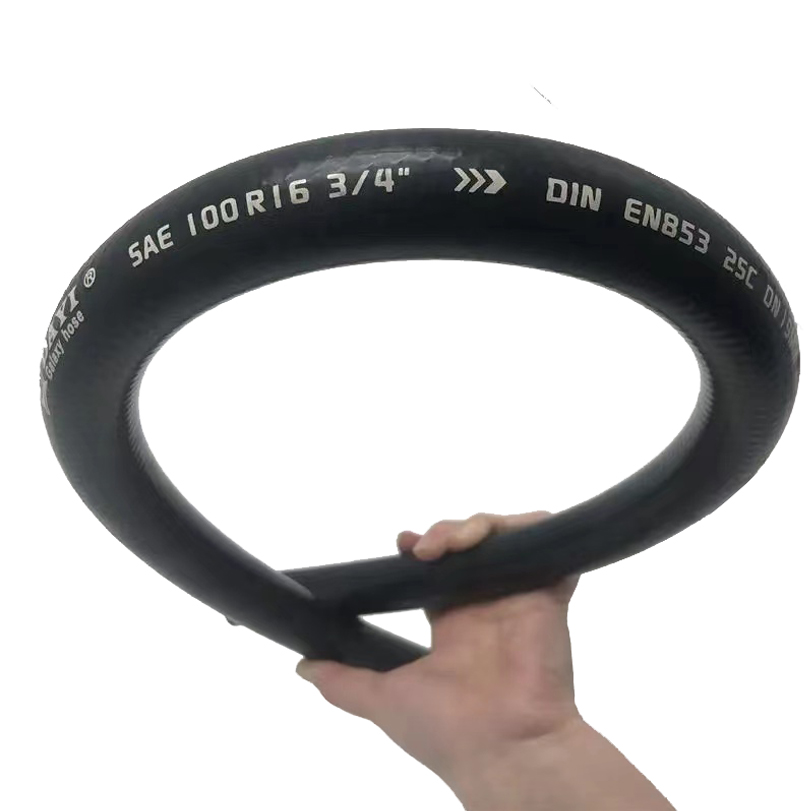
1/4 inch hydraulic hose represents a critical component within fluid power systems, facilitating the transmission of hydraulic fluid to actuators and other components. Suppliers from China, increasingly, are playing a significant role in the global market due to competitive pricing and expanding manufacturing capabilities. This technical guide provides a comprehensive overview of 1/4 inch hydraulic hose, encompassing material science, manufacturing processes, performance characteristics, potential failure modes, and relevant industry standards. The focus will be on understanding the complexities of this seemingly simple component, highlighting the core engineering considerations essential for reliable and safe operation in diverse industrial applications. Core performance attributes include burst pressure, working pressure, temperature range, and fluid compatibility, all impacting system longevity and operational integrity. The increasing demand for high-performance, cost-effective hydraulic hoses necessitates a deep understanding of the underlying technology to ensure proper selection and application.
Material Science & Manufacturing
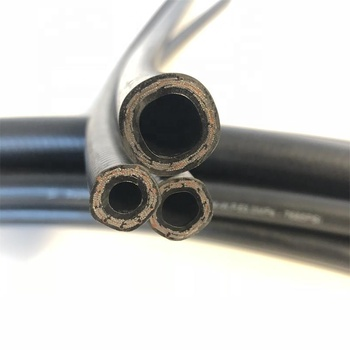
The construction of a 1/4 inch hydraulic hose typically involves four key layers: the inner tube, reinforcement layers, outer cover, and often, a bonding agent between layers. The inner tube is commonly composed of nitrile rubber (NBR), also known as Buna-N, due to its excellent resistance to petroleum-based hydraulic fluids. Alternative materials include Chloroprene (CR) for improved ozone and weathering resistance, and Fluoroelastomers (FKM/Viton) for aggressive fluids and high-temperature applications. NBR offers a good balance of cost and performance, possessing tensile strength ranging from 15-30 MPa and elongation at break between 300-500%. The reinforcement layer provides the hose’s pressure resistance. This is most frequently achieved using one or multiple layers of high-tensile steel wire, spiraled or braided. The number and construction of the wire layers directly correlate with the hose’s working and burst pressures. Wire specification (diameter, tensile strength) is crucial. Outer covers are generally made of Chloroprene rubber (CR) or Polyurethane (PU) offering abrasion resistance, weathering protection, and oil resistance. PU offers superior abrasion resistance but is more susceptible to hydrolysis. Manufacturing processes include extrusion for the inner tube and outer cover, followed by wire winding or braiding for reinforcement. Proper vulcanization is critical to ensure bonding between layers and to achieve the desired mechanical properties. Key parameter control during manufacturing includes maintaining precise temperature and pressure during extrusion and vulcanization, ensuring consistent wire tension during braiding, and rigorously inspecting for defects like voids or incomplete bonding.
Performance & Engineering
The performance of a 1/4 inch hydraulic hose is governed by several critical engineering factors. Burst pressure, defined as the pressure at which the hose fails catastrophically, is a primary specification, typically exceeding the working pressure by a safety factor of 4:1. Working pressure is the maximum continuous operating pressure. Hose performance is also significantly influenced by temperature. Hydraulic fluid viscosity changes with temperature, affecting flow rate and pressure drop. Extreme temperatures can degrade the rubber compounds, reducing flexibility and increasing the risk of cracking. Impulse pressure, caused by pump pulsations and rapid valve closures, induces fatigue stress on the hose. The hose’s ability to withstand repeated impulse pressure cycles is critical for long-term reliability. Hose bend radius is also a critical engineering consideration. Exceeding the minimum bend radius can lead to kinking and hose failure. Proper hose routing and support are essential to minimize stress and prevent abrasion. Finite Element Analysis (FEA) is frequently used to model hose behavior under various loading conditions, optimizing reinforcement layer design and predicting stress concentrations. Compliance requirements such as SAE J517 and EN 856 dictate minimum performance standards for hydraulic hoses, defining test methods for burst pressure, impulse pressure, and temperature resistance.
Technical Specifications
| Parameter | SAE J517 (Typical) | EN 856 (Typical) | Units |
|---|---|---|---|
| Inner Diameter | 6.35 mm (0.25 inch) | 6.3 mm | mm |
| Working Pressure | Up to 35 MPa (5000 psi) | Up to 31.5 MPa (4500 psi) | MPa |
| Burst Pressure | ≥ 140 MPa (20000 psi) | ≥ 126 MPa (18000 psi) | MPa |
| Temperature Range | -40°C to +100°C (-40°F to +212°F) | -40°C to +100°C (-40°F to +212°F) | °C |
| Reinforcement Type | Spiral Wire | Spiral or Braided Wire | - |
| Cover Material | Chloroprene Rubber (CR) or Polyurethane (PU) | Chloroprene Rubber (CR) | - |
Failure Mode & Maintenance
Several failure modes can affect 1/4 inch hydraulic hoses. Fatigue cracking, initiated by repeated impulse pressure and flexing, is a common issue. This often originates at the wire reinforcement layer due to stress concentrations. Abrasion, caused by contact with abrasive surfaces, can wear through the outer cover, exposing the reinforcement layers and leading to corrosion. Oil degradation and incompatibility can cause the inner tube to swell, crack, or delaminate. Ozone cracking, particularly in unsaturated rubbers like NBR, occurs due to exposure to ozone in the atmosphere. Kinking, resulting from exceeding the minimum bend radius, weakens the hose and can lead to rupture. Proper maintenance is crucial to prevent premature failure. Regular visual inspections should be conducted to identify signs of abrasion, cracking, or swelling. Hoses should be replaced if any damage is detected. Fluid compatibility should be verified to ensure the hose material is suitable for the hydraulic fluid used. Avoid exposing hoses to extreme temperatures or harsh chemicals. Implement proper hose routing and support to minimize stress and prevent abrasion. Regularly check hose connections for leaks. A preventative maintenance schedule, based on operating hours and environmental conditions, is highly recommended.
Industry FAQ
Q: What is the significance of the spiral versus braided reinforcement construction in a 1/4 inch hydraulic hose?
A: Spiral reinforcement generally offers higher pressure ratings and improved flexibility compared to braided reinforcement. Braided hoses are more resistant to kinking, while spiral hoses provide better impulse performance. The choice depends on the specific application requirements. For high-pressure, dynamic applications, spiral reinforcement is usually preferred. For applications requiring frequent bending and resistance to kinking, braided reinforcement is often selected.
Q: How does hydraulic fluid type affect the lifespan of a 1/4 inch hose?
A: Hydraulic fluid compatibility is paramount. Incompatible fluids can cause the inner tube to swell, soften, or degrade, leading to premature failure. Petroleum-based fluids typically require NBR inner tubes, while phosphate ester fluids require specialized materials like FKM. Using the incorrect fluid will dramatically reduce hose service life.
Q: What are the implications of exceeding the minimum bend radius of a hydraulic hose?
A: Exceeding the minimum bend radius induces stress on the hose reinforcement, potentially leading to fatigue cracking and eventual failure. Kinking can also restrict fluid flow and increase pressure drop. Proper hose routing and support are critical to maintain the recommended bend radius.
Q: What role does hose assembly quality play in overall system reliability?
A: Proper hose assembly, including correct crimping of fittings, is crucial. Incorrect crimping can lead to leaks, fitting blow-off, or hose failure. Fittings must be compatible with the hose and fluid. Certified hose assembly technicians and calibrated crimping equipment are essential for ensuring reliable assemblies.
Q: How often should a 1/4 inch hydraulic hose be replaced as part of a preventative maintenance program?
A: Replacement frequency depends on operating conditions and application severity. A general guideline is to replace hoses every 5-7 years, or sooner if visual inspection reveals any signs of damage. In critical applications or harsh environments, more frequent replacement may be necessary. Maintaining detailed records of hose installations and inspections is recommended.
Conclusion
The selection and implementation of 1/4 inch hydraulic hoses are far from trivial. A thorough understanding of material science, manufacturing processes, and performance parameters is vital for ensuring system reliability and safety. The increasing prevalence of these components in diverse industrial applications necessitates a commitment to best practices in design, installation, and maintenance. Proper hose selection, compatible fluid usage, and consistent inspection routines are crucial to maximizing service life and minimizing the risk of catastrophic failure.
Moving forward, advancements in hose materials and manufacturing techniques will continue to improve performance and durability. Greater emphasis on preventative maintenance programs and the implementation of condition monitoring technologies will further enhance the reliability of hydraulic systems. The role of qualified hose assembly technicians and adherence to industry standards remain paramount in delivering safe and efficient hydraulic power transmission solutions.