
Apr . 01, 2024 17:55 Back to list
china 1/4 hydraulic hose manufacturer Performance Analysis
Introduction
1/4 inch hydraulic hose, manufactured in China, represents a critical component in fluid power systems across diverse industries including construction, agriculture, manufacturing, and automotive. These hoses are designed to transmit hydraulic fluid under significant pressure, facilitating the operation of heavy machinery and critical industrial processes. The technical position of these hoses lies between the hydraulic pump/reservoir and the actuators (cylinders, motors) which perform the work. Core performance characteristics revolve around pressure rating, temperature resistance, fluid compatibility, and burst strength. Chinese manufacturers have become significant players in the global market, offering competitive pricing and increasingly meeting international quality standards. This guide provides an in-depth technical overview of these hoses, covering material science, manufacturing processes, performance parameters, potential failure modes, and relevant industry standards.
Material Science & Manufacturing
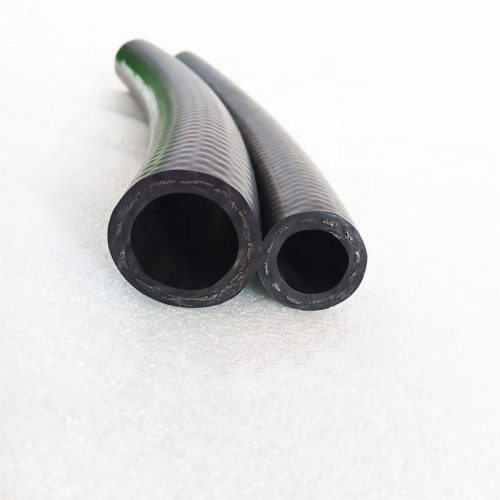
The core construction of a 1/4 inch hydraulic hose typically involves four key layers: the inner tube, reinforcement layers, and the outer cover. The inner tube is commonly composed of synthetic rubbers like Nitrile (NBR) for oil-based fluids, or Ethylene Propylene Diene Monomer (EPDM) for water-based fluids, offering resistance to fluid degradation and permeation. NBR exhibits excellent resistance to petroleum-based oils, fuels, and hydraulic fluids, with typical temperature ranges of -40°C to +120°C. EPDM provides superior resistance to heat, ozone, and weathering, making it suitable for applications involving water-glycol fluids. The reinforcement layer provides the strength to withstand high pressures. This is usually constructed from one or more layers of high-tensile steel wire, spirally wound or braided. The number and configuration of steel wire layers directly correlate to the hose's working and burst pressures. Higher ply counts increase pressure capacity but also reduce flexibility. Finally, the outer cover, typically made of Chloroprene (CR) or Polyurethane (PU), provides abrasion resistance, weather protection, and resistance to oil and chemicals. CR offers good all-around performance, while PU offers superior abrasion resistance. Manufacturing processes include extrusion for the inner tube and outer cover, calendaring for reinforcement layer preparation, and spiral winding or braiding of the reinforcement. Critical parameters during extrusion include temperature control, screw speed, and die pressure to ensure consistent wall thickness and material properties. Winding/braiding tension is meticulously controlled to ensure uniform reinforcement distribution. Post-processing includes vulcanization (curing) to crosslink the rubber compounds, enhancing their strength, elasticity, and resistance to environmental degradation.
Performance & Engineering
Hydraulic hose performance is governed by several engineering principles. Force analysis focuses on hoop stress within the hose wall due to internal pressure. This stress is directly proportional to the pressure and radius, and inversely proportional to the wall thickness. Therefore, maintaining precise dimensional control during manufacturing is crucial. Environmental resistance is paramount; exposure to extreme temperatures, UV radiation, and corrosive fluids can significantly degrade hose materials. Selection of appropriate rubber compounds is critical to match the application environment. Compliance requirements are dictated by industry standards (detailed in the footer) and often specify burst pressure testing, impulse testing (cyclic pressure fluctuations), and temperature cycling. Functional implementation involves consideration of bend radius – exceeding the minimum bend radius can cause kinking and hose failure. Hose assemblies are typically terminated with fittings crimped onto the hose ends. The crimp process must be precisely controlled to ensure a secure, leak-free connection without damaging the hose reinforcement. Finite Element Analysis (FEA) is often employed during the design phase to optimize hose geometry and material selection for specific pressure and temperature conditions. Fatigue life is a critical consideration in dynamic applications involving repeated pressure cycles. Material selection and reinforcement construction directly impact the hose’s resistance to fatigue cracking.
Technical Specifications
| Parameter | Unit | Typical Value (1/4" Hose) | Testing Standard |
|---|---|---|---|
| Inner Diameter | mm | 6.35 | ISO 1307 |
| Working Pressure | MPa | 20-35 | SAE J517 |
| Burst Pressure | MPa | 60-105 | SAE J517 |
| Temperature Range | °C | -40 to +100 (NBR), -40 to +120 (EPDM) | ISO 1817 |
| Reinforcement Type | - | Spiral Wire (1/2/4 ply) or Braided Wire | SAE J517 |
| Outer Cover Material | - | CR or PU | ISO 1817 |
Failure Mode & Maintenance
Common failure modes in 1/4 inch hydraulic hoses include: 1) Bursting: Typically due to exceeding the working pressure or gradual weakening of the reinforcement due to fatigue. 2) Kinking: Occurs when the hose is bent beyond its minimum bend radius, restricting flow and potentially damaging the inner tube. 3) Pinholing: Small leaks in the inner tube caused by abrasion from within (fluid contaminants) or external damage. 4) Blow-out: Failure at the fitting connection, often due to improper crimping or corrosion. 5) Cover Degradation: Cracking, hardening, or swelling of the outer cover due to exposure to UV radiation, ozone, or chemicals. 6) Reinforcement Corrosion: Corrosion of the steel wire reinforcement, leading to reduced strength. Maintenance involves regular visual inspections for signs of damage (cracks, abrasions, leaks). Hose assemblies should be inspected before each use, and replaced if any damage is detected. Proper hose routing and support are crucial to prevent kinking and abrasion. Contamination control is essential; using appropriate filtration systems minimizes internal abrasion. Regularly check fitting connections for tightness and corrosion. Proper storage conditions (cool, dry, dark) are also important to prevent premature degradation. Avoid storing hoses in direct sunlight or near sources of heat or chemicals. A preventative maintenance schedule, including documented inspections and replacement intervals, is highly recommended.
Industry FAQ
Q: What is the significance of the hose 'dash size' (e.g., -6 for 1/4 inch)?
A: The dash size is a standardized nomenclature used in the hydraulic industry to denote the hose's inner diameter. It doesn't directly represent the actual inner diameter in inches, but rather relates to a specific standardized size chart. -6 corresponds to a 1/4 inch inner diameter. Using dash sizes ensures proper fitting compatibility across different manufacturers.
Q: How does the number of reinforcement plies affect hose performance?
A: Increasing the number of reinforcement plies (e.g., from 1 to 2 or 4 spiral wire layers) significantly increases the hose's working and burst pressures. However, it also decreases flexibility. The optimal number of plies depends on the specific application's pressure requirements and bend radius constraints.
Q: What are the key differences between CR and PU outer covers?
A: Chloroprene (CR) offers good all-around performance, including resistance to oil, weathering, and abrasion. Polyurethane (PU) provides superior abrasion resistance, making it ideal for applications where the hose is exposed to harsh environments or frequent rubbing. PU is generally more expensive than CR.
Q: What is the impact of impulse pressure on hose life?
A: Impulse pressure, or pressure pulsations, creates cyclic stress on the hose reinforcement. Repeated impulse pressures can lead to fatigue cracking and premature failure. Hoses designed for applications with significant impulse pressures typically have enhanced reinforcement constructions to withstand these cyclic loads. Specialized impulse testing standards assess a hose's ability to endure these conditions.
Q: How important is proper fitting selection and crimping?
A: Proper fitting selection and crimping are critical for ensuring a secure, leak-free connection. Using incorrect fittings or improper crimping can lead to hose blow-out and potentially hazardous situations. Crimping specifications must adhere to the hose manufacturer's recommendations and be performed using calibrated crimping equipment.
Conclusion
The 1/4 inch hydraulic hose, manufactured in China, is a vital component for numerous industrial applications. Understanding the interplay between material science, manufacturing processes, and performance characteristics is crucial for selecting the appropriate hose for a given application. Careful consideration of factors such as pressure requirements, temperature range, fluid compatibility, and environmental conditions ensures optimal performance and longevity.
Ongoing advancements in rubber compound technology and reinforcement materials are continually improving the performance and durability of these hoses. Implementing robust preventative maintenance programs, including regular inspections and adherence to industry standards, is essential for maximizing hose life and minimizing the risk of failure. Selecting a reputable manufacturer committed to quality control and adherence to international standards is paramount for ensuring reliable and safe operation.