
Apr . 01, 2024 17:55 Back to list
china 1/4 3/8 air hose supplier Performance Analysis

Introduction
Reinforced rubber air hoses, specifically those manufactured to ¼” and ⅜” internal diameter specifications, are critical components in pneumatic systems across a diverse range of industries. These hoses serve as flexible conduits for compressed air, facilitating power transmission to tools, automated machinery, and various process equipment. China has emerged as a significant global supplier of these hoses, offering competitive pricing and increasing quality standards. This guide details the material science, manufacturing processes, performance characteristics, potential failure modes, and relevant industry standards associated with these hoses, intended for procurement managers, engineers, and maintenance personnel. The core performance attributes are burst pressure, working pressure, temperature resistance, and flexibility, all of which dictate the hose's suitability for specific applications. A significant industry pain point is ensuring consistent quality control to avoid premature failure and associated downtime.
Material Science & Manufacturing
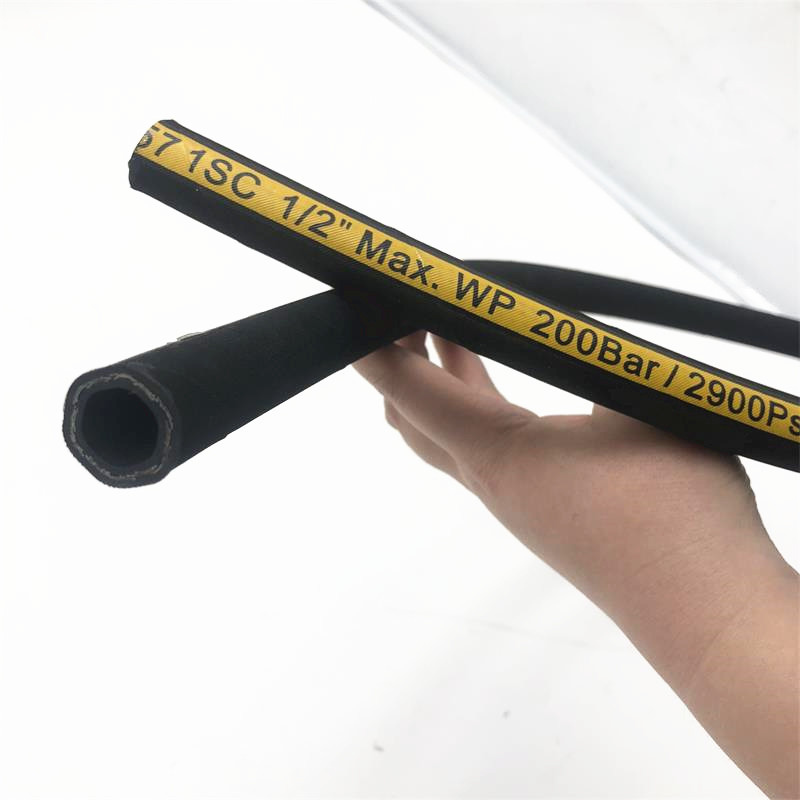
The construction of a ¼” or ⅜” air hose typically involves several layers of materials. The inner tube, which directly contacts the compressed air, is commonly composed of synthetic rubbers such as Nitrile Rubber (NBR), Styrene-Butadiene Rubber (SBR), or Ethylene Propylene Diene Monomer (EPDM). NBR offers excellent resistance to oils and fuels, SBR provides good abrasion resistance at a lower cost, and EPDM exhibits superior resistance to ozone, weathering, and heat. The reinforcement layer is crucial for pressure handling capability. It’s usually comprised of a high-tensile strength textile braid – typically polyester or nylon – spirally wound within the rubber matrix. The cover layer, providing external protection, often utilizes similar rubber compounds as the inner tube, sometimes with added UV stabilizers.
Manufacturing begins with rubber compound mixing, where raw polymers are blended with fillers (carbon black, silica), plasticizers, curing agents, and other additives to achieve desired physical properties. The mixed compound is then extruded through a die to form the inner tube. The reinforcement braid is simultaneously applied during extrusion, or subsequently wound onto the inner tube. The cover layer is then extruded over the braided structure. Critical parameter control during extrusion includes temperature regulation, die pressure, and braid tension. Following extrusion, the hose undergoes curing (vulcanization) in a heated autoclave or steam tunnel. Curing crosslinks the rubber molecules, enhancing its strength, elasticity, and resistance to degradation. Post-curing, hoses are inspected for defects, tested for burst pressure, and cut to specified lengths before being fitted with couplings. Consistent control of curing time and temperature are paramount to achieving optimal mechanical properties and preventing reversion (degradation of rubber properties due to over-curing).
Performance & Engineering
The performance of an air hose is dictated by several engineering considerations. Burst pressure, typically expressed in PSI (pounds per square inch) or bar, represents the maximum pressure the hose can withstand before rupture. Working pressure is significantly lower, typically 3:1 or 4:1 safety factor below the burst pressure, and represents the maximum sustained operating pressure. Flexibility is crucial for ease of handling and routing. This is influenced by the hose’s diameter, wall thickness, and rubber compound formulation. The hose's ability to resist kinking under bending stresses is also important.
Environmental resistance is a key factor. Exposure to UV radiation, ozone, and extreme temperatures can degrade the rubber, leading to cracking and loss of flexibility. Oil resistance is vital in applications where the hose may contact lubricants. Force analysis considers both internal pressure and external mechanical stresses (bending, abrasion). Finite Element Analysis (FEA) can be employed during the design phase to optimize hose geometry and reinforcement structure for specific pressure and temperature conditions. Compliance requirements, such as those outlined by OSHA (Occupational Safety and Health Administration) in the US or equivalent regulations in other countries, dictate the minimum burst pressure and safety factors for air hoses used in industrial settings. Proper selection of coupling materials (brass, steel, plastic) is essential to ensure a secure and leak-proof connection.
Technical Specifications
| Parameter | ¼” Hose (Typical) | ⅜” Hose (Typical) | Units |
|---|---|---|---|
| Inner Diameter | 0.25 | 0.375 | inches |
| Outer Diameter | 0.45 - 0.55 | 0.55 - 0.65 | inches |
| Working Pressure | 300 | 300 | PSI |
| Burst Pressure | 900 | 900 | PSI |
| Temperature Range | -40 to +60 | -40 to +60 | °F |
| Reinforcement | Polyester Braid | Polyester Braid | Material |
| Cover Material | NBR/SBR Blend | NBR/SBR Blend | Material |
Failure Mode & Maintenance
Air hoses are susceptible to several failure modes. Abrasion from contact with rough surfaces can wear through the cover and reinforcement, leading to leaks or bursts. Fatigue cracking, caused by repeated bending and flexing, initiates at stress concentrations and propagates through the reinforcement braid and rubber matrix. Ozone cracking, particularly in EPDM hoses exposed to outdoor conditions, manifests as surface cracks that eventually lead to failure. Oil contamination can swell and degrade the rubber, reducing its strength and flexibility. Kinking, if severe and prolonged, can cause localized stress and eventual rupture. Internal pressure surges (water hammer) can exceed the hose’s working pressure, leading to immediate failure.
Preventive maintenance is crucial. Regular visual inspections should identify abrasions, cracks, kinks, and leaks. Hoses should be replaced if any signs of damage are observed. Avoid sharp bends and ensure hoses are adequately supported to prevent excessive stress. Avoid exposing hoses to incompatible fluids (e.g., solvents that attack the rubber). Store hoses in a cool, dry place away from direct sunlight and ozone sources. After use, hoses should be drained of compressed air to minimize internal pressure and potential fatigue. Correct coupling installation and tightening torque are essential to prevent leaks and ensure secure connections. A proactive maintenance schedule, incorporating regular inspections and timely replacement, will significantly extend hose service life and minimize downtime.
Industry FAQ
Q: What is the impact of different reinforcement braid materials (polyester vs. nylon) on hose performance?
A: Polyester braids generally offer superior resistance to stretching and deformation under pressure, making them ideal for applications requiring consistent dimensions. Nylon braids exhibit higher tensile strength and abrasion resistance, offering enhanced durability in harsh environments. The choice depends on the specific application requirements; nylon is preferred where abrasion is a significant concern, while polyester is better for maintaining dimensional stability under pressure.
Q: How does temperature affect the working pressure of an air hose?
A: As temperature increases, the rubber compound softens, reducing its ability to withstand pressure. Manufacturers typically specify a working pressure at a standard temperature (e.g., 70°F). Operating a hose at higher temperatures requires derating the working pressure to account for the reduced strength of the rubber. Consult the manufacturer’s specifications for temperature-pressure derating curves.
Q: What are the common causes of oil degradation in NBR hoses, and what preventative measures can be taken?
A: Prolonged exposure to certain petroleum-based oils, particularly those containing aromatic hydrocarbons, can cause NBR hoses to swell and lose their elasticity. Preventative measures include selecting hoses specifically rated for oil resistance, minimizing oil contact, and using appropriate oil-resistant couplings. Regularly inspect hoses for signs of swelling or degradation.
Q: How important is the hose coupling material in preventing failure?
A: The coupling material is critically important. Brass couplings are commonly used but can corrode in humid environments. Steel couplings offer higher strength and corrosion resistance. Plastic couplings are lightweight and corrosion-resistant but may have lower pressure ratings. Proper selection and secure installation (correct torque specification) of the coupling are essential to prevent leaks and ensure a reliable connection.
Q: What is the typical lifespan of a ¼” or ⅜” air hose in a standard industrial application?
A: The lifespan varies greatly depending on usage and maintenance. Under optimal conditions (moderate temperature, minimal oil exposure, regular inspection), a hose can last 2-5 years. However, in harsh environments with frequent bending, abrasion, or oil contamination, the lifespan may be significantly shorter. A proactive maintenance program is key to maximizing hose lifespan.
Conclusion
The selection and maintenance of ¼” and ⅜” air hoses are critical for ensuring the safe and efficient operation of pneumatic systems. Understanding the material science underpinning hose construction – the interplay between rubber compounds and reinforcement materials – is paramount for choosing a hose suited to the specific application demands. Careful consideration of working pressure, temperature range, environmental factors, and potential failure modes allows for proactive mitigation of risks and extension of hose service life.
The increasing globalization of supply chains necessitates a thorough understanding of quality control processes employed by manufacturers, particularly those based in regions like China. Adhering to relevant international standards (detailed below) and implementing rigorous inspection protocols are crucial for ensuring consistent product performance and avoiding costly downtime. Proper hose management, encompassing regular inspection, preventative maintenance, and timely replacement, represents a significant return on investment by minimizing failures and maximizing operational efficiency.